
Blogpost keywords: rectangular glass lamp shades oem, fixture interface tolerances, beam shaping behavior
Rectangular glass lamp shades oem projects are rarely driven by decoration alone. Brands typically choose rectangular shades when a fixture is designed as a system, where glass, metal structure, and light source must work together with minimal visual noise. The rectangular form creates deliberate direction and alignment, which helps a lamp feel integrated with architectural lines rather than floating as an accessory.
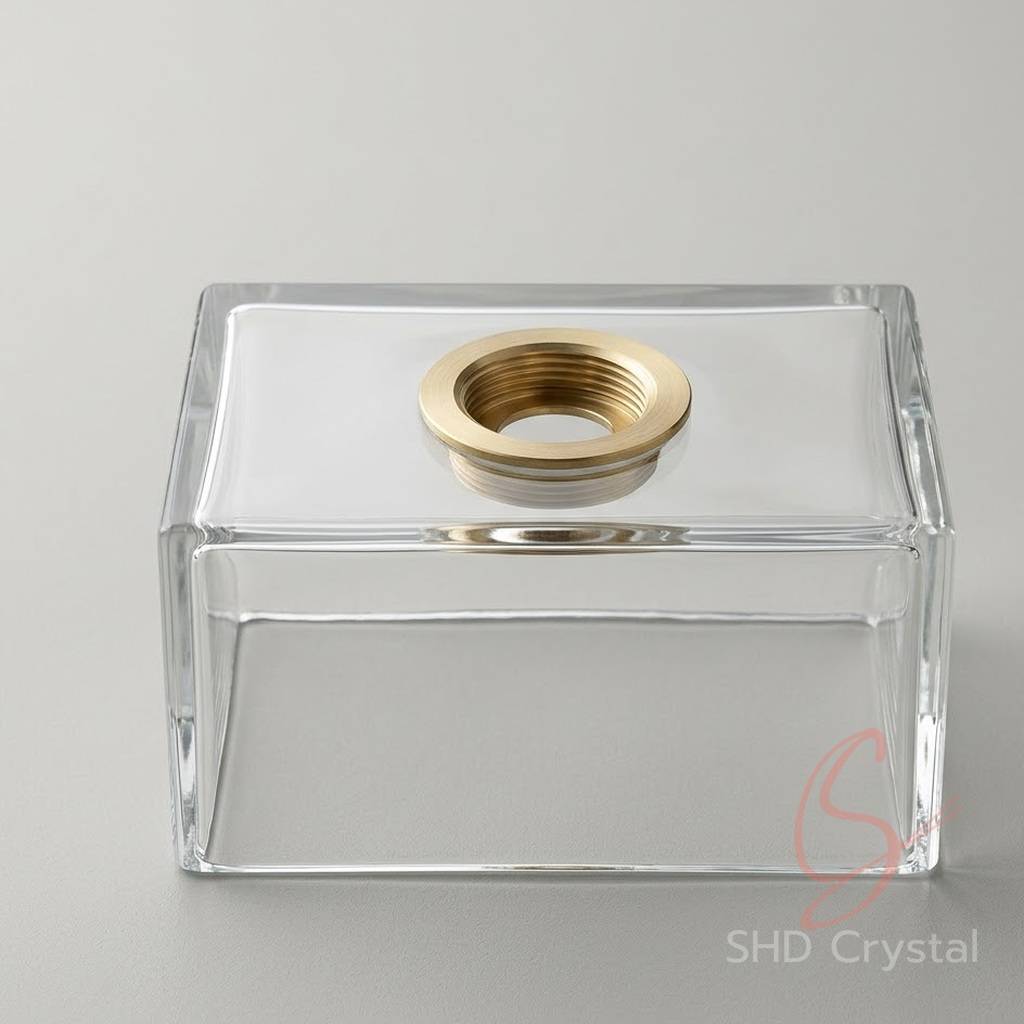
In OEM development, the real work begins after the silhouette is approved. Rectangular shades introduce engineering demands that are easy to underestimate, especially when the glass must assemble cleanly, repeat accurately, and deliver a predictable lighting effect across a product series.
Rectangular Glass Lamp Shades OEM and Fixture Interface Tolerances
Rectangular shades depend on straight edges, flat faces, and consistent angles. Any small dimensional drift becomes obvious because there are no curves to visually “forgive” misalignment. For this reason, fixture interface tolerances become a defining factor when selecting suppliers for rectangular glass lamp shades oem production.
The key interfaces typically include the mounting opening, the seating plane where glass meets metal, and the edge alignment that determines whether the shade looks centered once installed. If these interfaces are not controlled, the shade may fit but still appear skewed, creating a quality issue that cannot be fixed by assembly.
Manufacturers with strong interface control support repeatable assembly, lower rejection rates during installation, and cleaner product presentation in retail or project deliveries.
Beam Shaping Behavior in Rectangular Shade Designs
Rectangular glass influences light differently from round forms because the light interacts with flat planes rather than a continuous curve. This creates beam shaping behavior that can either elevate a design or cause unwanted glare if not handled carefully.
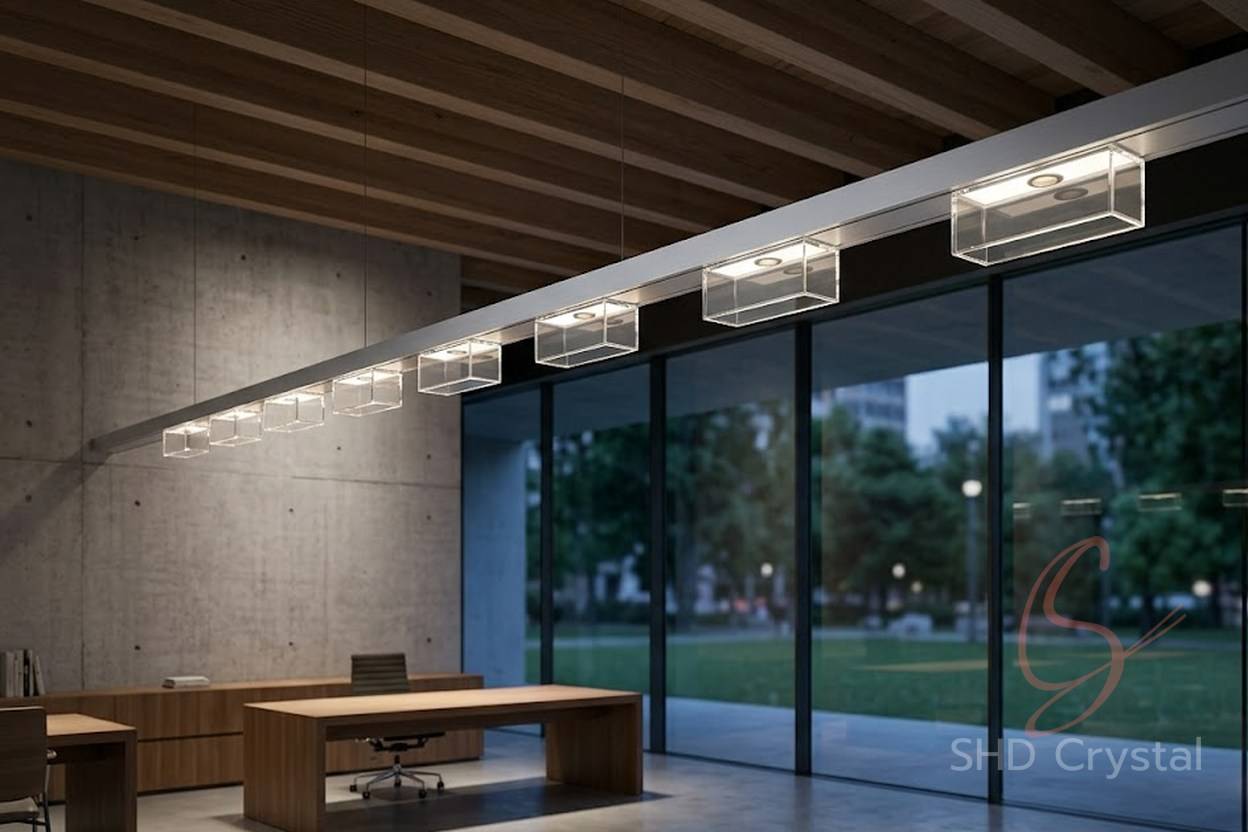
When the interior surface is clear and the edges are sharp, the shade can produce strong linear highlights and visible hot spots. When diffusion is introduced in a controlled way, rectangular shades can create a calmer, more uniform presence while still maintaining direction.
In rectangular glass lamp shades oem development, beam behavior should be considered early. Glass finish selection, wall thickness planning, and the relationship between shade depth and light source placement all affect whether the resulting light feels refined or harsh.
Edge Finishing Standards That Affect Perceived Quality
On rectangular shades, edges are not a minor detail. They sit in direct view and become part of the product’s visual language. Edge finishing determines whether the shade reads as premium, especially when the fixture is viewed from an angle.
Poorly managed edges can look sharp, uneven, or overly reflective. Well-finished edges appear clean and intentional, supporting a crisp geometric identity without distraction. For rectangular glass lamp shades oem orders, edge finishing standards are often the difference between a shade that feels architectural and one that feels merely box-shaped.
This is also where suppliers differentiate themselves, because finishing discipline must be repeatable across production batches, not just perfected on prototypes.
Designing Rectangular Shades for Product Families
Rectangular shades are frequently used in coordinated collections such as pendant sets, wall units, and floor lamp variations. In these families, proportion is not the only concern. The shade must maintain consistent interface tolerances, matching beam behavior, and comparable edge appearance across sizes.
If one size produces a different lighting character or shows a different edge finish quality, the collection loses cohesion. Strong OEM partners build rectangular shade programs around repeatable rules rather than one-off solutions, making multi-size development smoother and lower risk.
Conclusion
Rectangular glass lamp shades oem programs succeed when the supplier can manage system-level requirements rather than just produce a geometric shape. With controlled fixture interface tolerances, predictable beam shaping behavior, and disciplined edge finishing, rectangular shades can support clean architectural lighting designs across product lines.
Developing Rectangular Shade Programs With Lower Assembly Risk
Working with experienced rectangular glass lamp shades oem manufacturers helps brands reduce fit issues and maintain consistent lighting performance by prioritizing fixture interface tolerances and beam shaping behavior from the earliest development stage.