
Blogpost keywords: white wine glass factory, crystal white wine glasses, small bowl wine glasses
White wine is rarely presented with the same visual intensity as red wine. Its appeal often depends on freshness, brightness, temperature, and precision rather than weight or dramatic aromatic expansion. This difference explains why glassware for white wine follows an entirely different visual language. In many white wine glass factory projects, crystal white wine glasses are developed to preserve clarity, coolness, and restrained elegance rather than maximizing bowl volume or visual scale.
The result is a style of glassware that feels lighter, cleaner, and more controlled within hospitality environments.
Why White Wine Glasses Use Smaller Bowl Geometry
One of the defining characteristics of small bowl wine glasses is proportion. Unlike large Burgundy-style bowls designed for oxygen exposure and aromatic expansion, white wine glasses remain narrower and more upright. This structure helps preserve lower serving temperature while concentrating delicate citrus, mineral, floral, and orchard-fruit aromas closer to the rim.
Because of this geometry, crystal white wine glasses often feel visually sharper and more restrained than red wine stemware. The silhouette supports freshness rather than richness. In many hospitality settings, this cleaner profile also contributes to a more refined table atmosphere.
Crystal Clarity Changes How White Wine Is Perceived
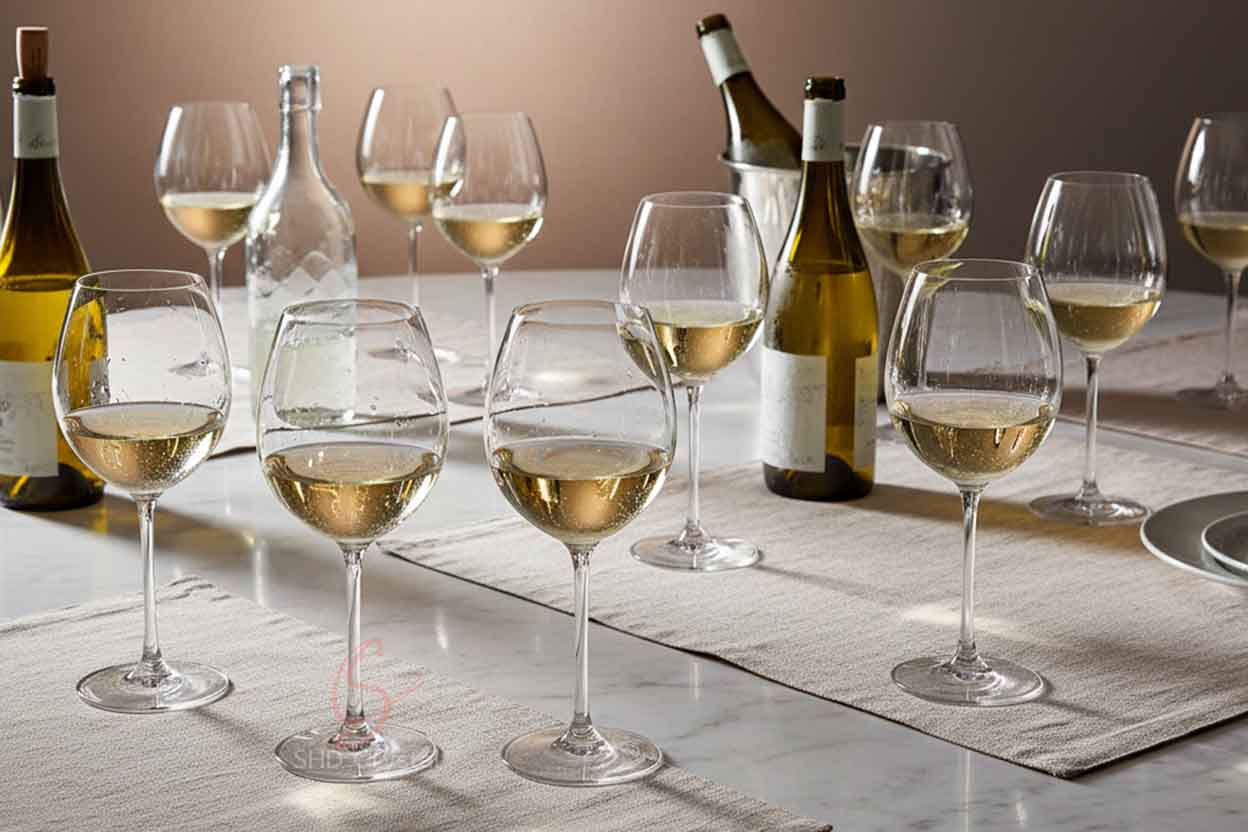
White wine reacts strongly to transparency and light. Pale gold reflections, chilled condensation, and subtle color variation become more visible inside highly transparent crystal. Under restaurant lighting, crystal white wine glasses allow white wine to appear brighter and more luminous without visual heaviness.
This optical behavior is one reason many white wine glass factory collections prioritize thin walls, delicate rims, and lighter bowl proportions. The objective is not visual drama, but preserving crisp visual purity throughout service.
Why White Wine Service Feels More Controlled
Compared with red wine rituals, white wine presentation often depends on precision and restraint. Smaller pours, lower temperatures, and more focused aromatic delivery all influence the experience. Small bowl wine glasses support this by slowing temperature change while guiding aroma more directly toward the nose.
This controlled atmosphere is especially important for Sauvignon Blanc, Riesling, Chablis, and other white wines where freshness and acidity define character. In many restaurants, crystal white wine glasses are selected specifically because they visually reinforce this sense of clean refinement.
Hospitality Lighting Interacts Differently With White Wine Glasses
White wine behaves differently under light than darker wines. Instead of deep reflections and shadow density, white wine produces brighter highlights and softer transparency. Candlelight and ambient restaurant lighting move more cleanly through narrow crystal bowls, creating cooler and more restrained reflections across the table.
Because of this, white wine glass factory development increasingly considers not only bowl proportion, but also how crystal behaves visually within hospitality interiors. Small bowl wine glasses contribute to a lighter dining atmosphere compared with the richer visual presence of oversized red wine stemware.
Why We Approach White Wine Glasses Beyond Standard Stemware Production
A common misconception is that white wine glasses are simply smaller versions of red wine glasses. In reality, crystal white wine glasses require different balance, bowl tension, and visual rhythm. Even small changes in rim diameter or bowl taper can affect freshness perception and aromatic concentration during service. In our white wine glass factory work, small bowl wine glasses are developed around temperature preservation, optical clarity, and hospitality atmosphere rather than generic stemware scaling.
The goal is creating glassware that supports the clean and vibrant identity of white wine itself.
A Refined Hospitality Example
In one boutique seafood dining concept, designers selected crystal white wine glasses with tall slender stems and compact bowls to reinforce the restaurant’s cooler coastal atmosphere. Rather than using oversized stemware, the project emphasized crisp visual lightness across marble surfaces, brushed metal accents, and pale linen table settings.
The smaller bowl wine glasses preserved chilled presentation throughout extended dining service while allowing candlelight and soft ambient reflections to move cleanly through the crystal. The result created a more restrained and elegant wine experience aligned closely with the freshness of the cuisine itself.
Conclusion
A white wine glass factory shapes more than functional stemware. Through carefully balanced crystal white wine glasses and refined small bowl wine glasses, hospitality environments can preserve freshness, clarity, and restrained elegance throughout wine service. Bowl proportion, transparency, and reflective behavior all contribute to how white wine is visually and emotionally experienced at the table.
Crystal White Wine Glasses Developed For Fresh Hospitality Presentation
At SHD Crystal, we approach white wine glass factory projects through optical clarity, freshness preservation, and refined hospitality atmosphere rather than oversized stemware aesthetics. Our crystal white wine glasses are developed with attention to bowl proportion, delicate rim balance, and light-responsive crystal behavior to preserve crisp visual presentation during service.
Through small bowl wine glasses customization in stem proportion, bowl taper refinement, crystal transparency, and hospitality-focused durability, we support restaurants, hotels, and wine programs seeking elegant stemware designed around freshness and controlled wine presentation.