
Blogpost keywords: custom rectangular glass lamp shades, geometric glass covers, bespoke luminaire parts
Many lighting products rely on brightness to attract attention. A well-designed custom rectangular glass lamp shades project works differently. It shapes light through proportion, edge definition, surface texture, and controlled diffusion. In contemporary interiors, rectangular glass forms are increasingly used not because they feel minimal, but because they create a stronger architectural rhythm inside the space.
This makes them especially effective in boutique hospitality, gallery-inspired interiors, luxury vanity lighting, and design-oriented residential collections where the fixture must feel composed even before the light is turned on.
Why Custom Rectangular Glass Lamp Shades Depend on Edge Precision and Light Balance
A rectangular glass shade exposes production inconsistencies more aggressively than rounded forms. Straight lines immediately reveal uneven polishing, distorted corners, or unstable wall thickness. In transparent or satin-finished glass, even slight asymmetry becomes visible once illumination passes through the structure. Because of this, experienced manufacturers approach custom rectangular glass lamp shades more like architectural glass components than decorative accessories.
Surface Treatment Changes the Emotional Character of the Fixture
One of the biggest advantages of rectangular glass is its ability to support different lighting moods without changing the underlying geometry.
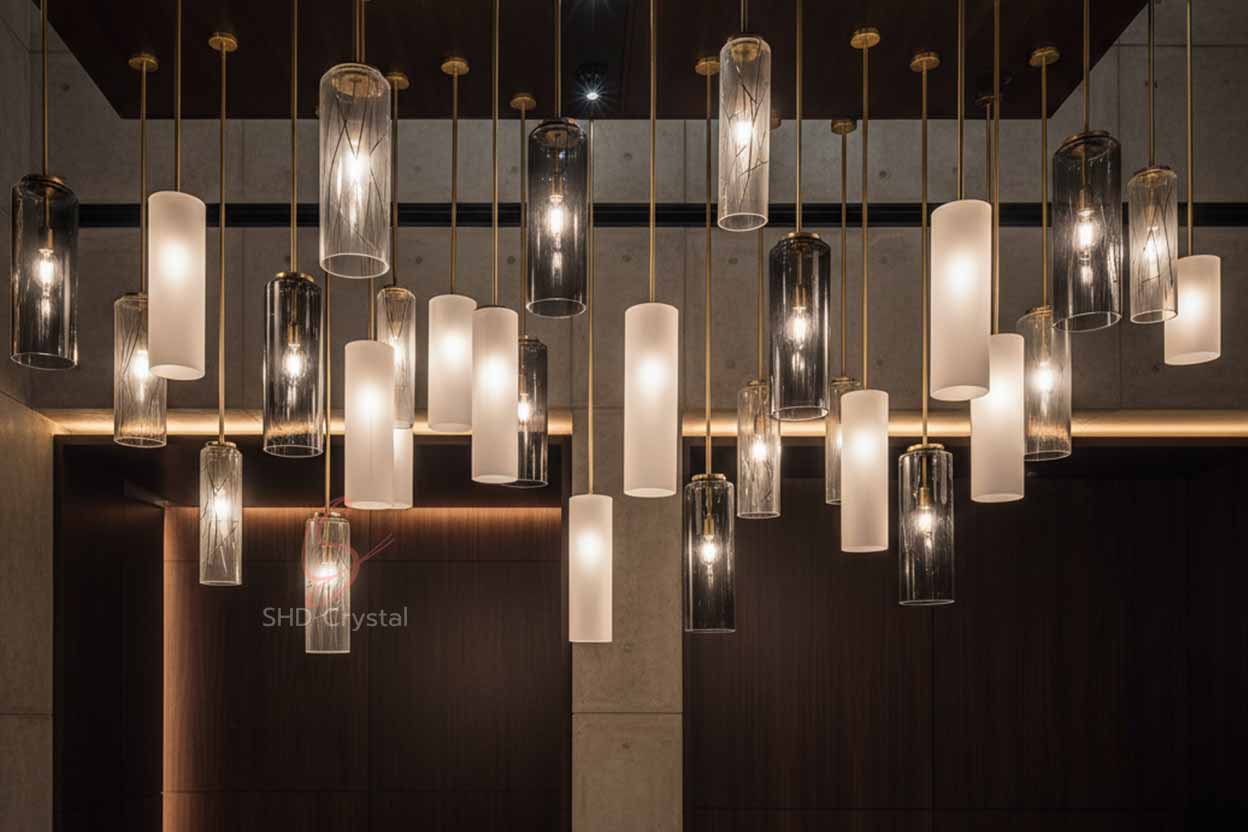
Soft satin finishes can make the fixture feel calm and atmospheric. Smoke-tinted surfaces create stronger visual depth. Ribbed or hand-engraved textures introduce movement across the glass while helping diffuse glare more naturally.
In premium geometric glass covers, these surface treatments often matter more than ornament. A restrained carved texture along the edge or a subtle vertical engraving can dramatically change how the light spreads across nearby walls.
This is especially valuable in hospitality projects where lighting must feel warm and layered instead of overly exposed.
Thickness Transition Controls How Light Travels
A common mistake in low-cost production is keeping the entire shade at a uniform thickness regardless of size. Large rectangular forms rarely respond well to this approach.
When thickness remains too consistent, the shade may appear visually flat under illumination. More advanced production methods introduce controlled thickness transitions near corners and edges to create softer light gradients and stronger material depth.
For premium custom rectangular glass lamp shades, this creates a more sculptural appearance while reducing harsh hotspots from direct bulbs.
In many OEM projects, the visual quality of the light becomes more important than the fixture itself. Buyers increasingly want lighting products that create atmosphere instead of simply exposing illumination hardware.
Bespoke Metal Integration Determines Whether the Fixture Feels Artistic or Industrial
Glass alone cannot define the final impression. Hardware proportion matters equally. Poorly balanced mounting structures can make refined glass feel overly commercial. Slim antique brass supports, concealed mounting systems, and softened brushed finishes often work better with elongated rectangular glass because they allow the glass to remain visually dominant. This is where bespoke luminaire parts become commercially important. OEM customization is not only about changing dimensions. It is about controlling how metal, glass, and light behave together as one visual object.
For coordinated lighting collections, this also allows wall lamps, pendants, vanity lights, and ceiling fixtures to share a consistent design language without appearing repetitive.
Where Rectangular Glass Shades Work Best
A refined rectangular glass form performs especially well in spaces that already contain strong architectural lines.
Luxury hotel corridors, reception counters, vanity mirrors, bedside sconces, and gallery-style residential interiors all benefit from lighting that reinforces spatial rhythm rather than interrupting it. This explains why geometric glass covers are increasingly used in lighting collections that aim for a quieter and more sculptural visual identity.
Instead of acting as decorative centerpieces, these fixtures help shape atmosphere through controlled reflection, softened geometry, and disciplined light diffusion.
Conclusion
Well-designed custom rectangular glass lamp shades succeed because they organize light through structure rather than decoration. Through controlled edge finishing, balanced wall thickness, refined surface treatment, and carefully integrated bespoke luminaire parts, rectangular glass lighting can achieve a more architectural and artistic presence across modern lighting collections.
Supporting Artistic Glass Lighting Development
At SHD Crystal, we support OEM production for architectural lighting collections through custom blown and molded glass development, hand-engraved textures, satin and smoke finishing, precision edge polishing, and coordinated metal integration. For brands developing sculptural lighting programs, our team helps create custom rectangular glass lamp shades that balance light diffusion, structural clarity, and refined handcrafted character across multiple fixture categories.