
Blogpost keywords: hand blown decanter OEM, custom decanter, glass decanter set
At SHD Crystal, most hand blown decanter OEM projects begin long before mold production starts. Clients often arrive with inspiration photos, sketches, or existing market references, but translating those ideas into stable production requires much more than copying a silhouette.
A decanter may look simple in photography, yet small structural decisions can dramatically affect pouring comfort, stopper fit, weight balance, and production stability. In hand-blown glass especially, every curve changes how the molten glass behaves during forming.
This is why custom decanter development usually becomes a combination of aesthetic design, artisan glass control, and practical export planning rather than a straightforward manufacturing task.
Shape Development Usually Starts With Pouring Behavior
Many clients focus first on appearance, especially dramatic shoulders or oversized bases. However, we normally begin by evaluating how the decanter will actually pour.
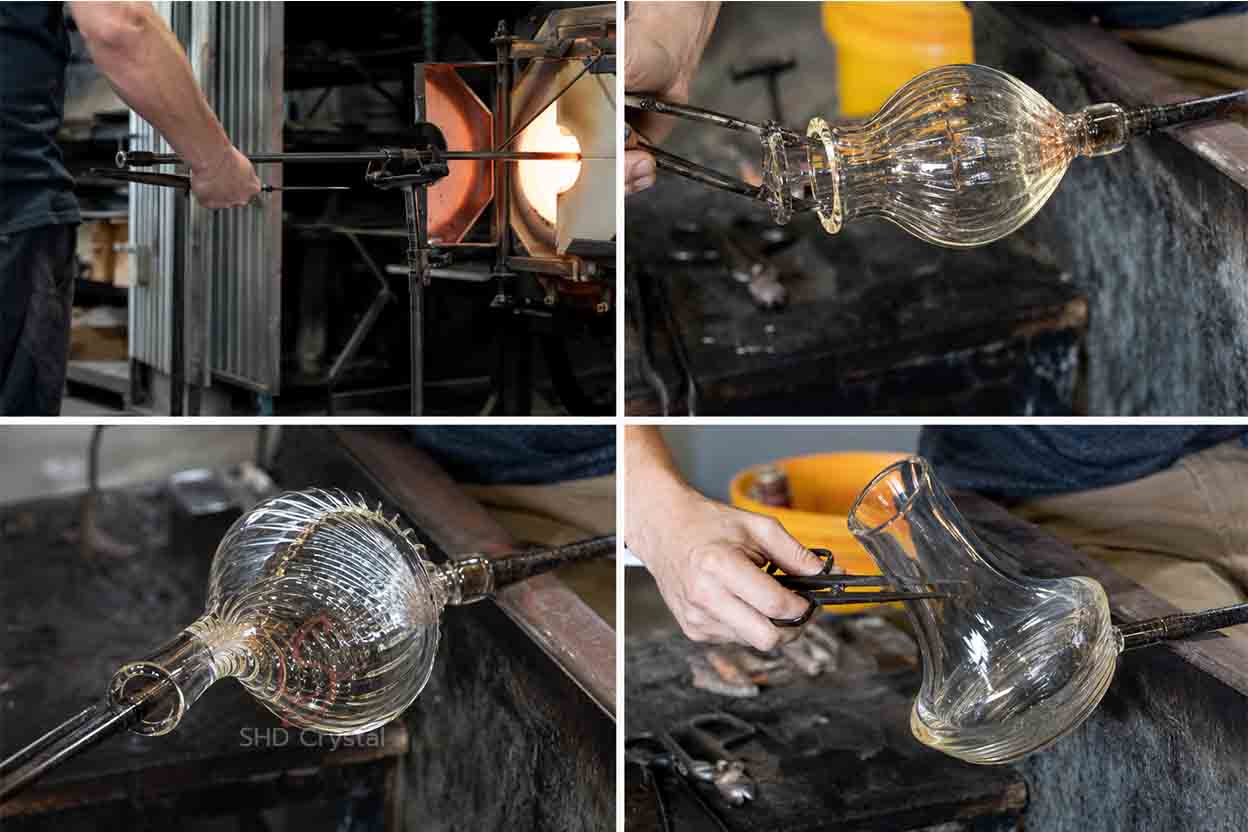
A narrow neck may create a cleaner silhouette but restrict airflow during serving. An aggressively angled mouth may look sculptural but produce unstable liquid flow. Large bodies can increase visual presence while also making the piece uncomfortable to lift when filled.
For this reason, most custom decanter sampling requires practical handling tests rather than relying only on CAD drawings or renderings.
During hand blowing, even small adjustments to shoulder angle or neck diameter can noticeably improve usability without changing the overall visual identity of the piece.
Hand Blown Glass Changes Shape Naturally During Production
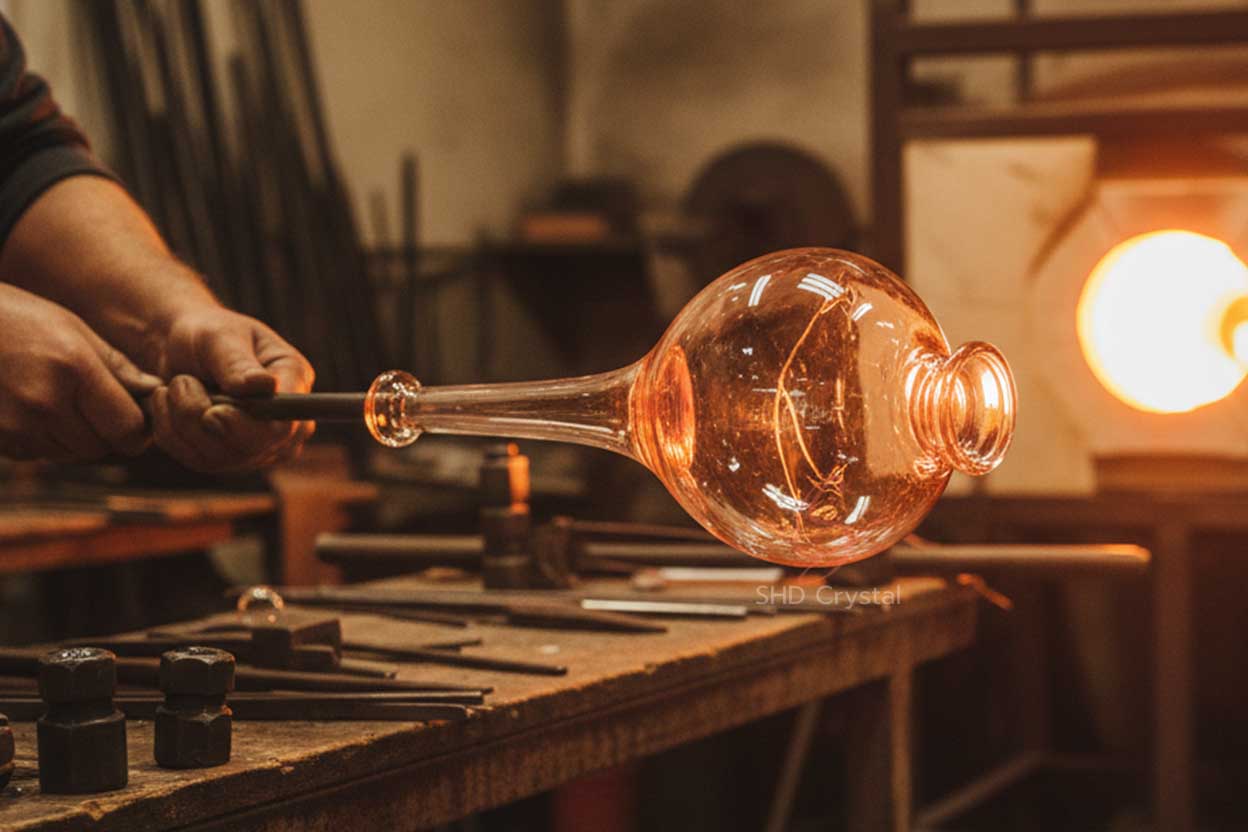
One of the biggest misunderstandings in hand blown decanter OEM sourcing is expecting every handmade piece to behave like precision-machined industrial material. Hot glass remains fluid during forming. As artisans blow, rotate, and shape the body, gravity continuously influences wall distribution. Large rounded decanters especially require careful timing to prevent the lower body from becoming uneven or visually heavy.
This is why experienced glass workshops pay close attention to:
- glass gathering size
- furnace temperature
- blow expansion rhythm
- neck pulling timing
- base stabilization
These variables directly influence whether the final decanter feels refined or unstable.
Stopper Matching Often Determines Whether the Product Feels Premium
Many buyers initially focus only on the bottle body. In reality, the stopper system often defines the perceived quality of the entire product. A poorly matched stopper may tilt, wobble, or create inconsistent sealing pressure. This immediately reduces the premium impression, even if the decanter body itself looks visually strong. In our experience, successful glass decanter set development requires evaluating:
-stopper taper angle
-insertion depth
-opening tolerance
-grip comfort
-repeated opening behavior
before production approval begins. Hand-ground stopper fitting is especially important for premium crystal decanters where precision tolerance becomes more visible.
Weight Balance Matters More Than Thickness Alone
Another common misconception is that heavier glass automatically creates a luxury feel. Excessive wall thickness may increase freight cost and reduce pouring comfort without improving visual refinement. Instead, we usually focus on how the weight distributes between the base, shoulder, and neck.
A well-balanced custom decanter should feel stable during display while remaining comfortable during pouring. In hand-blown production, subtle wall variation can actually help the piece feel more organic and less mechanically rigid. This balance becomes especially important for hospitality and gifting projects where the decanter will be handled frequently.
Packaging Problems Often Appear After Sampling
One challenge many clients underestimate is export protection. Large glass stoppers, elongated necks, and asymmetrical silhouettes create concentrated pressure points during shipment. A decanter that performs perfectly during sampling may still fail during container transport if internal packaging support is insufficient.
For this reason, our hand blown decanter OEM projects usually review packaging structure together with glass development rather than treating it as a separate step later.
Depending on the shape, we may recommend:
-foam suspension structures
-molded inserts
-reinforced neck protection
-magnetic rigid gift boxes
-double-wall export cartons
to reduce transit risk.
Why Many Brands Still Prefer Hand Blown Decanters
Despite the production complexity, hand-blown glass continues to hold strong value because it creates softer transitions, more natural optical movement, and stronger artisan character than heavily automated production. Small variation in wall thickness and curvature often gives the decanter more visual depth once illuminated or filled with whiskey, wine, or aged spirits. For many premium brands, this handcrafted identity becomes part of the product itself rather than a manufacturing limitation.
Conclusion
A successful hand blown decanter OEM project depends on balancing shape development, pouring behavior, stopper precision, packaging protection, and artisan glass control throughout the production process. The strongest custom decanter programs are usually built through iterative refinement rather than simply reproducing a reference image at scale.
Supporting Custom Hand Blown Decanter Development
At SHD Crystal, custom decanter production combines artisan hand blowing, stopper grinding, hot-form shaping, optical polishing, and export-oriented packaging engineering for premium barware collections. For brands developing luxury glass decanter set programs, our team supports scalable OEM production while maintaining the handcrafted visual character that defines high-end blown glassware.