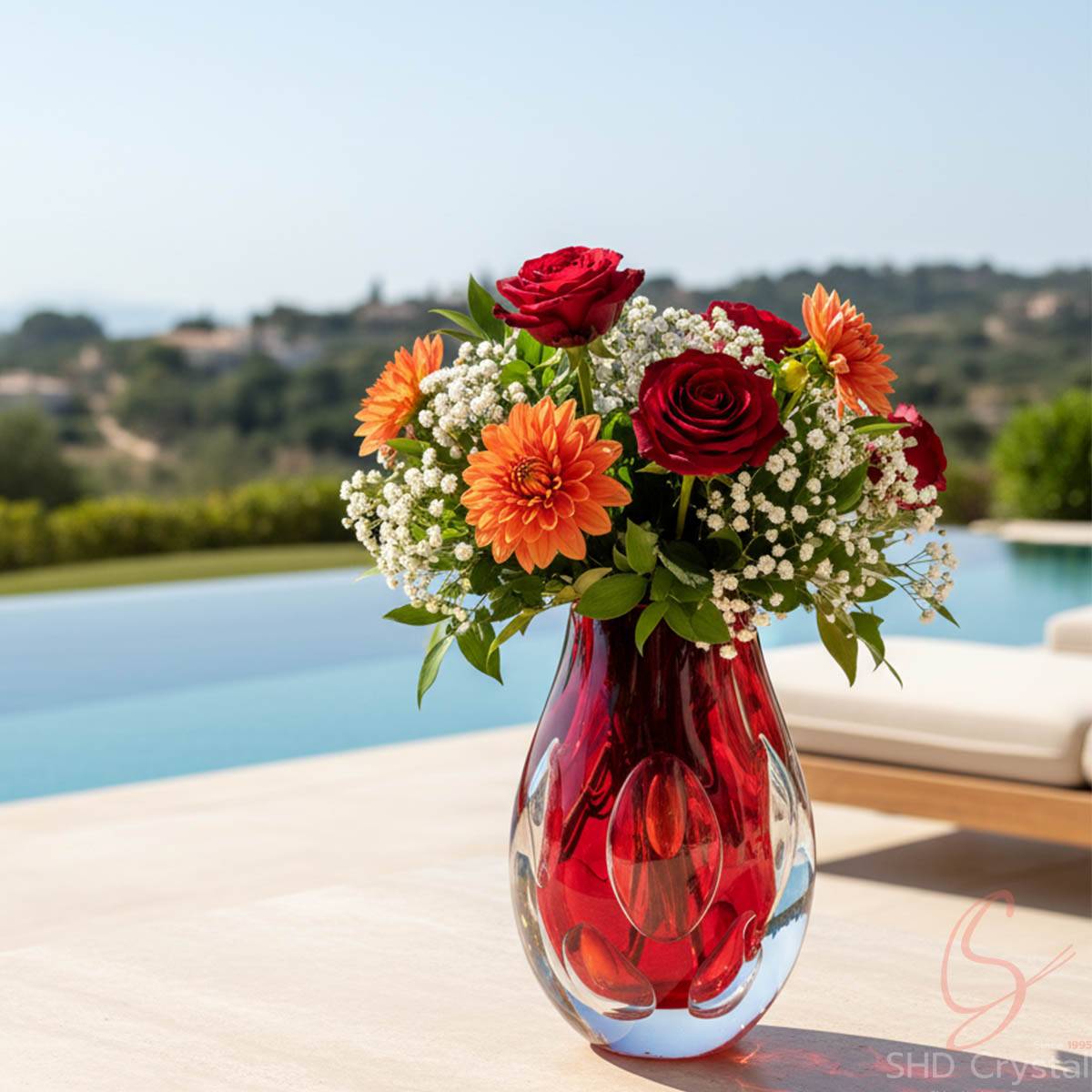
Blogpost keywords: hand blown red crystal vase OEM, layered red art glass, durable decorative vase production
In decorative interiors, red glass rarely behaves quietly. Even under soft lighting, deep red crystal immediately introduces warmth, contrast, and visual focus into a space. This is one reason premium hospitality projects, boutique retailers, and decorative glass collections continue investing in hand blown red crystal vase OEM programs despite changing interior trends.
Unlike highly reflective clear crystal, red blown glass creates atmosphere through tonal depth and controlled diffusion. The object does not depend entirely on sharp reflections to feel premium. Instead, the visual strength comes from layered color density, sculptural silhouette, and the way the material absorbs and softens surrounding light.
For decorative programs intended for repeated handling and long-term placement, this behavior offers practical advantages as well as visual impact.
Layered Red Art Glass Produces More Stable Visual Depth
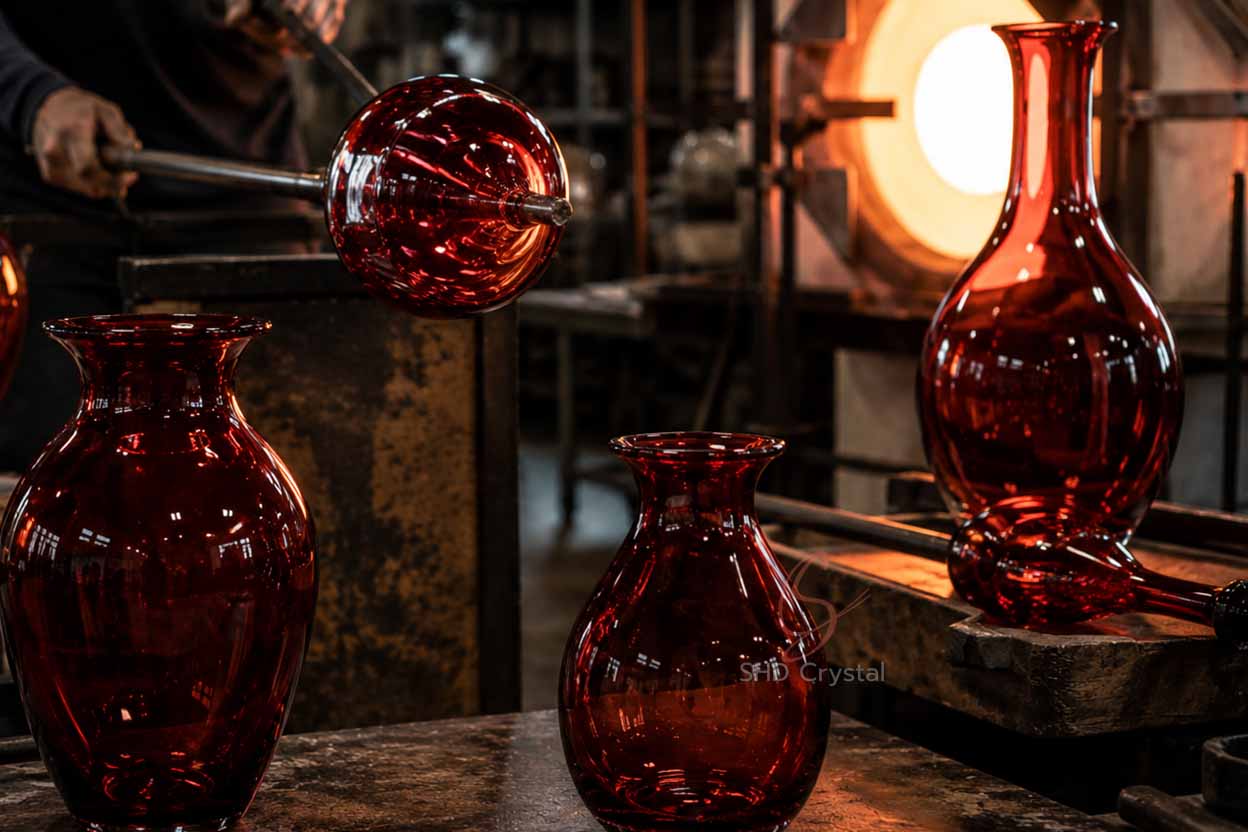
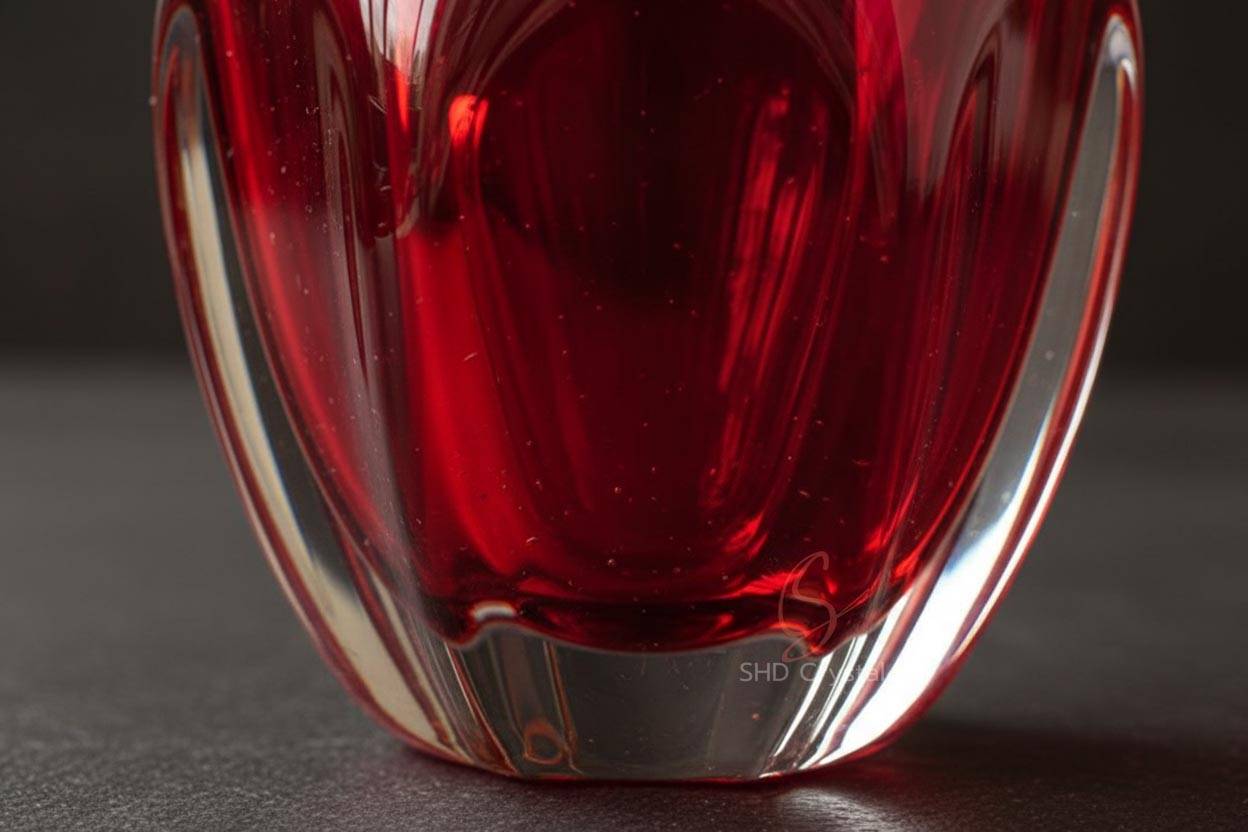
High-quality layered red art glass behaves differently from sprayed or surface-coated coloration. During hot-form production, red pigment is integrated directly into the molten glass mass or layered between transparent crystal gathers. As the vase expands during blowing, the color stretches naturally through the body, creating subtle variation between thinner and thicker sections of the form. This process gives the vase stronger optical depth and prevents the color from appearing flat or mechanically uniform.
Under daylight, the glass may appear brighter and more translucent near the rim. Under evening lighting, deeper sections often become richer and more saturated, creating a more dramatic sculptural presence.
Hand Blown Red Crystal Vase OEM Depends on Shape Balance
Red glass naturally carries stronger visual weight than lighter crystal tones. For this reason, successful hand blown red crystal vase OEM development depends heavily on contour balance and proportion control. Oversized lower bodies can quickly feel visually heavy if the neck transition or shoulder lift is too abrupt.
Many premium decorative collections therefore rely on softened curves, expanded midsections, and carefully controlled wall distribution to maintain elegance while preserving the richness of the red crystal itself. The shape must support the color rather than compete against it.
Durable Decorative Vase Production Requires Stable Surface Behavior
One reason red art glass performs well in hospitality and decorative environments is its forgiving surface behavior. Unlike ultra-clear crystal, where fingerprints, dust, or light residue become highly visible, deeper red glass naturally softens minor surface traces through color density and diffused reflection. This allows the vase to maintain a cleaner appearance during repeated repositioning or daily maintenance. For this reason, durable decorative vase production has become increasingly relevant for:
-hospitality interiors
-lounge environments
-decorative tabletop programs
-high-contact public spaces
where objects are frequently handled rather than permanently staged.
Hot-Worked Blowing Creates More Natural Optical Movement
Hand-blown production also contributes strongly to the final visual effect. As artisans rotate and expand the molten glass, internal color layers stretch unevenly through the body of the vase. These small variations create subtle movement within the material itself, preventing the red crystal from appearing static or overly industrial.
This is one reason handcrafted red glass often feels more atmospheric than mechanically produced colored glassware. Slight wall transitions and organic contour variation help the vase respond more dynamically under changing lighting conditions.
Decorative Red Glass Works Especially Well in Hospitality Spaces
Red blown crystal performs particularly well in interiors that use warm ambient lighting. Restaurants, cocktail lounges, hotel lobbies, and luxury hospitality spaces often rely on deeper tones to create intimacy and visual richness. Under these conditions, layered red art glass interacts naturally with candlelight, wood textures, brass finishes, and dark architectural materials. The vase contributes warmth and presence without requiring excessive decorative detail.
Conclusion
A refined hand blown red crystal vase OEM program combines sculptural proportion, layered color integration, and stable handcrafted glass behavior to create decorative objects with stronger long-term visual impact. Through carefully developed layered red art glass and disciplined durable decorative vase production, red crystal vases achieve both atmospheric richness and practical usability across hospitality and interior environments.
Supporting Hand Blown Red Crystal Vase Development
At SHD Crystal, decorative red crystal vase production combines artisan hand blowing, layered color fusion, hot-form contour shaping, optical polishing, and export-oriented packaging engineering for premium decorative collections. For brands developing hand blown red crystal vase OEM programs, our team supports scalable handcrafted production while maintaining rich color depth, balanced sculptural form, and stable decorative consistency.