
Blogpost Keywords: cyan glass vase OEM, image-consistent glass decor, catalog-ready decorative OEM
Cyan is one of the hardest glass colors to produce accurately because it sits between blue and green on the absorption spectrum. A cyan glass vase OEM manufacturer must balance cobalt ions, which produce blue, against copper or chromium ions, which produce green. The margin between a true cyan and a teal or sky-blue result is measured in fractions of a percent.
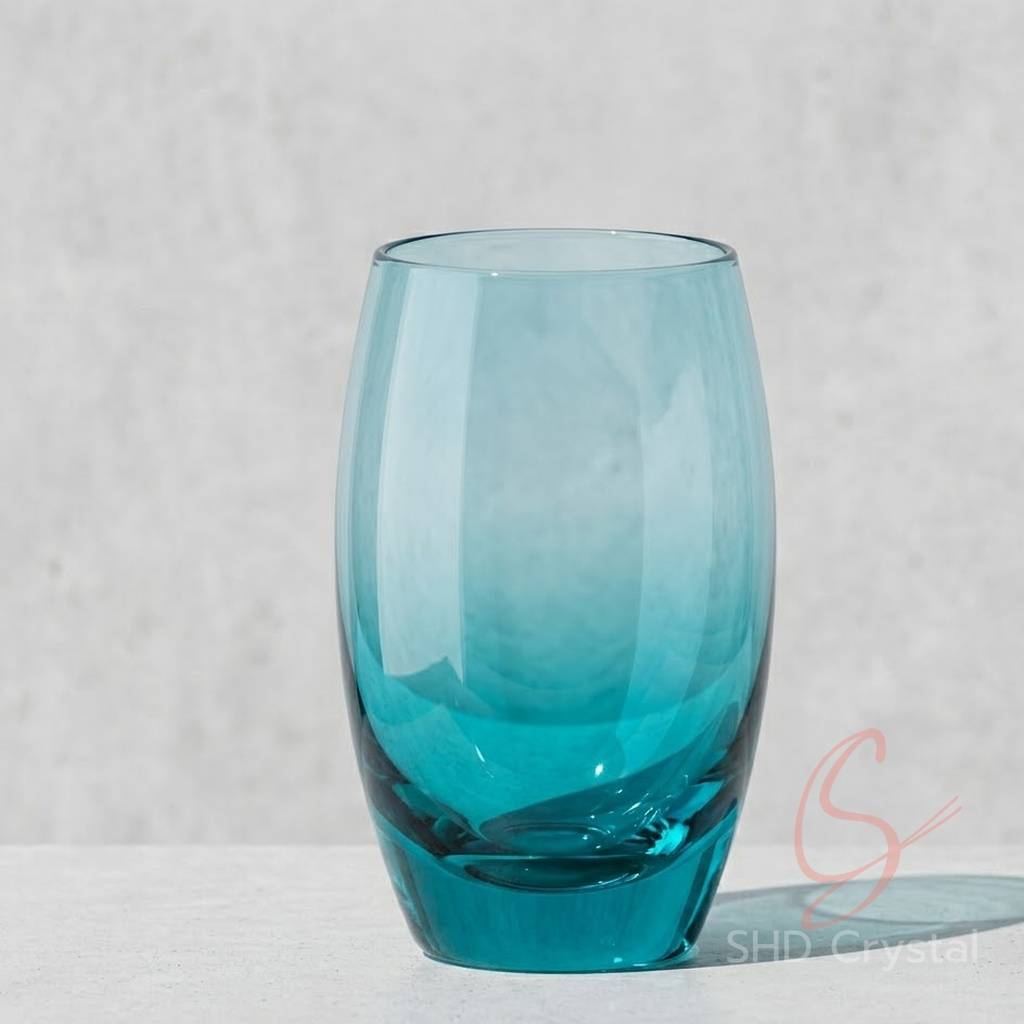
This precision requirement is what separates a well-crafted cyan glass vase OEM product from mass-produced alternatives. The difference is visible not just to the trained eye, but to any camera or spectrophotometer. Luminous cyan that holds its intended hue under every light source is the result of deliberate chemical engineering, not artistic intuition.
The Cobalt-Copper Ratio That Defines Cyan
Pure cobalt oxide in a soda-lime glass batch produces a deep blue that absorbs strongly in the orange and red wavelengths. To shift that blue toward cyan, manufacturers introduce copper oxide, which absorbs in the red end of the spectrum and transmits blue-green light. The resulting cyan glass vase OEM color profile depends on getting this ratio right.
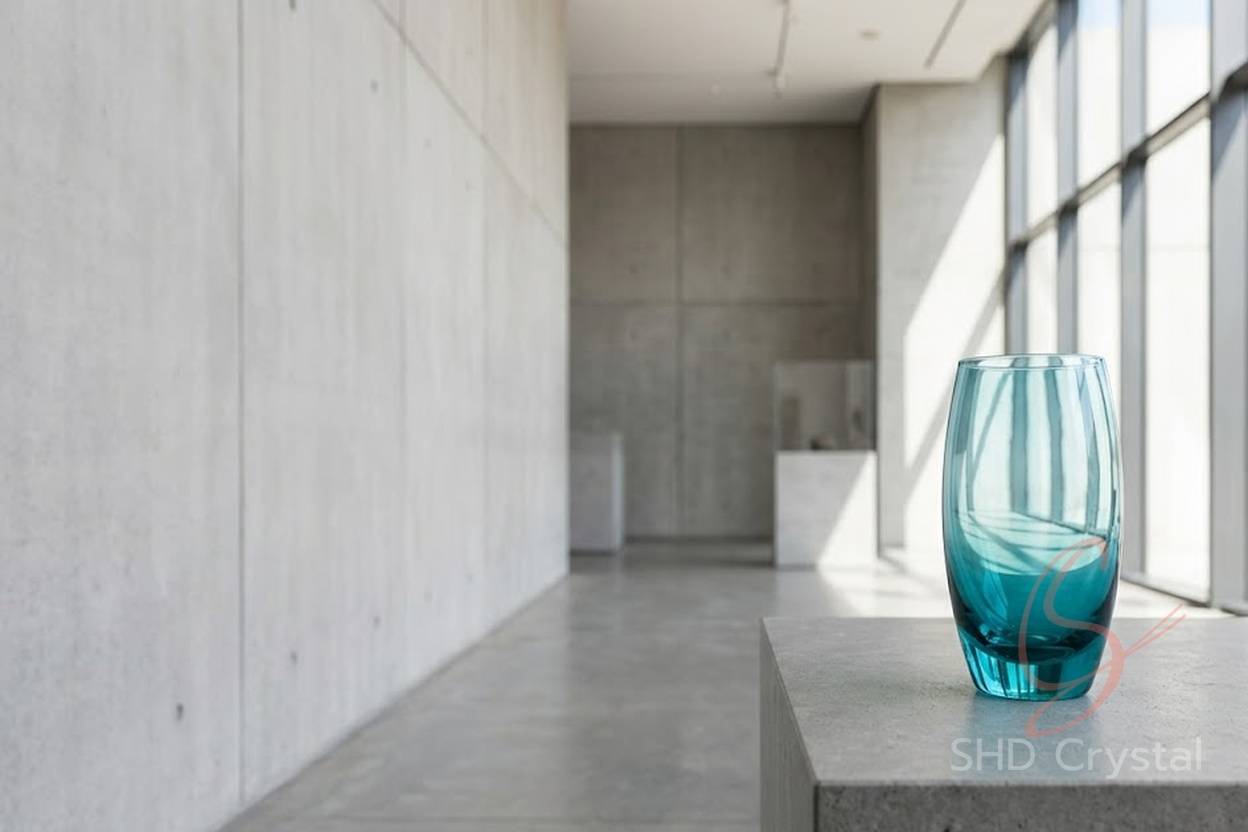
A typical starting point is roughly three parts cobalt to one part copper by weight, but this shifts depending on the base glass composition. Lead crystal, borosilicate, and standard soda-lime each interact differently with the same colorant ratio. A serious cyan glass vase OEM supplier tests and calibrates for each glass type separately.
Small adjustments produce noticeable results. Adding more copper pushes the tone toward a brighter turquoise. Reducing it keeps the cyan deeper and more saturated. The target is always defined by an approved physical sample, not a digital color value.
Furnace Atmosphere and Oxidation State Control
The oxidation state of the furnace atmosphere directly affects how copper behaves in the melt. Under oxidizing conditions, copper exists primarily as Cu2+, producing the characteristic blue-green of cyan glass. Under reducing conditions, copper shifts toward Cu+ or even metallic copper, which changes the color toward amber or red.
A cyan glass vase OEM production run must maintain consistent oxidation throughout the melt cycle. This means monitoring oxygen levels in the furnace, controlling the fuel-to-air ratio, and timing the colorant addition so it integrates before the atmosphere shifts.
This is where image-consistent glass decor begins — not at the quality inspection stage, but at the furnace control panel. Without stable oxidation, no amount of post-production sorting can guarantee color consistency.
Thickness Mapping and Color Density Distribution
Cyan glass shows a dramatic thickness-to-color relationship. A wall that is four millimeters thick will appear significantly darker than a rim that is two millimeters thick. For a catalog-ready decorative OEM program, this gradient must be mapped and controlled.
A well-crafted cyan glass vase OEM design specifies a target thickness profile — the thickest point, the thinnest point, and the transition between them. This profile determines the visual gradient from base to rim. Manufacturers use it to adjust both the colorant concentration and the forming process.
The goal is a luminous appearance where the thickest sections show deep, saturated cyan while the thinnest edges glow with a lighter, almost ethereal tone. This gradient is a signature of quality cyan glass vase OEM production.
Spectrophotometric Validation Before Shipping
Final quality control for cyan glass vase OEM products should include spectrophotometric measurement against the approved standard. The dominant wavelength, chromaticity coordinates, and lightness value are all recorded and compared to tolerance limits.
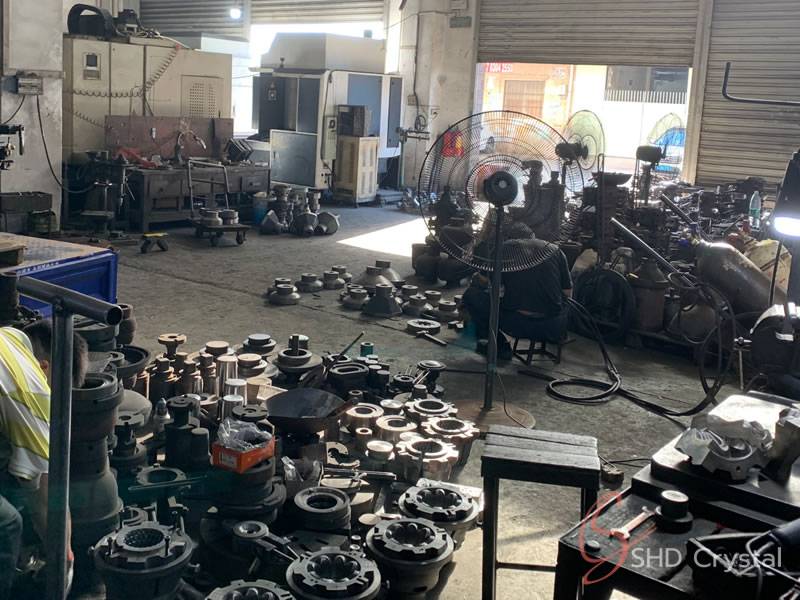
For image-consistent glass decor applications, the tolerance is typically within two Delta E units of the reference. Any batch that exceeds this threshold is sorted or reworked before shipping. This step ensures that every unit in a catalog-ready decorative OEM order matches the approved sample under standardized lighting.
Buyers should request these measurements as part of the delivery documentation. A supplier who provides them demonstrates a commitment to measurable quality rather than subjective visual approval.
The Takeaway
A cyan glass vase OEM product achieves luminous, consistent color through precise cobalt-copper ratio control, stable furnace oxidation, and spectrophotometric validation. These manufacturing disciplines transform a difficult color into a reliable decorative specification.
For Buyers Sourcing Cyan Glass Vase OEM Products
Request spectrophotometric batch reports with every delivery. Specify your target glass type — soda-lime, crystal, or borosilicate — since colorant ratios differ for each. Approve a physical sample under your actual lighting conditions, not showroom lights. A cyan glass vase OEM manufacturer who controls furnace oxidation and measures color density will deliver image-consistent glass decor that meets catalog-ready decorative OEM standards.