
Blogpost Keywords: purple crystal vase OEM, long-term crystal appearance, time-resilient decorative OEM
Purple crystal vase OEM programs face a specific material challenge: purple colorants can degrade under ultraviolet exposure. The phenomenon, called solarization, causes certain purple glasses to develop a brownish tint after prolonged sunlight exposure. Not all purple crystal is equally vulnerable, but buyers who do not understand this risk may receive products that look dramatically different within months of installation.
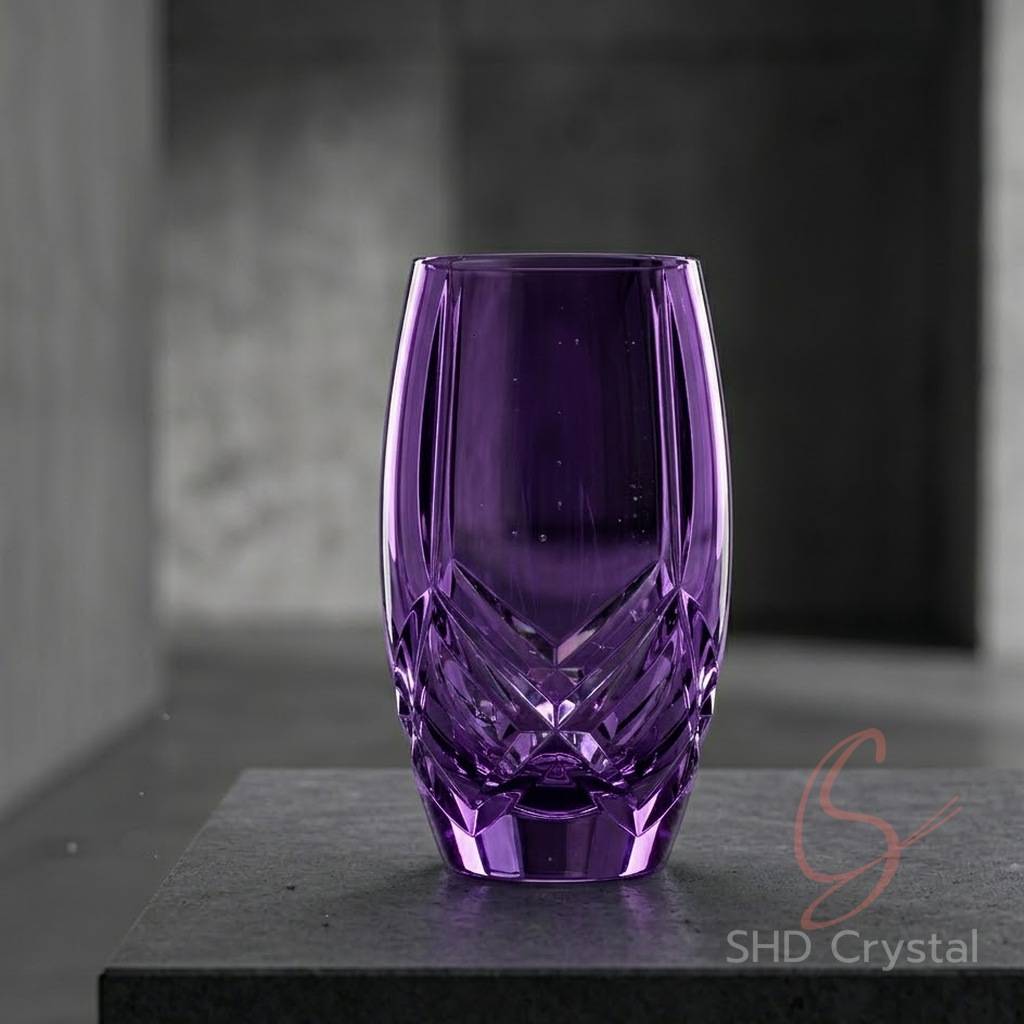
A radiant purple crystal vase OEM specification begins with colorant selection. The difference between a purple that fades and a purple that endures is measured in the chemistry of the colorant system — manganese, cobalt-selenium, or neodymium — each with different UV stability profiles.
Manganese Purple and the Solarization Risk
Manganese oxide has been used to produce purple glass for centuries. It is inexpensive, produces a rich purple tone, and works well in standard soda-lime glass formulations. However, manganese-based purple is highly susceptible to solarization. UV radiation causes the manganese ions to change oxidation state, shifting the color from purple to brown over time.
A purple crystal vase OEM product made with manganese colorants should never be specified for sunlit locations. If a buyer plans to install the piece near a window, under skylights, or in any area with significant UV exposure, manganese purple will not maintain its intended appearance.
For time-resilient decorative OEM programs, the question is not whether manganese purple is beautiful — it is — but whether it is appropriate for the intended installation environment.
Cobalt-Selenium: The UV-Stable Alternative
Cobalt-selenium colorants produce a purple that is resistant to solarization. The cobalt provides the blue component while selenium adds the red, and together they create a purple tone that does not shift under UV exposure. A purple crystal vase OEM program using cobalt-selenium colorants maintains its long-term crystal appearance regardless of lighting conditions.
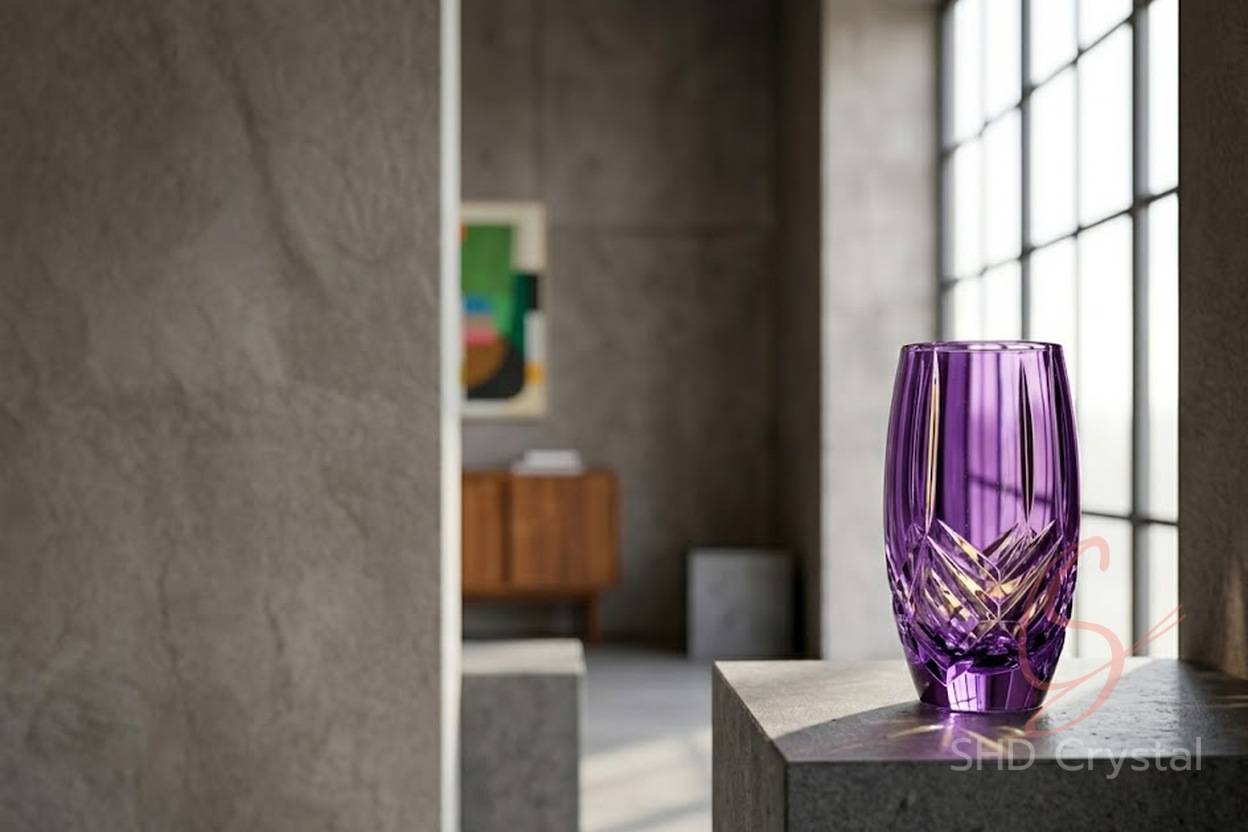
The trade-off is cost. Cobalt-selenium colorants are more expensive than manganese, and the formulation requires tighter process control. But for installations where color stability matters, the investment is justified by the elimination of replacement and warranty claims.
A well-crafted purple crystal vase OEM supplier should disclose the colorant system used and provide UV exposure testing data. Buyers should request this information before approving the specification.
Neodymium Purple: The Premium Option
Neodymium oxide produces a unique purple that shifts between pink and violet depending on the light source. This dichroic behavior is highly desirable in high-end decorative applications because it creates a dynamic visual experience — the color changes as the lighting changes, but it does not degrade.
Neodymium purple is inherently UV-stable. The color shift that buyers see under different lighting is a designed feature, not a degradation. A purple crystal vase OEM product using neodymium colorants offers both longevity and visual interest.
For time-resilient decorative OEM programs targeting luxury hospitality or high-end residential markets, neodymium purple provides a premium option that distinguishes the collection from standard manganese-based alternatives.
Testing and Verification Protocols
A responsible purple crystal vase OEM manufacturer should conduct accelerated UV testing on all purple colorant formulations before offering them to buyers. This involves exposing samples to concentrated UV radiation and measuring color change over time using spectrophotometric analysis.
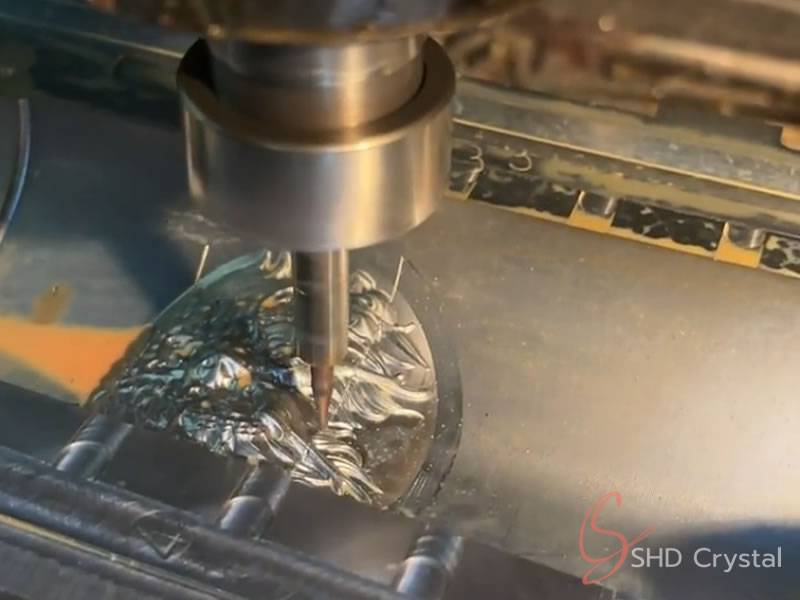
The results determine whether the colorant system meets the long-term crystal appearance standards required for the intended application. Samples that show significant color shift after UV exposure should be restricted to indoor, non-sunlit applications only.
Buyers should request UV testing documentation as part of their quality assurance process. A time-resilient decorative OEM supplier who provides this data demonstrates commitment to product performance beyond the point of sale.
The Takeaway
A purple crystal vase OEM program achieves long-term color stability through UV-resistant colorant selection. By choosing cobalt-selenium or neodymium over manganese for sunlit applications, manufacturers deliver radiant purple crystal that maintains its appearance for years.
For Buyers Sourcing Purple Crystal Vase OEM Products
Ask which colorant system is used for your purple crystal specification. For sunlit locations, require cobalt-selenium or neodymium — never manganese. Request UV exposure testing data before approving production. A purple crystal vase OEM supplier who understands long-term crystal appearance and time-resilient decorative OEM will provide transparent colorant documentation and environment-appropriate recommendations.