
Blogpost Keywords: crystal glass cup manufacturers, custom glass cup OEM, crystal drinking cups
Crystal glass cup manufacturers produce drinkware that bridges the gap between everyday functionality and elevated presentation. The crystal formulation — whether leaded for maximum brilliance or lead-free for commercial durability — determines how light interacts with the glass, how the cup feels in hand, and how it performs through repeated washing cycles.
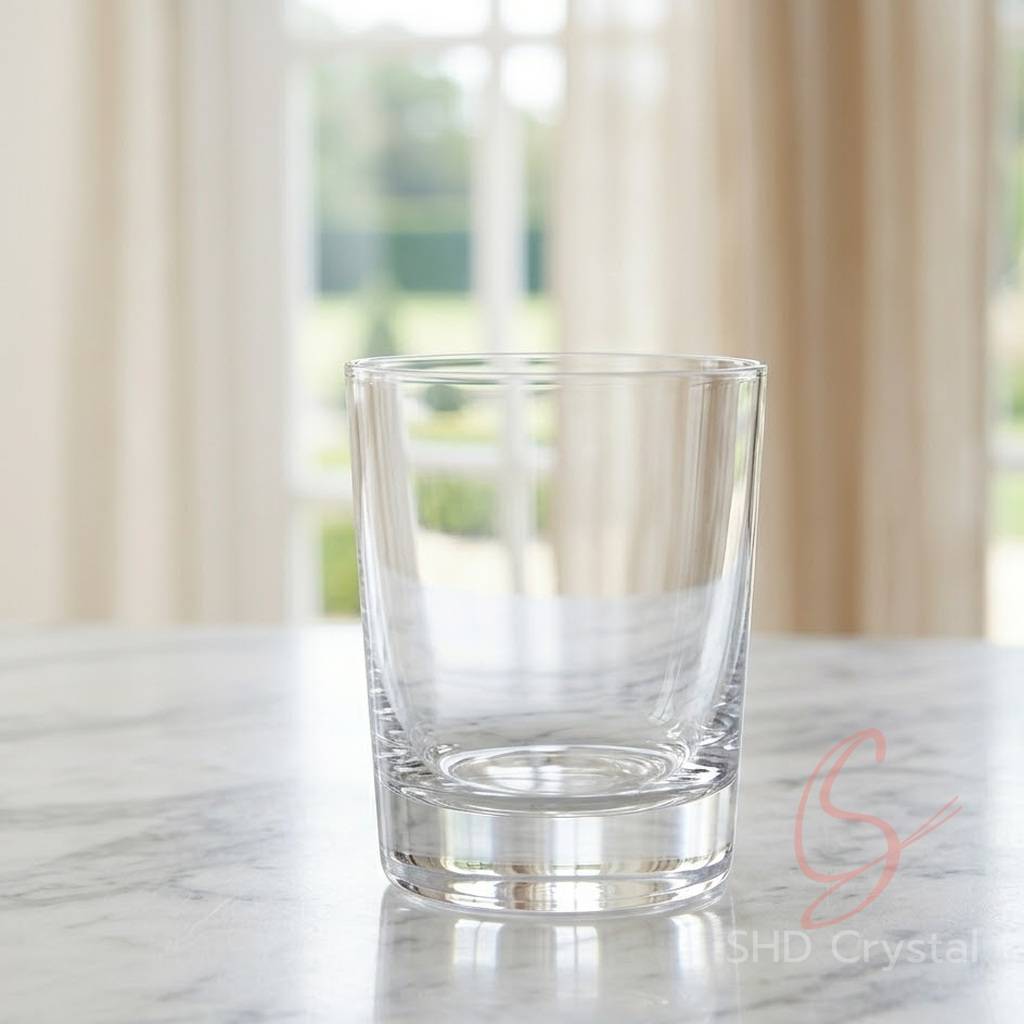
For hospitality operators, retail brands, and corporate gifting programs, selecting among crystal glass cup manufacturers requires evaluating not just the visual quality of individual pieces, but the consistency of production across orders, the feasibility of customization through OEM programs, and the durability of crystal drinking cups in real-world use.
Material Selection for Commercial Environments
Crystal glass cup manufacturers serving restaurants, hotels, and event venues typically recommend lead-free crystal formulations. These materials provide high optical clarity and a refined ring when tapped, while resisting the chipping and thermal shock that can affect traditional leaded crystal drinking cups in high-turnover environments.
Custom glass cup OEM programs from crystal glass cup manufacturers allow buyers to specify glass thickness, rim treatment, and base diameter to match their operational needs. A cup designed for a fine-dining restaurant may prioritize thin rims and lighter weight for elegance, while a hotel breakfast program may specify thicker walls for durability with crystal drinking cups.
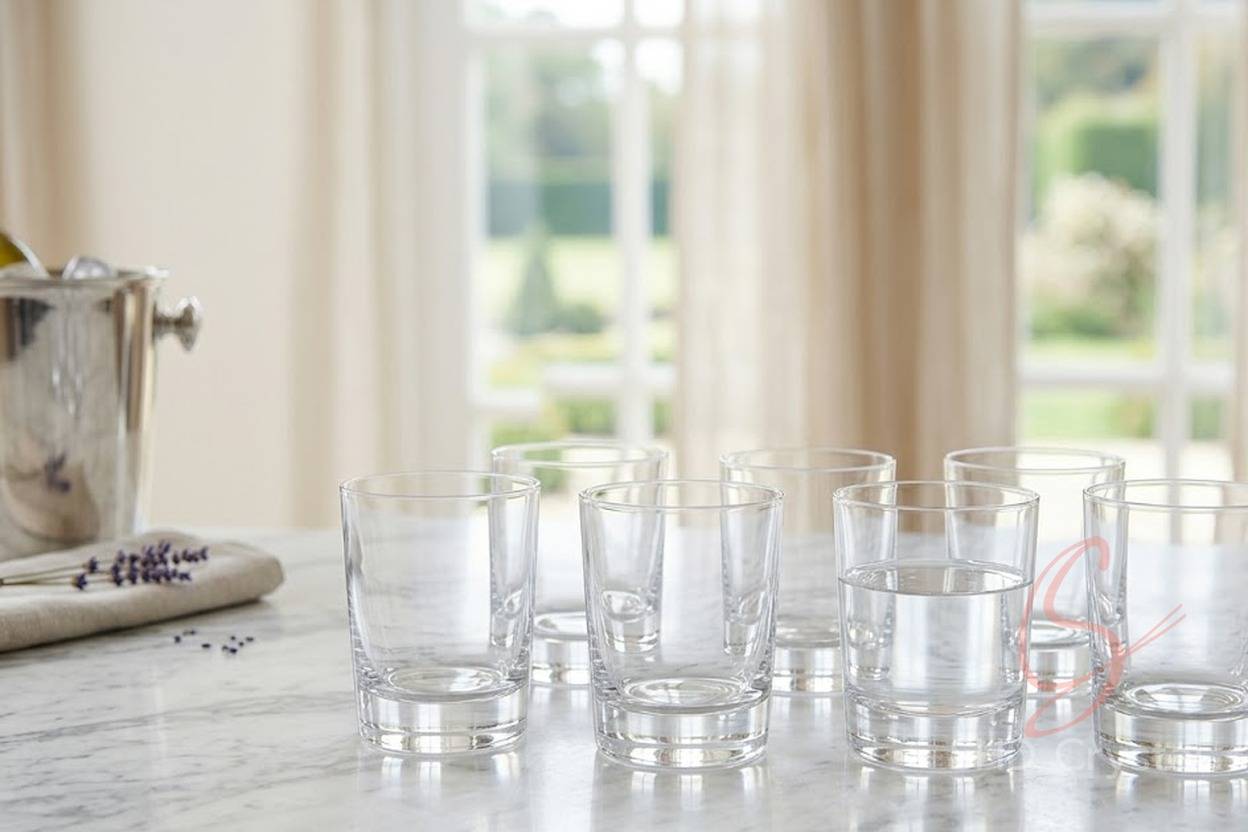
The forming method also matters. Pressed crystal cups from crystal glass cup manufacturers are more consistent in thickness and dimension, making them suitable for stacked storage and automated dishwashing. Hand-blown options offer more organic character but require more careful handling — a consideration for any custom glass cup OEM program targeting commercial use.
Customization Options Through Glass Cup OEM
Crystal glass cup manufacturers with OEM capabilities offer several customization paths: glass tint or color formulation, surface texture (smooth, faceted, or ribbed), rim finishing (fire-polished or ground), and base engraving. Each option affects both the aesthetic and the functional performance of crystal drinking cups.
Volume-Based Customization Tiers
Not all customization options are available at every order quantity. Crystal glass cup manufacturers typically structure their OEM capabilities in tiers: low-volume minimums may limit buyers to stock shapes with standard rim finishes and simple etching, while high-volume programs unlock custom mold creation, proprietary tint formulations, and multi-surface texturing. A custom glass cup OEM buyer should clarify upfront which options require dedicated tooling and what the associated amortization costs will be. For crystal drinking cups with complex features — such as faceted walls, colored glass, or engraved branding — the mold investment may be justified by multi-year order commitments. Conversely, buyers seeking only laser-etched logos on a stock cup shape can access customization without heavy upfront tooling. Crystal glass cup manufacturers that provide clear option-tier documentation help buyers avoid over-investing in features their volume does not require.
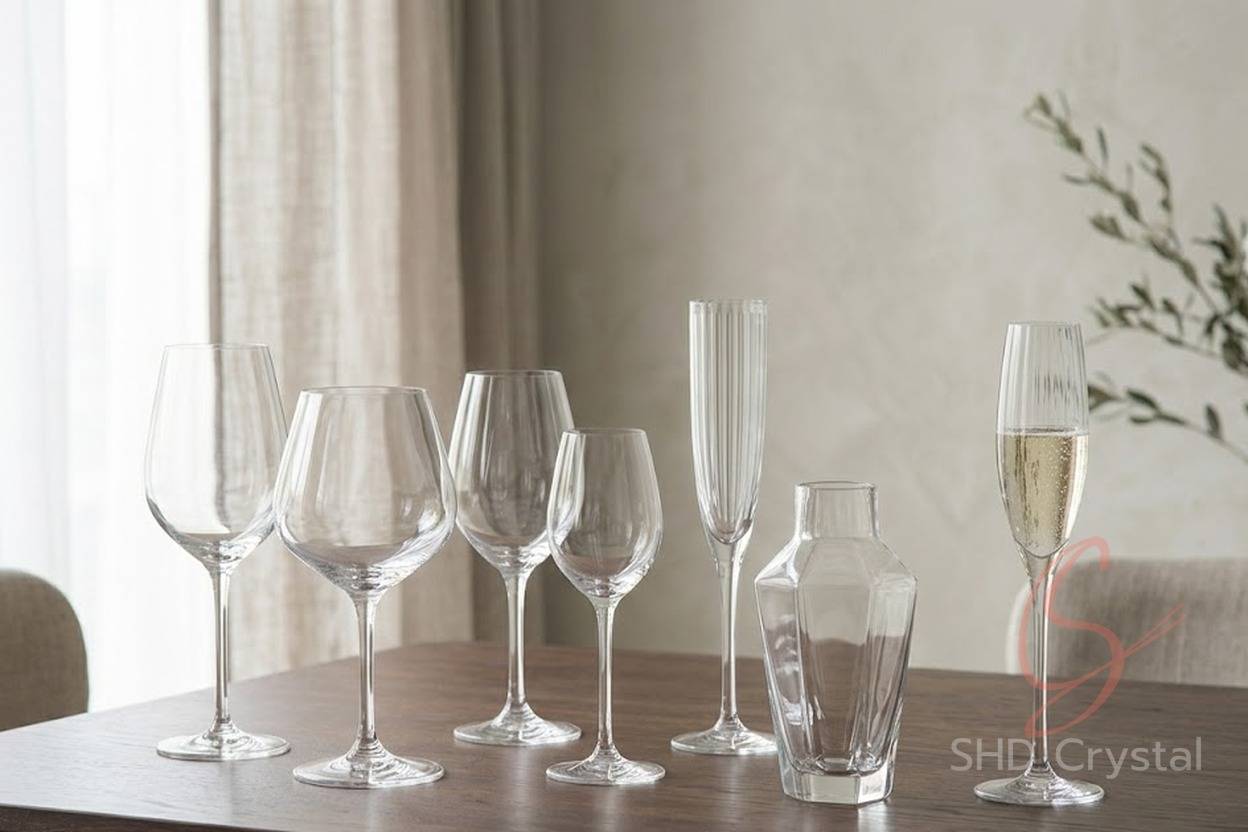
A custom glass cup OEM program should include sampling at the target production specifications, not just prototype quality. Crystal glass cup manufacturers that invest in production-representative samples help buyers evaluate weight, balance, and clarity before committing to volume orders of crystal drinking cups.
The Takeaway
Crystal glass cup manufacturers that offer both lead-free material options and flexible OEM programs deliver the most practical value for commercial buyers. Crystal drinking cups and custom glass cup OEM selections should prioritize material durability, dimensional consistency, and reorder reliability alongside visual appeal.
For Buyers Evaluating Crystal Glass Cup Manufacturers
Request lead-free crystal specifications if commercial dishwashing is required. Ask crystal glass cup manufacturers for weight and dimension tolerances before sampling. Evaluate custom glass cup OEM options based on production-representative samples, not prototypes. Confirm that crystal drinking cups meet the thermal and impact resistance standards of your operational environment.