
Blogpost Keywords: crystal wine glass OEM, advanced crystal forming techniques, refined stem balance
Crystal wine glass OEM production is where material science meets craft tradition. The difference between a functional wine glass and a refined one lies in details that most consumers notice subconsciously — the weight distribution between bowl and stem, the smoothness of the rim against the lip, the way light refracts through the crystal when the glass is held to ambient light.
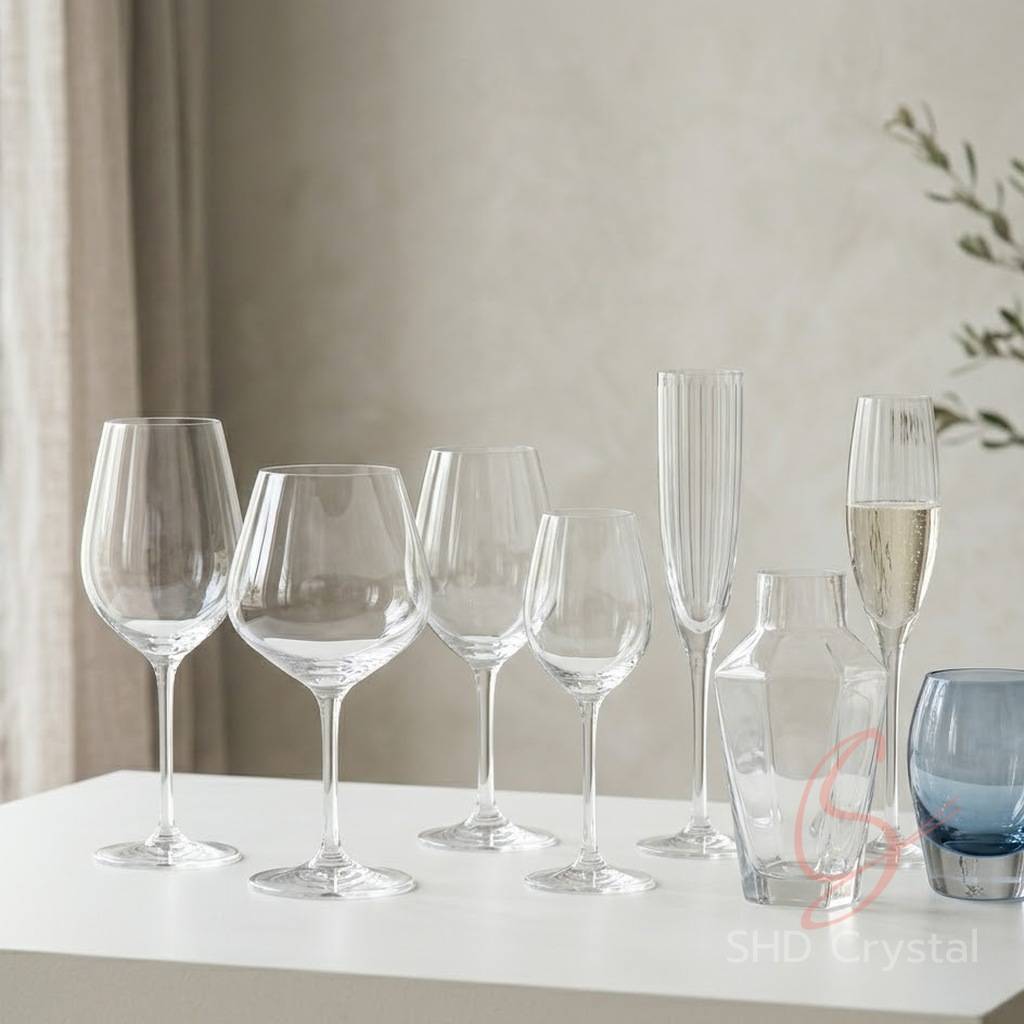
An OEM program for crystal wine glasses connects these quality details to brand-level consistency. Advanced crystal forming techniques ensure that every piece in a production run matches the reference sample in weight, dimension, and optical clarity. Refined stem balance transforms a drinking vessel into an experience that elevates the wine it holds.
Material Purity and Optical Clarity
The foundation of any crystal wine glass OEM program is the raw material formulation. High-purity silica, controlled amounts of lead oxide or lead-free alternatives, and carefully managed fluxing agents create a glass structure that maximizes light transmission. Advanced crystal forming techniques begin with batch composition — no amount of post-forming refinement can correct impurities locked into the glass matrix.
Crystal wine glass OEM manufacturers control material purity through documented supplier specifications, incoming material testing, and furnace atmosphere management. The result is glass with consistent clarity across production runs, ensuring that every batch of crystal wine glasses with refined stem balance matches the original approved sample.
Refractive index is the metric that separates crystal from standard glass. A crystal wine glass OEM program using high-refractive-index formulations produces glassware that displays the wine’s color with greater depth and luminosity. This optical performance is a key element of the refined stem balance experience — the glass should enhance, not distort, the visual qualities of the wine.
Stem Balance and Rim Finishing
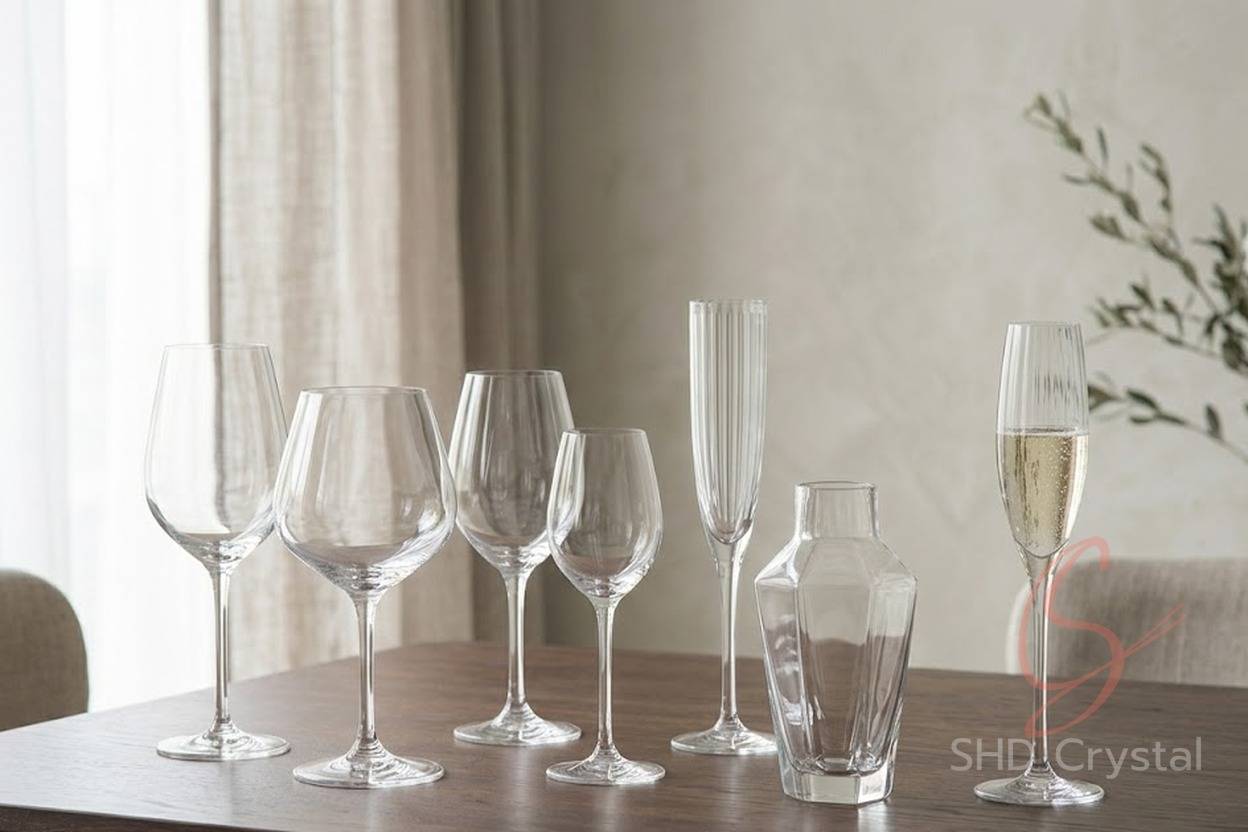
Refined stem balance in a crystal wine glass is achieved through precise weight distribution between the bowl, stem, and base. Advanced crystal forming techniques control this through calibrated glass volume in each section during the blowing or pressing process. A well-balanced stem feels stable in hand while directing attention to the bowl — where the wine lives.
Base Weight and Table Stability
The bowl and stem often receive the most design attention, but the base is equally critical for refined stem balance. A crystal wine glass with a bowl that is too heavy for its base will tip easily on a table or during swirling. Advanced crystal forming techniques control base thickness and diameter to create a stable footprint without adding bulk that distracts from the glass silhouette. The base must also be perfectly flat — even a slight convex or concave warp causes rocking. Crystal wine glass OEM programs use cooling schedules and post-forming inspection to verify that each base sits flush on a flat surface. This stability is especially important in hospitality environments where tables may be bumped and glasses are set down repeatedly throughout a meal.
Rim finishing defines the final tactile interaction between the drinker and the glass. Crystal wine glass OEM programs offer fire-polished rims (smooth and rounded through flame treatment) or precision-ground rims (cut to a thin, even edge). Both approaches require skilled craftsmanship, and the choice depends on the desired drinking experience for each refined stem balance design.
The Takeaway
Crystal wine glass OEM value comes from the combination of material purity, advanced crystal forming techniques, and refined stem balance. These elements work together to produce glassware that performs functionally while elevating the sensory experience of the wine it serves.
For Buyers Sourcing Crystal Wine Glass OEM
Evaluate crystal wine glass OEM samples for weight distribution between bowl and stem — this defines refined stem balance. Request material composition documentation to verify glass formulation. Confirm that advanced crystal forming techniques include post-forming quality inspection for rim finish and dimensional accuracy. Treat OEM craftsmanship as a brand differentiator, not just a production method.