Blogpost keywords: lead-free crystal spirit glass, premium crystal barware, handcrafted spirit glasses
In contemporary hospitality and beverage service environments, glassware is no longer treated as a secondary accessory. The shape, weight, clarity, and tactile balance of a spirit glass now contribute directly to how whiskey, cognac, aged rum, tequila, and other distilled beverages are perceived during presentation and tasting. This shift is one reason lead-free crystal spirit glass has become increasingly important across luxury bars, tasting programs, private hospitality spaces, and high-end dining environments.
Unlike ordinary soda-lime drinkware, crystal spirit glasses create a more refined interaction between light, liquid, and movement. The glass does not simply contain the beverage. It becomes part of the atmosphere surrounding the drinking ritual itself.
Lead-Free Crystal Spirit Glass Balances Clarity and Service Practicality
One reason hospitality programs continue choosing lead-free crystal spirit glass is the balance between optical refinement and operational practicality.
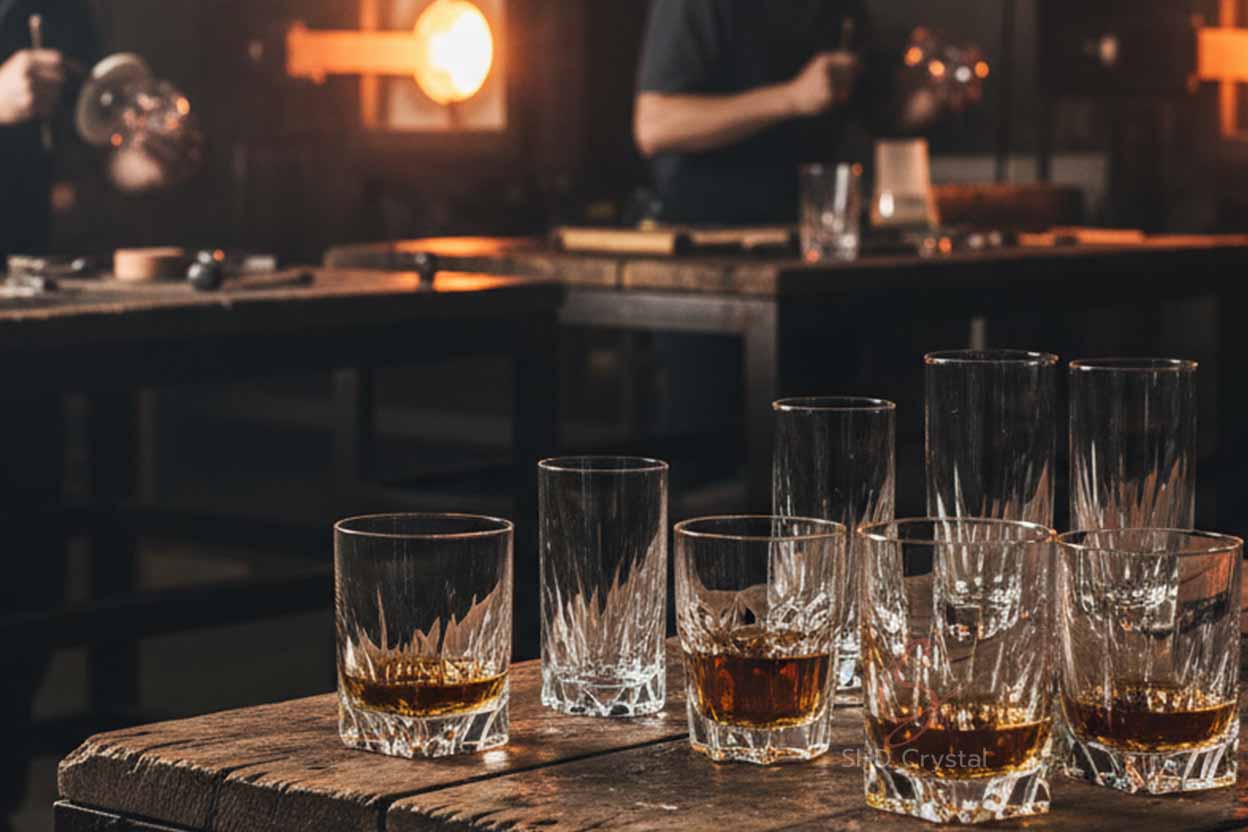
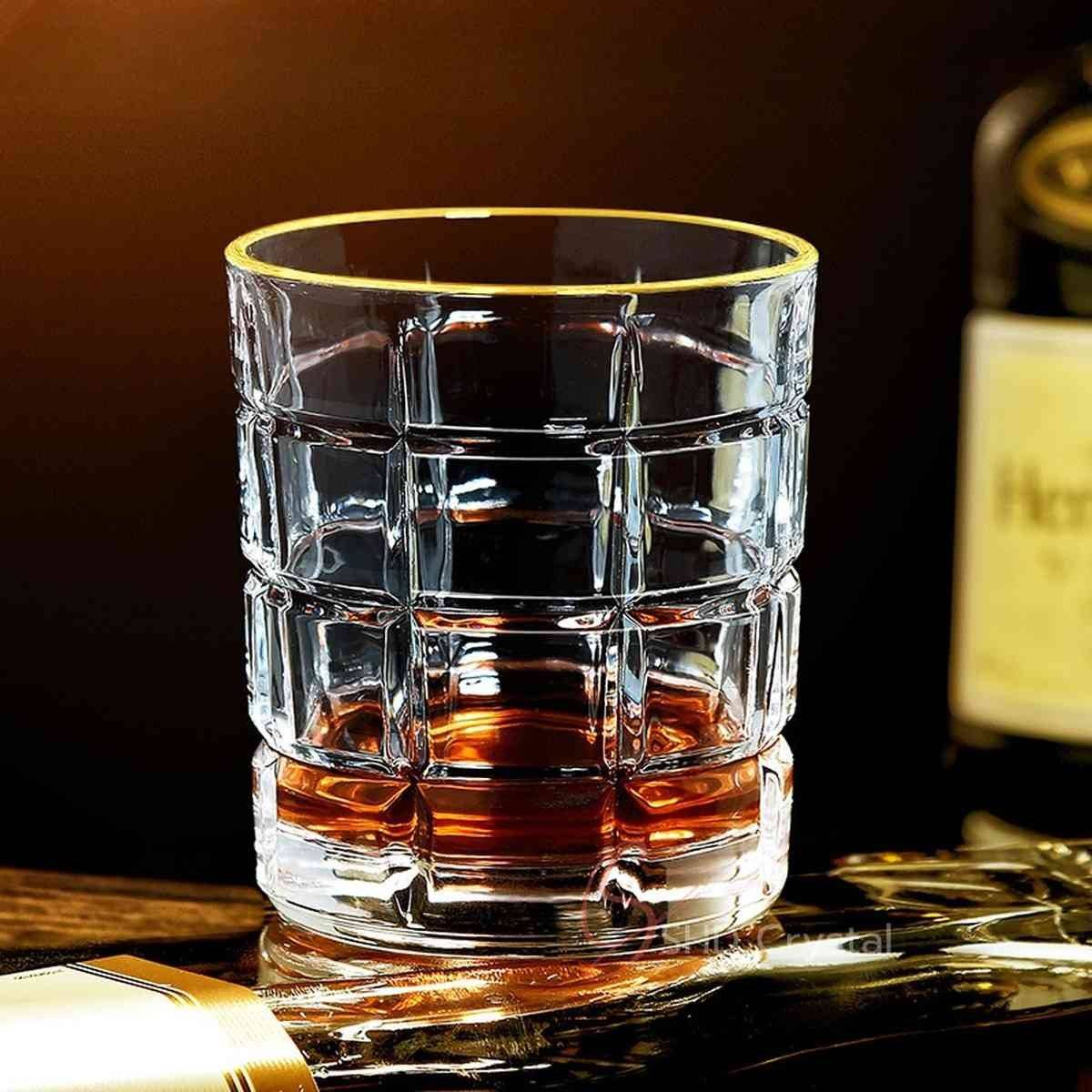
Modern lead-free crystal formulations maintain strong transparency and sharp reflection behavior while supporting stable performance under repeated service conditions. Under warm bar lighting, the material produces brighter highlights, deeper liquid visibility, and more controlled reflections than ordinary utility glassware.
At the same time, lead-free crystal remains suitable for hospitality deployment where repeated handling, washing cycles, and replacement consistency become important operational concerns.
Premium Crystal Barware Depends on Weight Distribution
A common misconception in spirit glass design is that heavier automatically means more luxurious. In reality, successful premium crystal barware depends on controlled weight distribution rather than excessive thickness. A spirit glass should feel grounded in hand without becoming bulky during extended service periods.
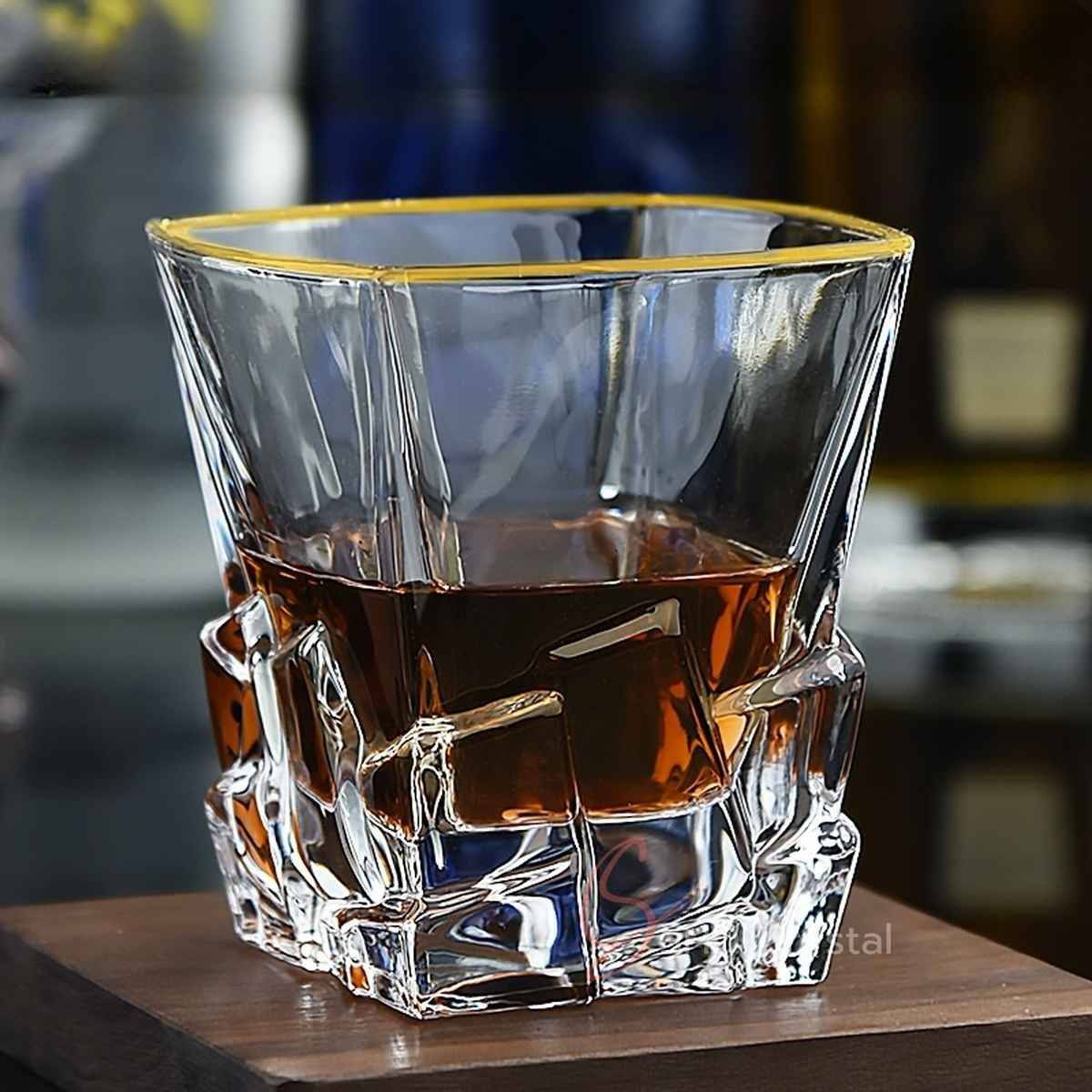
For whiskey tumblers and tasting glasses especially, the lower section often carries slightly more visual density to stabilize the glass while preserving refined handling balance near the rim. Small changes in wall thickness or base transition can significantly influence how the glass feels during pouring, swirling, or tasting.This tactile balance strongly affects perceived quality even before the beverage itself is consumed.
Handcrafted Spirit Glasses Create Stronger Optical Character
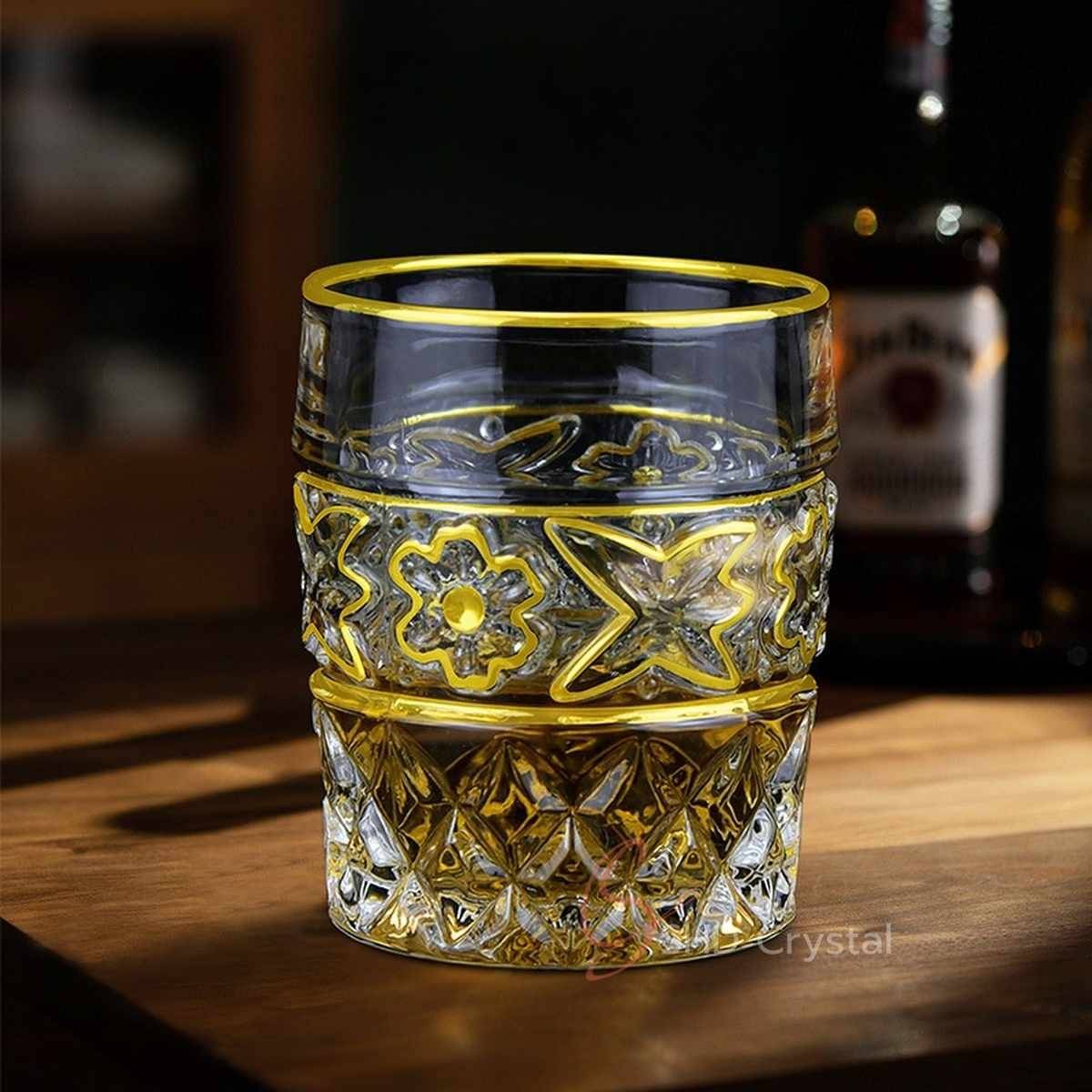
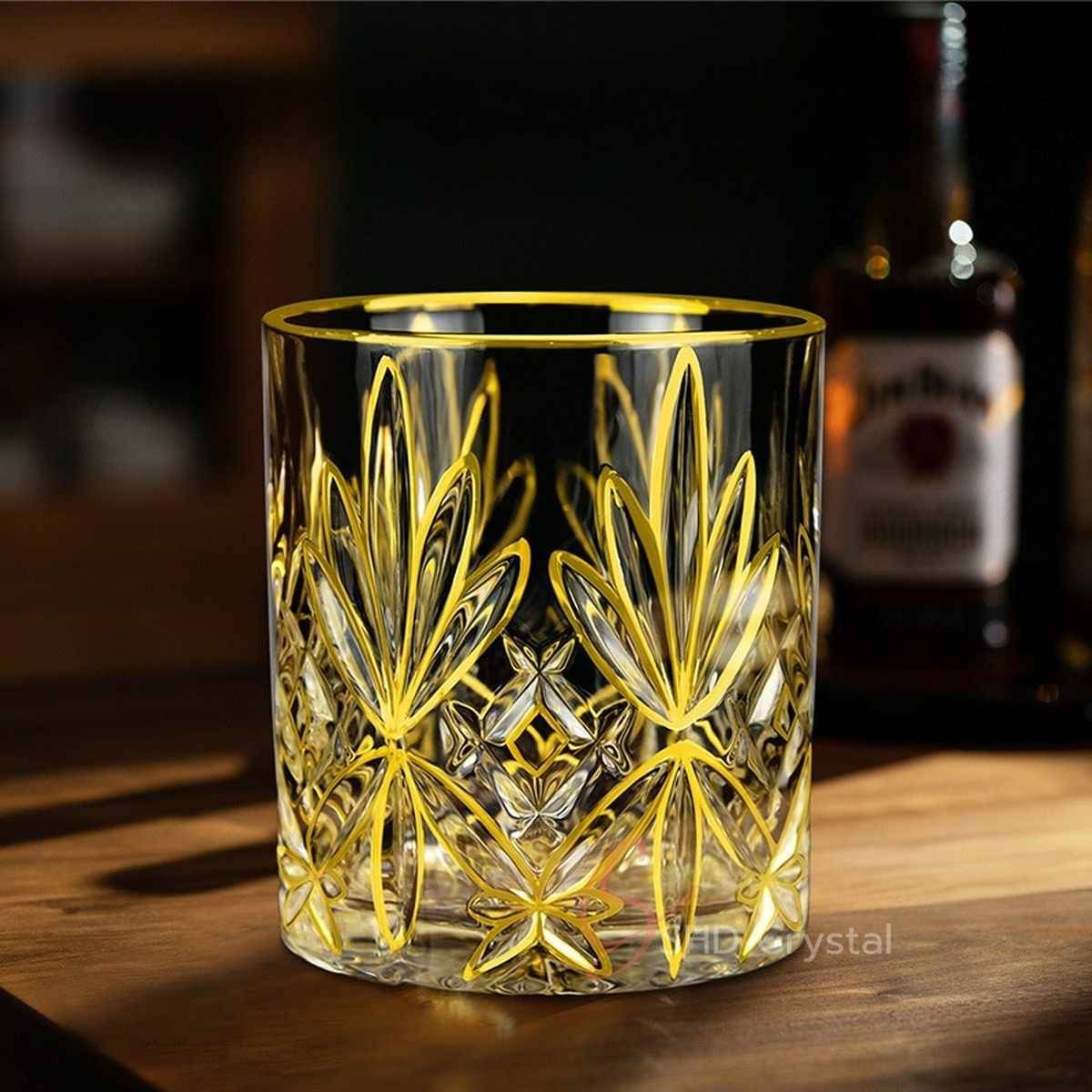
Although automated production supports consistency, many premium hospitality collections still favor handcrafted spirit glasses because handmade production creates softer optical movement and more natural contour transitions. Slight variation in wall behavior often allows reflections to feel more dynamic under hospitality lighting. This becomes especially noticeable in amber spirits where layered highlights interact continuously with the crystal surface.
In luxury bars and tasting environments, this subtle handcrafted character contributes to a more elevated drinking presentation without requiring excessive decorative engraving or heavy ornamentation.
Rim Refinement Changes the Drinking Experience
The rim is one of the most important yet overlooked elements in spirit glass production. A thick unfinished rim interrupts liquid flow and reduces tactile refinement during tasting. Thin polished rims create a smoother transition between beverage and palate while also improving visual elegance.
For this reason, high-end lead-free crystal spirit glass production usually involves controlled edge finishing and polishing refinement after forming. In hospitality environments, these small details strongly influence how sophisticated the final service feels.
Optical Clarity Enhances Beverage Presentation
Aged spirits rely heavily on visual perception. Color layering, viscosity movement, light diffusion, and liquid reflections all contribute to how whiskey, cognac, or rum is experienced before tasting begins. Well-produced premium crystal barware allows these characteristics to remain visually clear under both warm lounge lighting and brighter tasting environments. This optical transparency becomes especially valuable in hospitality programs where presentation quality directly shapes guest perception.
Durability and Consistency Matter in Hospitality Use
In hospitality environments, glassware must maintain visual consistency over extended service cycles.
Variations in rim diameter, wall thickness, or optical clarity become noticeable when multiple spirit glasses are presented together within the same tasting environment. Stable annealing and controlled finishing therefore remain essential throughout production.
Reliable handcrafted spirit glasses must balance artisanal visual character with dependable structural consistency suitable for repeated professional use.
Conclusion
A refined lead-free crystal spirit glass program combines optical clarity, balanced proportion, polished tactile refinement, and stable production quality to support elevated beverage presentation. Through carefully developed premium crystal barware and sophisticated handcrafted spirit glasses, modern spirit service becomes more immersive, visually layered, and operationally refined across hospitality environments.
Supporting Premium Hospitality Spirit Glass Production
At SHD Crystal, premium spirit glass production combines precision crystal forming, balanced weight distribution, optical polishing, hand-finished detailing, and hospitality-oriented packaging engineering for beverage service collections. For hospitality groups and beverage programs developing luxury lead-free crystal spirit glass collections, our team supports scalable OEM production while maintaining refined optical clarity and handcrafted presentation quality.