Blown glass dog figurines begin as a small gather of molten glass rather than a fully defined sculpture. The recognizable body, head, muzzle, ears, legs, and tail emerge gradually through blowing, reheating, tool shaping, and the attachment of additional hot glass.
Unlike cut crystal ornaments, which rely heavily on grinding and faceting after forming, a blown dog figurine receives most of its character while the material is still hot and workable. The glassblowing sculpture process therefore depends not only on the design, but also on the glassblower’s timing, heat control, and understanding of proportion.
Blown Glass Dog Figurines Begin With a Controlled Bubble
The first stage is gathering molten glass onto the end of a blowpipe. The amount of glass collected must correspond to the intended size, wall thickness, and overall weight of the figurine. The gather is rolled on a marver or shaped with wet wooden blocks to center the material. A small bubble is then introduced through the blowpipe.
For a vessel, this bubble may eventually become the full interior cavity. For a sculptural dog form, it acts as a controlled internal volume that allows the body to remain visually substantial without becoming unnecessarily heavy.
The bubble must stay centered. If it drifts toward one side, the body may develop uneven walls, an unstable posture, or a thin area that becomes vulnerable during later shaping.
Translating a Dog Design Into a Blowable Form
A drawing can contain details that are difficult to reproduce directly in hot glass. Before production begins, the design must be simplified into a form that can be built while the material remains above its working temperature.
The glassblower considers:
- The relationship between the head and torso
- Whether the pose is sitting, standing, or lying down
- The length and angle of the muzzle
- The size and position of the ears
- The distance between the legs
- The curve and support of the tail
- The location of the figurine‘s center of gravity
For blown glass dog figurines, compact poses are generally easier to control than designs with widely separated legs, extended tails, or unsupported thin features. This does not mean every blown dog must look abstract. For hand blown glass animal figurines, breed characteristics must be translated into a small number of clear visual cues that remain readable in glass.
Shaping the Main Body From Molten Glass
After the initial bubble is formed, the glassblower begins shaping the torso. In blown glass dog figurines, gravity naturally pulls the hot glass downward, while steady rotation of the blowpipe helps maintain balance and symmetry. Jacks, paddles, blocks, and other hand tools are then used to compress, lengthen, flatten, or round selected areas.
Additional air may be introduced gradually, but overinflation must be avoided. A bubble that becomes too large can create walls that are too thin to support later attachments. At this stage of the glassblowing sculpture process, the body is developed before the smaller features because it establishes the figurine’s scale, posture, and weight distribution. The neck may be narrowed, the chest brought forward, and the lower body flattened so the legs can be attached in a stable position.
Reheating Maintains Workability
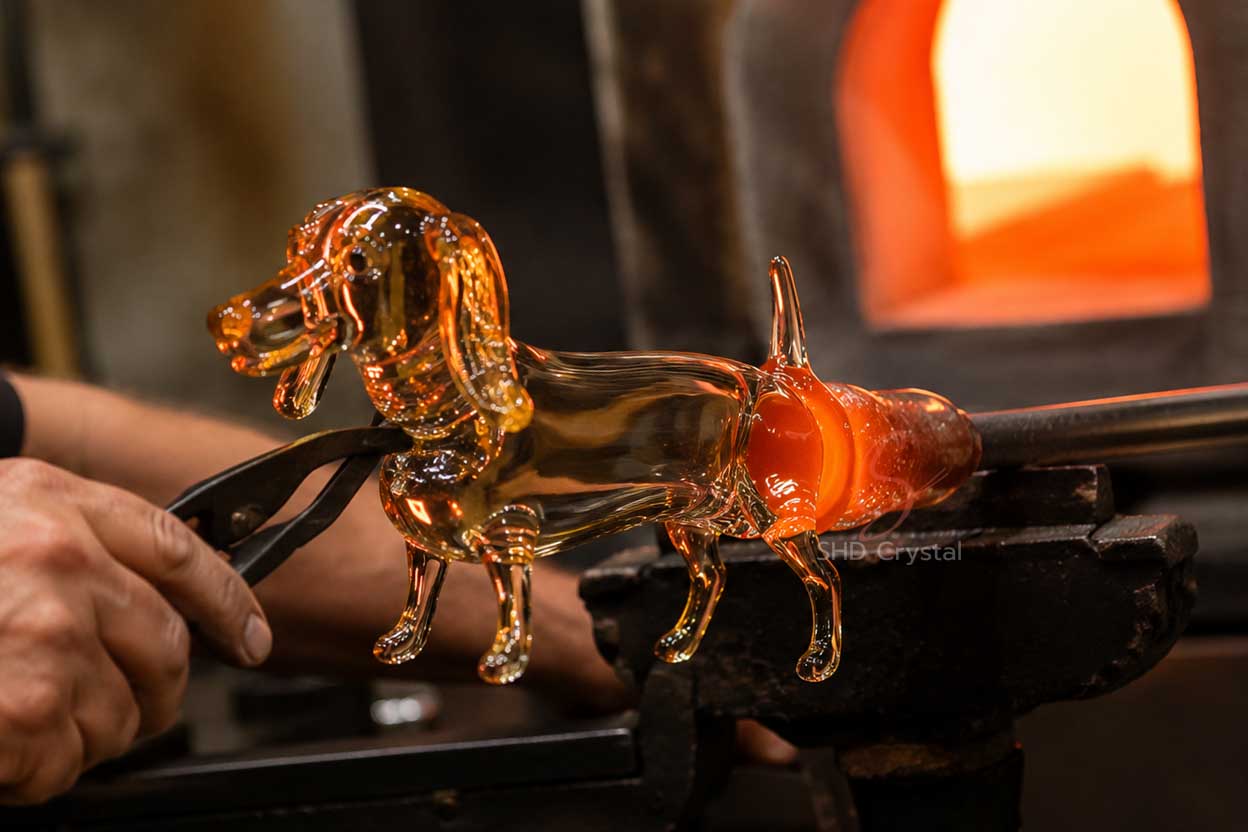
Glass loses heat continuously while it is outside the furnace. As it cools, the surface becomes stiffer and less responsive to tools. The piece must therefore return repeatedly to the reheating furnace, often called a glory hole. Each reheating cycle restores enough softness for the next shaping stage.
Reheating is not simply a matter of making the glass hot again. The glassblower must decide:
- Which section needs additional heat
- Which section should remain firm
- How long the piece can be reheated without losing its shape
- Whether attached details are becoming too soft
- How the internal bubble is responding
If the entire figurine becomes equally soft, completed features may collapse while another section is being adjusted. Selective heat control is therefore central to the glassblowing sculpture process.
Adding the Head, Muzzle, Ears, Legs, and Tail
The smaller features are usually created by attaching separate portions of hot glass to the main body. During this stage of the glassblowing sculpture process, a second glassworker may bring a small molten gather, sometimes called a hot bit, to the sculpture. The glassblower connects it to the intended area and then pulls, cuts, pinches, or shapes it with tools.
Step 1: Forming the Head and Muzzle
The head must be large enough to remain visually distinct from the body. The muzzle can be extended from a hot attachment or shaped from the front of the head. Excessive detail is avoided at this stage because the glass remains soft. The profile, nose direction, and transition between the muzzle and forehead are often more important than very small facial features.
Step 2: Shaping the Ears
Ears are among the most heat-sensitive parts of hand blown glass animal figurines. They may be pinched upward, pulled outward, folded, or flattened depending on the intended breed. Thin ears cool rapidly, while thicker ears may lose definition and merge visually with the head. Their attachment points must be strong enough to survive annealing, handling, and transportation.
Step 3: Building the Legs
Legs can be pulled from attached glass or built as separate additions. Their spacing affects both appearance and stability. Very narrow legs may look elegant but become fragile. Thick legs are safer but can make the figurine appear heavy. In some designs, the legs are partially connected to the body to improve strength.
Step 4: Attaching the Tail
The tail can communicate movement and breed character, but it also creates one of the most vulnerable projecting areas. A curved tail placed close to the body is generally more durable than a long unsupported tail. The glassblower must balance visual expression with structural protection.
Controlling Proportion While the Glass Is Moving
Hot glass never remains completely still. Gravity, rotation, tool pressure, and reheating all continue to change the shape. This makes proportion control different from carving a cold material. Correcting one area may unintentionally affect another.
For example:
-Lengthening the neck may narrow the chest
-Reheating the muzzle may soften the ears
-Flattening the feet may alter the leg angle
-Pulling the tail may shift the visual balance backward
The maker therefore works from large forms toward small details. Once the body, posture, and balance are established, the final character can be refined.
Transferring the Figurine From the Blowpipe
When shaping from the original end is complete, the glassblowing sculpture process may require the figurine to be transferred to a punty rod. The punty temporarily supports the sculpture while the blowpipe is removed. This provides access to the area that was previously attached to the pipe.
The separation point is heated and gently opened, cut, sealed, or refined depending on the design. This stage requires careful handling because the figurine already contains thin projecting features that may respond differently to heat. The remaining punty mark is later removed or polished if it is located on the base.
Annealing the Finished Glass Dog
A completed figurine cannot simply cool in open air. The body, ears, legs, and tail contain different thicknesses and therefore cool at different rates. Without controlled cooling, these temperature differences can create internal stress. The hot figurine is placed inside an annealing kiln, where it is held at a controlled temperature and cooled gradually.
Annealing helps reduce the risk of:
-Delayed cracking
-Stress around attached features
-Breakage at thick-to-thin transitions
-Weakness near the tail or ears
-Damage caused by rapid temperature change
The annealing schedule depends on the glass composition, overall mass, wall thickness, and structural complexity of the figurine.
Cold Finishing Is Limited but Still Important
The main sculpture is created while the glass is hot. Cold processing is used only where necessary.
Typical finishing may include:
-Grinding the base flat
-Removing the punty mark
-Polishing the contact surface
-Smoothing a sharp separation point
-Correcting minor roughness
-Adding a small engraved logo
This article should not present cutting as the primary decorative process. Deep faceting and extensive crystal cutting would change the subject from blown sculpture to cut crystal ornament production.
For blown glass dog figurines, cold finishing supports stability and surface safety rather than creating the main form.
Why Handmade Figurines Are Not Completely Identical
Even when glassworkers follow the same reference, handmade figurines can show small variations in:
-Body width
-Head angle
-Ear position
-Tail curvature
-Leg spacing
-Bubble distribution
-Overall weight
These differences are a natural consequence of shaping a moving material by hand. The production standard should therefore distinguish between acceptable handmade variation and actual defects. A slight difference in ear angle may be acceptable, while an unstable base, cracked attachment, or visibly distorted posture is not.
Inspecting Blown Glass Dog Figurines
Inspection should focus on both appearance and structural integrity. Important checkpoints include:
- Overall posture and recognizable silhouette
- Stability on a flat surface
- Strength of ears, legs, and tail
- Cracks around attachment points
- Uncontrolled thin areas
- Large bubbles or inclusions in critical locations
- Surface tool marks
- Sharp edges near the base
- Annealing-related stress
Consistency across the production group
The inspection standard should reflect the handmade process rather than applying the dimensional expectations of automated bottles or machine-pressed glassware.
Packaging Fragile Projecting Features
Packaging must prevent the ears, muzzle, legs, and tail from bearing direct pressure. A protective insert should support the heavier body while leaving clearance around delicate features. Soft wrapping may prevent surface abrasion, but it should not be the only form of protection.
Depending on the design, packaging may use:
-Custom-cut foam
-Molded pulp supports
-Soft inner wrapping
-Individual presentation boxes
-Reinforced export cartons
-Separation between the tail and carton wall
Packaging design should begin during sampling rather than after the figurine is already approved.
Understanding the Craft Behind Blown Glass Dog Figurines
Blown glass dog figurines are created through a continuous relationship between air, heat, gravity, timing, and hand movement. The form is not carved from a finished block. It develops while the glass remains molten, with each reheating and attachment affecting the final posture.
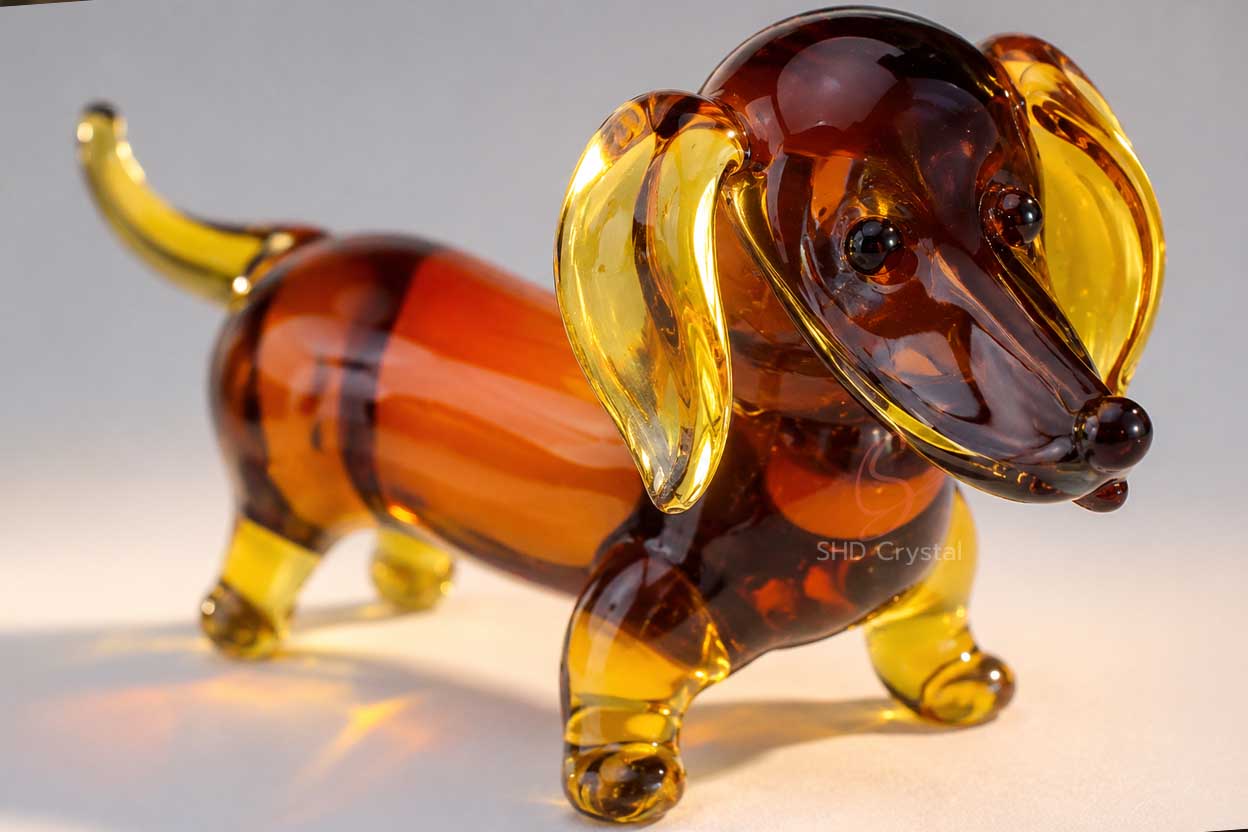
Understanding this process explains why certain poses are easier to produce, why thin ears and tails require special care, and why slight differences appear between handmade pieces. For projects involving blown glass dog figurines or other hand blown glass animal figurines, SHD Crystal can review the reference shape, forming direction, structural risks, annealing requirements, and packaging considerations before sampling begins.
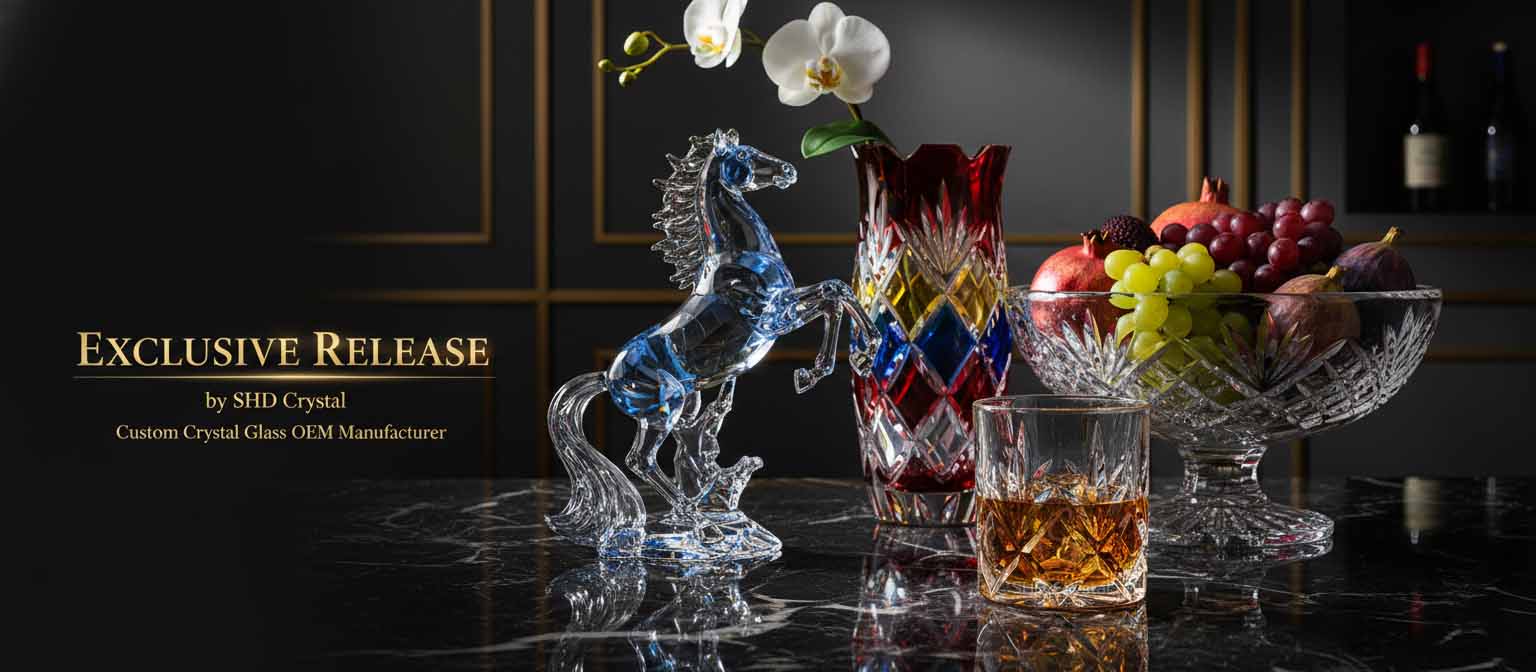
Exclusive Release by SHD Crystal
Custom Crystal Glass OEM Manufacturer
This article is originally published by SHD Crystal. Original Link: https://shdcrystal.com/blogs/blown-glass-dog-figurines/