
The crystal glass annealing process is the stage we cannot rush, no matter how tight the production schedule gets. We have learned this through experience—sometimes through pieces that looked perfect leaving the lehr but cracked spontaneously on the packing table two days later. That kind of failure has no visible cause. The surface is flawless. The shape is correct. The problem was locked inside the glass during cooling, and it only revealed itself once the residual stress found a release point.
Proper annealing management controls these risks while maintaining the clarity and brilliance that crystal products demand. It is the bridge between a beautiful formed piece and a durable finished product.
Crystal Glass Annealing Process Controls Internal Stress During Cooling
Glass forming happens at extremely high temperatures, and the material cannot jump from shaping to room temperature without controlled treatment. The crystal glass annealing process must gradually reduce temperature so that different areas of the glass contract evenly. The outer skin cools faster than the inner core. The base, often thicker than the walls, holds heat longer. These differences create internal tension that, if left unresolved, turns a decorative vase into a liability.
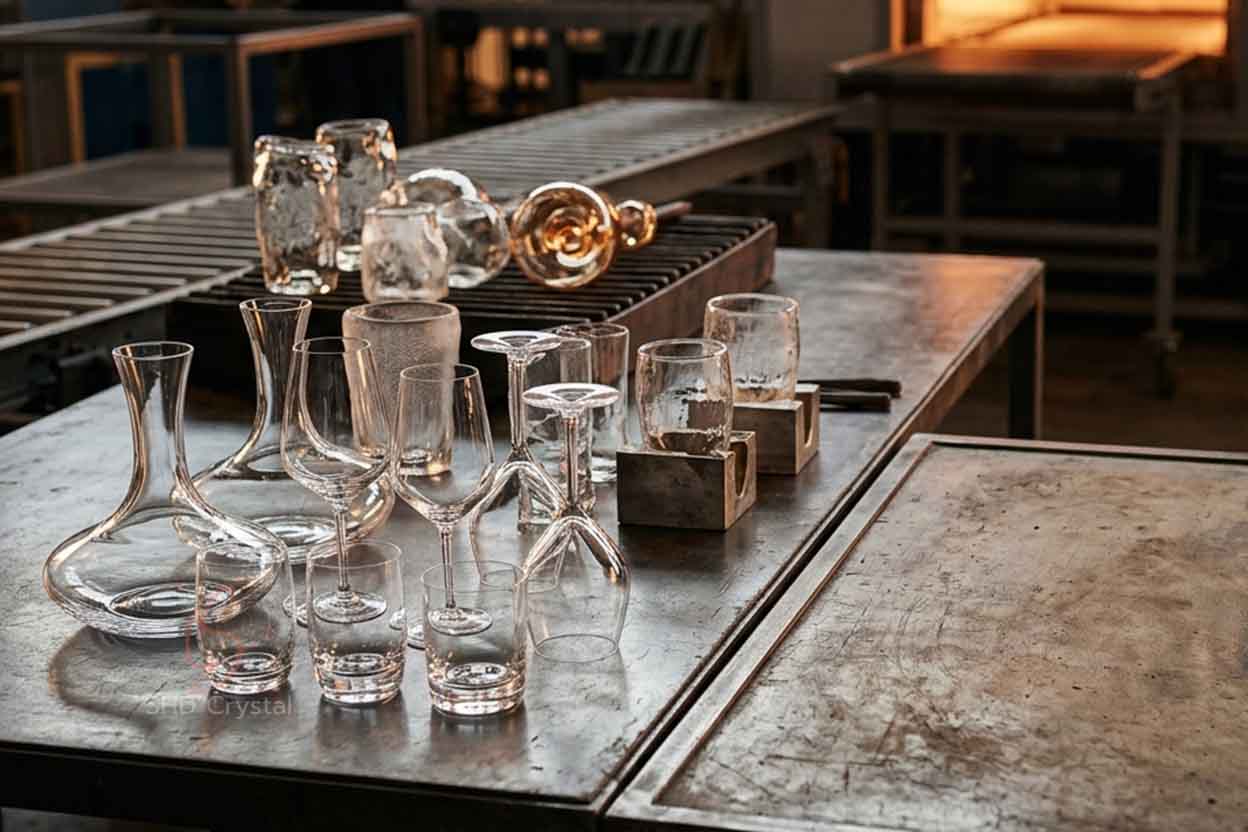
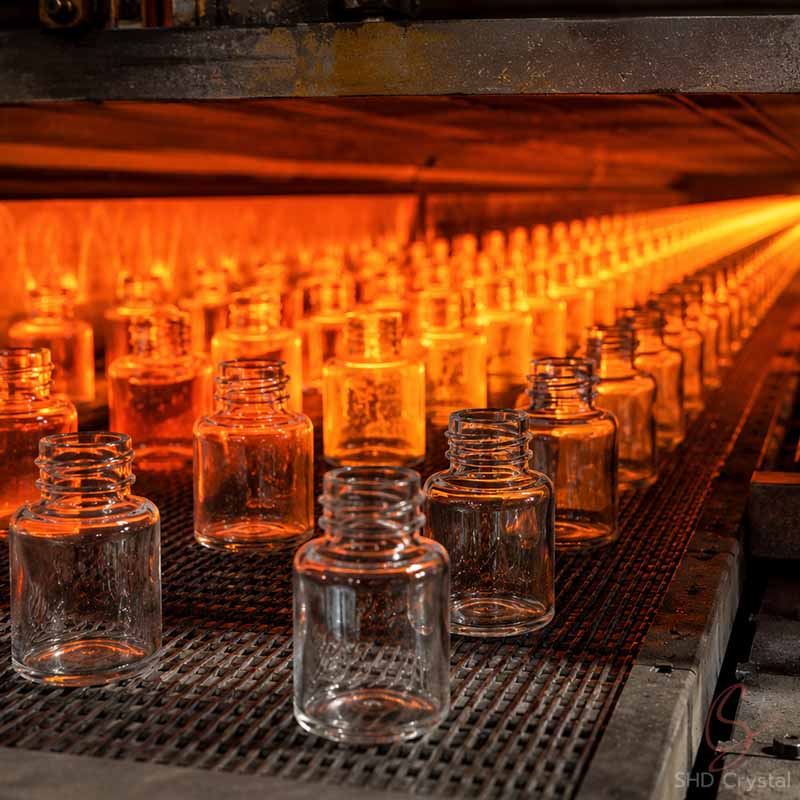
We use glass cooling control systems that monitor temperature zones inside the annealing lehr and adjust the belt speed and zone temperatures according to the product profile. A thick-based crystal decanter, for example, spends longer in the soak zone than a thin-walled tumbler. The goal is not simply to cool the glass. It is to bring every part of the piece through the strain point at a rate that does not lock in stress.
For crystal glass manufacturing methods, the lehr is not a passive step between forming and packing. It is an active process that requires as much attention as the mold design or the glass batch composition.
Key Factors That Influence Glass Quality After Forming
One common misunderstanding we encounter is that clear, attractive glass automatically means well-annealed glass. Buyers inspect samples under showroom lights and judge by appearance. Internal stress is invisible. Even a flawless surface can hide stress concentrations if the cooling cycle was shortened to save time or energy.
We once received a complaint from a client whose crystal candle holders had arrived intact but began cracking weeks after delivery—sitting on a retail shelf, untouched. The surface quality was excellent. The geometry was within spec. When we checked the retained samples under a polariscope, the stress patterns told a different story. The lehr cycle had been trimmed by a previous operator to increase daily throughput. That single decision created a latent defect that passed every visual inspection but failed in the field.
In crystal glass manufacturing methods, temperature management, furnace settings, and production timing must work together. Different shapes demand different cooling strategies. A large decorative bowl with an uneven wall thickness profile cools differently than a set of uniform drinking glasses. The thick areas retain heat, the thin areas shed it quickly, and the boundary between them is where stress concentrates. This is why glass cooling control is directly connected to final product reliability—not just in theory, but in every batch we run.
Manufacturing Variables Behind Successful Annealing Results
The crystal glass annealing process depends on several production variables that shift from product to product. Forming temperature sets the starting condition—glass blown too hot enters the lehr with more thermal energy to dissipate. Wall thickness transition determines how unevenly the piece cools. A tumbler with a heavy bottom and thin rim creates a natural temperature gradient that the lehr profile must compensate for. Batch consistency matters too: a slight shift in raw material composition can move the strain point by a few degrees, which changes the annealing window.
We adjust furnace programs according to the specific product design and material behavior. A piece with deep engraving or complex contours introduces additional stress points because the cut surfaces cool differently from smooth areas. These designs may require an extended soak at the annealing temperature to allow stress equalization before the controlled cooling ramp begins.
For buyers sourcing customized crystal products, understanding the annealing stage provides a useful supplier evaluation tool. Ask how the factory adjusts lehr settings for different product geometries. Ask whether they perform polariscope inspection on production samples, not just prototypes. A factory that focuses only on shaping and decoration may be overlooking the process that determines whether the product reaches the customer intact.
Practical Considerations For Custom Glass Projects
Different applications create different annealing requirements. A luxury tableware set prioritizes optical clarity and surface perfection. A large architectural glass component needs structural stability above all. The annealing profile must match the intended use, and we adjust our glass cooling control parameters accordingly.
Production consistency matters more than a single successful sample. A well-tuned crystal glass annealing process ensures that repeated batches produce similar stress profiles, similar clarity, and similar long-term durability. This is especially critical for brands ordering customized collections where every piece must match the approved reference sample.
Conclusion
The crystal glass annealing process is not a background operation. It is the stage that connects artistic design with dependable manufacturing results. By managing temperature transitions, internal stress, and product-specific variables, manufacturers can deliver crystal products that perform consistently across different applications. The pieces that survive shipping, retail handling, and years of use are the ones where annealing was treated as a priority, not an afterthought.
Build Your Crystal Project With Controlled Annealing
SHD Crystal manages the full crystal glass annealing process in-house, with lehr profiles adjusted per product geometry and polariscope inspection integrated into our quality control workflow. Our crystal glass manufacturing methods combine forming precision with glass cooling control tailored to your product’s thickness, shape, and intended use. If you are developing a custom crystal project, share your design concept with us—we will evaluate the annealing requirements alongside the forming and finishing specifications.
Recommended Articles
Crystal Glass Thermal Forming: Heat, Science, and Craftsmanship
Read the original article on custom crystal glass manufacturing: https://shdcrystal.com/blogs/crystal-glass-annealing-process/