
Crystal ice bucket design sits somewhere between practical bar equipment and decorative tableware. The bucket needs enough capacity for ice, a stable base, comfortable handling, and surfaces that remain attractive once condensation appears. At the same time, hotels, restaurants, bars, and premium gifting collections often expect it to contribute something visually to the table. A good design therefore has to answer a simple question: is this only a container for ice, or is it part of the presentation?
Crystal Ice Bucket Design Starts With How the Bucket Will Be Used
Before discussing facets, engraving, or gold rims, the intended use needs to be clear. A compact glass ice bucket for bar service may be used mainly for serving ice beside whisky, cocktails, or spirits. It needs convenient access for tongs and enough internal volume without occupying too much space on the table.
A larger vessel intended to hold a bottle with ice follows different proportions and should not simply be treated as an enlarged version of the same product. This distinction affects diameter, height, wall structure, handle design, and overall weight.
A Stable Base Matters More Once the Ice Goes In
An empty glass bucket can feel perfectly balanced in a showroom. Add ice, water from melting cubes, a pair of tongs, and repeated handling during service, and the design begins to reveal whether the proportions actually work.
A substantial base can give luxury glass barware more visual and physical stability. However, making the bottom excessively heavy increases total weight and can make the product less comfortable to move.
The goal is not to create the heaviest bucket on the bar. It is to create enough weight to feel secure without turning every refill into a small strength-training exercise.
Handles Change Both Appearance and Practicality
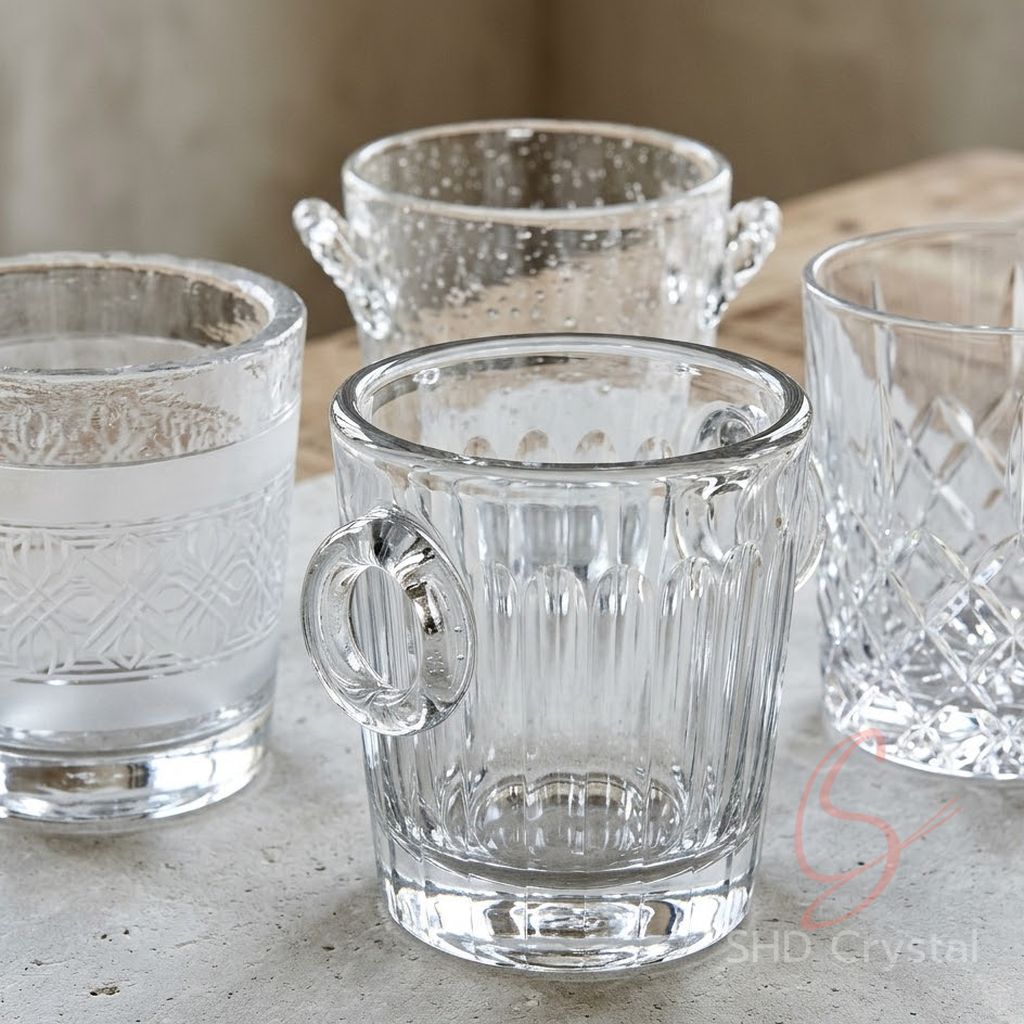
Handles are one of the strongest visual features on many ice buckets. Integrated glass handles can make the body feel sculptural and coherent. Metal handles introduce a different material contrast and may suit classic barware styling. Side handles can provide a more symmetrical look, while a movable overhead handle changes the way the bucket is carried. For a glass ice bucket for bar use, the handle should be reviewed with the bucket filled rather than judged only when empty. Position, clearance, attachment, and overall balance all influence actual handling.
A beautiful handle that becomes uncomfortable once the bucket contains ice has succeeded mainly as photography.
Texture Lets Crystal Do More With Light
Crystal and clear glass naturally interact with light, but surface design can push that effect much further.
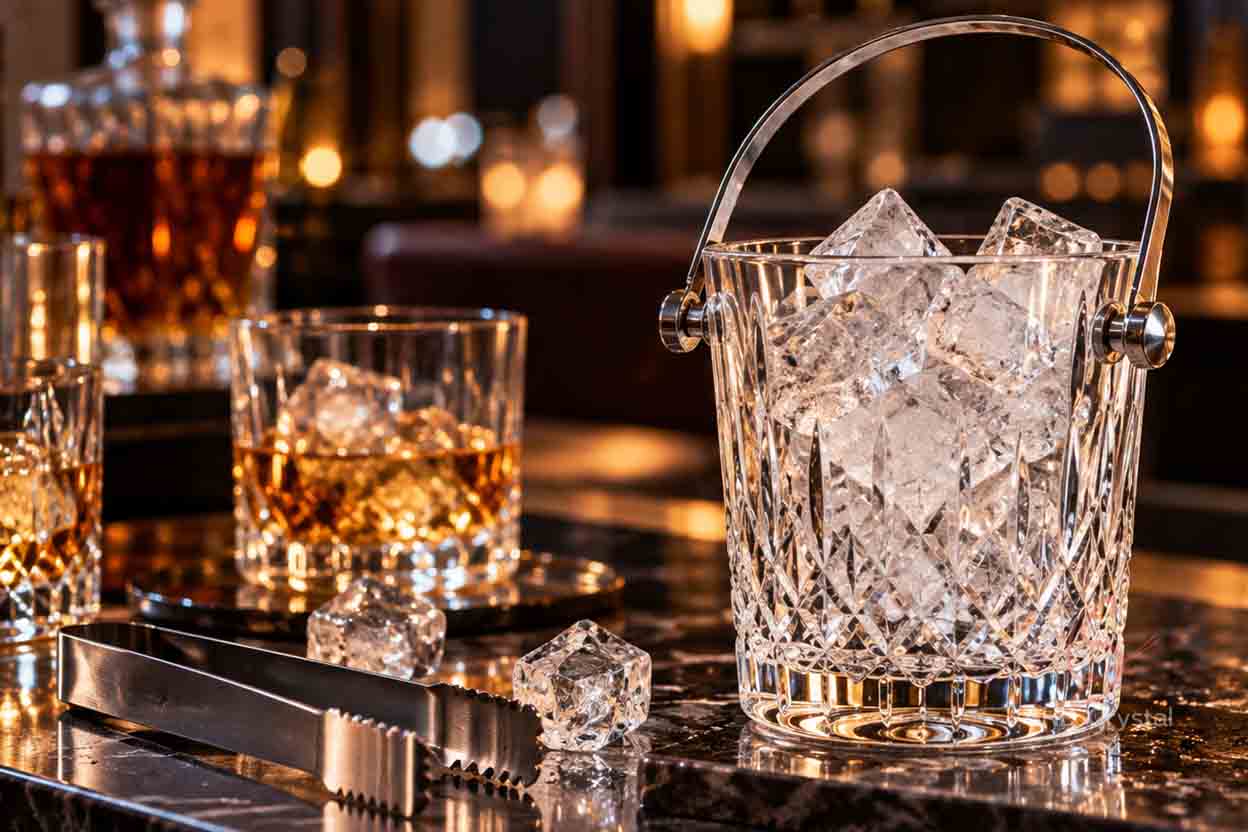
Vertical ribs, diamond cuts, lattice patterns, relief details, engraved surfaces, or faceted walls break up reflections from ice and surrounding lighting. On a hotel bar or restaurant table, this can make the bucket feel visually active even when the basic silhouette is relatively simple. This is one reason crystal ice bucket design often relies on surface treatment instead of extreme body shapes.
Luxury glass barware does not always need to shout. Sometimes a controlled cut pattern under warm bar lighting does enough talking.
Decoration Should Work With Condensation, Not Ignore It
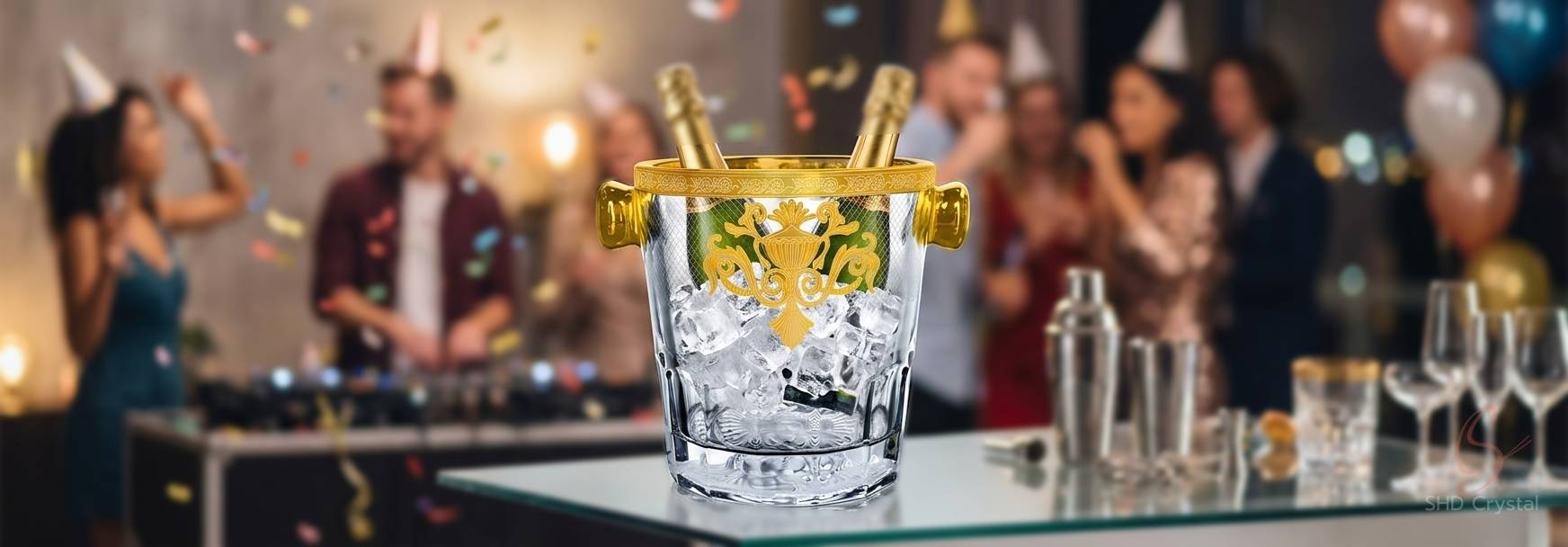
An ice bucket is unusual decorative glassware because its surface is expected to become cold and wet during normal use. Condensation changes how the product looks and feels. Highly polished transparent areas can emphasize droplets, while textured surfaces may visually break them up. Metallic rims, gilded details, frosting, or colored sections can add character, but they should be evaluated against the intended service environment.
A decoration that looks excellent in a dry studio sample should still make sense once the bucket is filled with ice. For this reason, physical sample evaluation is especially useful for hospitality products.
Sets Need Stronger Consistency Than Single Pieces
Luxury glass barware is often developed as a collection rather than one isolated product. An ice bucket may need to coordinate with whisky glasses, decanters, cocktail glasses, or serving accessories. Repeated geometric patterns, similar base proportions, matching gold details, or related surface textures can help create a recognizable family.
This also changes production expectations. If several buckets appear together in a hotel, bar, or retail display, differences in height, color, decorative positioning, or handle alignment become easier to notice. Reference samples and agreed appearance standards therefore become important once a design moves beyond a single prototype.
Packing a Heavy Glass Bucket Needs Its Own Plan
Ice buckets can combine substantial glass weight with exposed handles, decorated rims, or deep surface details. That makes packaging part of the product-development process rather than something to think about after production is finished.
Protective inserts should help prevent the body from moving inside the carton, while handles and decorative edges may require additional clearance. For export supply, the packing structure should reflect the actual shape and weight of the bucket.
After all, luxury glass barware is considerably less luxurious when it arrives in several pieces.
Conclusion
Crystal ice bucket design works best when bar function and visual presentation are developed together. Capacity, base stability, handle structure, glass weight, decorative texture, condensation behavior, and packaging all influence how the finished product performs in hospitality environments.
For a glass ice bucket for bar service, the strongest design is not necessarily the most complicated one. It is the one that feels natural to use while still giving luxury glass barware enough character to become part of the table setting.
Developing Crystal Ice Bucket Designs With SHD Crystal
SHD Crystal can develop crystal ice bucket design directions around different structural and decorative approaches, including relief patterns, faceted surfaces, engraving, gilded details, color effects, and varied handle structures.
For a new project, reference products, sketches, intended capacity, usage scenarios, decorative preferences, and related barware styles can help establish the initial direction. Physical sampling then allows details such as proportions, weight, handle comfort, surface treatment, and packing requirements to be evaluated before the design moves further.
This approach is particularly useful when a glass ice bucket for bar service needs to coordinate with a broader luxury glass barware collection rather than function as a standalone piece.
FAQs About Crystal Ice Bucket Design
Q&A 01 | Is a glass ice bucket the same as a champagne bucket?
Not necessarily. A traditional bar ice bucket is usually designed primarily to hold ice for serving drinks, while a champagne or wine bucket needs enough internal space to hold a bottle surrounded by ice. The two products therefore often require different dimensions and proportions.
Q&A 02 | Are heavy crystal ice buckets always better for hotel and bar use?
No. Additional weight can create a substantial premium feel and improve perceived stability, but excessive weight can make handling and transportation less convenient. The preferred balance depends on capacity, structure, and intended hospitality use.
Q&A 03 | What details should buyers check when reviewing an ice bucket sample?
Useful checks include capacity, base stability, handle comfort, rim quality, surface decoration, overall weight, ease of access with ice tongs, appearance with actual ice inside, and protective packaging.
Exclusive Release by SHD Crystal
Custom Crystal Glass OEM Manufacturer
This article is originally published by SHD Crystal. Original Link: https://shdcrystal.com/blogs/crystal-ice-bucket-design/