
Crystal vs Glass: The Differences That Matter on a Purchase Order
The crystal vs glass question reaches our desk almost every week, usually from importers, hotel procurement teams, or drinkware labels planning their next purchase order. On a showroom shelf the two materials can look similar. Inside our workshop they behave very differently, and those differences eventually reach your landed cost, your breakage rate, and how the product feels in a customer’s hand.
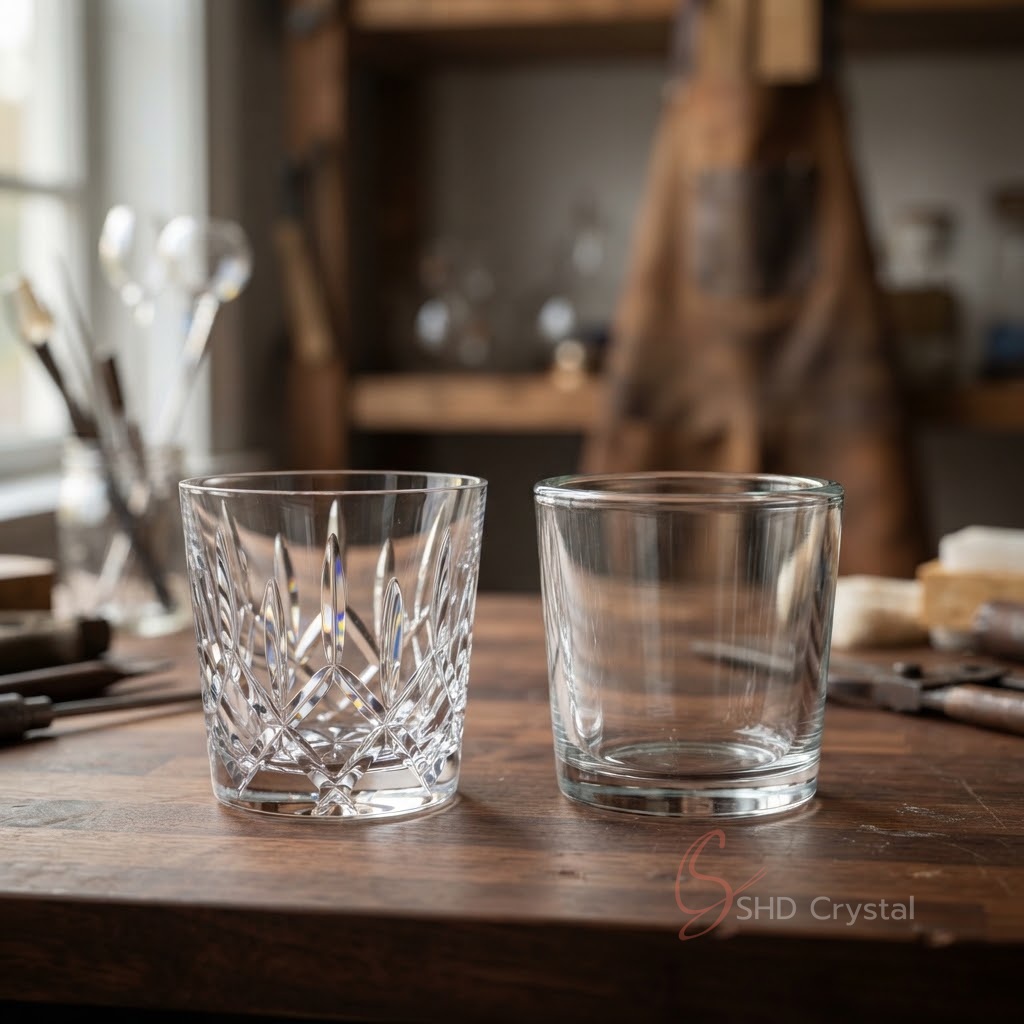
We mold and finish both lead-free crystal and soda lime glass, so we have no reason to steer you toward either one. What follows is roughly the briefing we give buyers during factory visits.
| Feature | Crystal | Ordinary Glass |
|---|---|---|
| Weight and hand feel | Heavier, thinner rim, better balance | Lighter stem, thicker walls |
| Clarity and refraction | Higher refractive index, brighter sparkle | Clean but visually flatter |
| Sound when tapped | Long, clear ring | Short, dull click |
| Rim finishing | Finer rims, better chip resistance | Fire-polished rims chip sooner |
| Wall thickness | Drawn thin by design | Formed thick by design |
| Relative unit cost | Noticeably higher | Budget-friendly at volume |
In practice, the crystal vs glass comparison starts with weight and often ends with sound. Crystal formulations carry a higher refractive index, so edges catch light in a way soda lime cannot copy. Tap a crystal rim and you get that sustained tone customers associate with fine dining; ordinary glass answers with a flat click.
Durability deserves a closer look, because buyers frequently get this backwards. Thin-wall crystal resists rim chipping well, yet tolerates hard knocks worse than soda lime. Ordinary glass shrugs off bumps on a busy trolley but still cracks when dropped. Match the material to the abuse level of the venue, not the catalog photo. That is the standard we hold every crystal vs glass to.
Wine Glass Material Selection for Hospitality Programs
For hotels and restaurant groups, wine glass material selection is rarely about one product. It is about running tiers at once: banquet service stacked and washed hundreds of times weekly, signature dining where presentation justifies a premium, and executive lounges. We typically advise soda lime downstairs and lead-free crystal upstairs, where pieces are handled individually.
One hotel chain learned this expensively. They specified delicate crystal tumblers for daily banquets because the crystal vs glass upgrade photographed beautifully. Within a quarter, breakage risk had eaten the visual gain entirely: replacement orders, sorting labor, and complaints about chipped pieces outpaced the compliments. We moved them to thicker soda lime tumblers with reinforced bases for banquets and shifted crystal to the executive lounge.
When you map wine glass material selection across a property, weigh washing cycles, stacking height, and staff handling before sparkle. Base stability matters more than brilliance on a moving service trolley.
How We Screen Samples: The Ring Test for Crystal and Better Tools
Buyers love the ring test for crystal because it costs nothing: flick the rim, listen for the sustained bell-like tone. As a first filter during unboxing it works reasonably well; as proof of material it does not. A gift-set importer once tapped tempered soda lime samples, heard a surprisingly long ring, and concluded the factory had swapped in crystal. Tempered glass stores surface stress, which stretches the sound, and the order nearly went to arbitration until a polariscope inspection revealed stress patterns no crystal piece would carry.
On our QC line we treat the ring test for crystal as screening only, followed by wall thickness measurement, polariscope checks, and review of annealing records from each kiln batch. Annealing is invisible from outside but decisive: a poorly annealed thin-walled bowl can pass every tap test and still fail in transit.
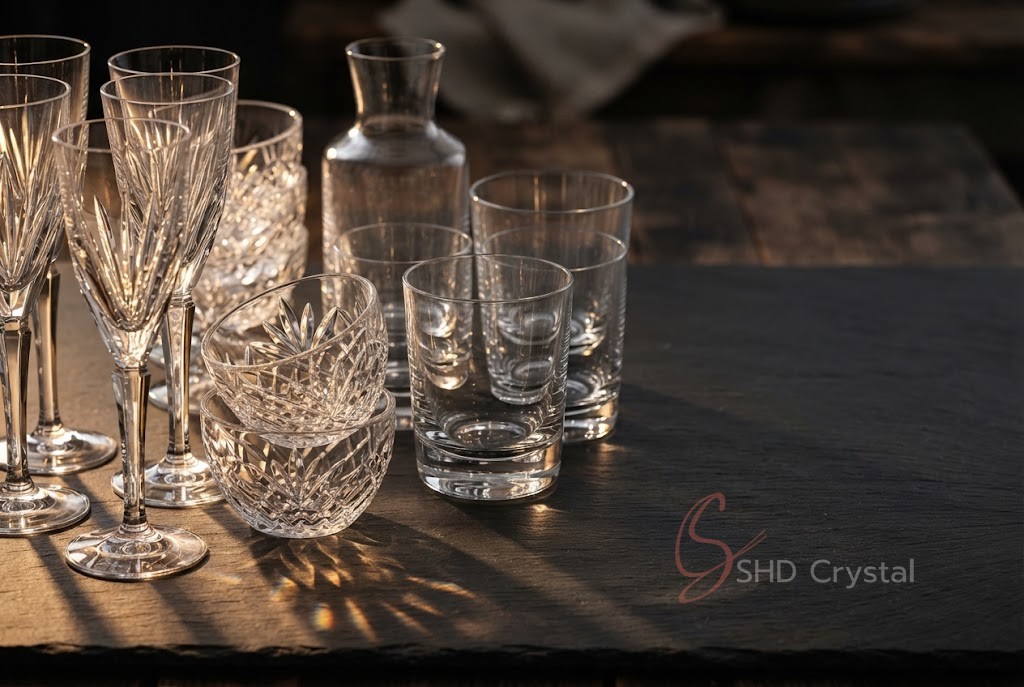
One client habit worth copying: before approving a sample run, they measured wall thickness at four points per piece and logged the spread. That ten-minute routine caught a drifting mold that neither sound nor sight revealed.
Lead-Free Crystal, Batch Consistency, and Making the Call
Most export buyers now ask for lead-free crystal, where metal oxides replace lead oxide to keep clarity without the regulatory baggage. From our production experience, the honest trade-off is trickier firing control, which is why batch consistency separates serious factories from trading offices. Ask any prospective supplier how they hold color tint steady between batches; vague answers tell you everything.
Before signing anything, request samples from two production weeks, inspect rim finishing under magnification, confirm export packing specs against drop tests, and agree in writing how breakage claims are handled. Ultimately, the crystal vs glass call comes down to channel: gifting favors decorated lead-free crystal, high-volume programs favor well-finished soda lime.
Frequently Asked Questions
Is lead-free crystal actually crystal?
Yes. Traditional crystal replaced some lime with lead oxide; modern lead-free crystal uses other metal oxides to achieve similar refractive index and a thin, resonant wall. Ask manufacturers for the formulation sheet rather than trusting marketing labels.
Does the crystal vs glass difference matter for everyday tumblers?
It depends on usage intensity. Treat the crystal vs glass choice for everyday tumblers as a total-cost question: soda lime typically wins where replacement is frequent and knocks are inevitable. Crystal earns its place where the drinking moment itself is what customers pay for.
How should a new label start with wine glass material selection?
Start your wine glass material selection from the sales channel, not the material. High-volume gift programs favor lead-free crystal with cutting details; volume channels favor upgraded soda lime. Order pilot samples in both, wash-test them twenty cycles, then commit.
Can I trust the ring test for crystal when auditing a shipment?
Treat the ring test for crystal as a first screen only. Tempered glass can imitate the long ring, and a dull tone can come from wall thickness alone. Pair listening with a polariscope check or third-party report before raising a claim.
Conclusion
There is no universal winner in the crystal vs glass decision, only fit: venue, channel, washing reality, and margin structure decide it. Weigh sound, weight, and rim together, demand annealing and batch documentation, and the right material usually announces itself before samples even ship.
Talk to Our Production Team Before You Place the PO
Send us your usage scenario and target price band, and our engineers will walk you through the crystal vs glass trade-offs using real samples from two production runs, plus packing and QC recommendations tailored to your market.
Interested in custom glassware or related products?
Contact our team to discuss your project requirements.