Blogpost keywords: custom glass mold cost, glass mold design, production tooling
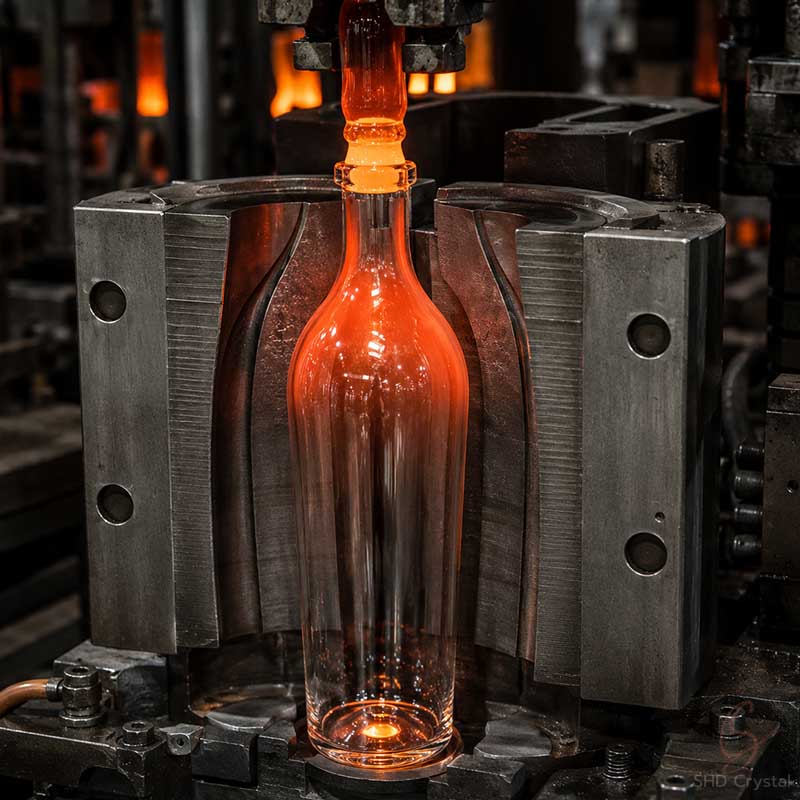
Custom glass mold cost depends on glass mold design, production tooling requirements, and project complexity during development.
Custom Glass Mold Cost Factors In Product Development
Custom glass mold cost is often one of the first topics discussed when developing a new glass product. Whether the project involves perfume bottles, beverage containers, lampshades, vases, ornaments, or tableware, tooling investment usually represents the largest upfront expense before production begins.
Many buyers focus only on the final mold quotation. However, mold pricing is influenced by numerous engineering and production variables. Understanding these factors early helps brands evaluate project feasibility, avoid unnecessary revisions, and make more informed development decisions.
A mold is not simply a manufacturing accessory. It is the foundation of product consistency, dimensional accuracy, and long-term production stability.
Why Custom Glass Mold Cost Varies Between Projects
The biggest misconception about custom glass mold cost is that it is determined primarily by product size.
In reality, size is only one variable.
A small perfume bottle with intricate detailing may require more engineering effort than a larger decorative vase. Likewise, a seemingly simple container can become expensive if tight tolerances or specialized surface effects are required.
When evaluating production tooling, manufacturers typically review the complete design rather than estimating cost based solely on dimensions.
Complexity often matters more than scale.
Product Geometry Has A Direct Impact
Shape is one of the largest contributors to tooling cost.
Simple cylindrical forms are generally easier to manufacture than products featuring:
- Deep embossing
- Sharp geometric transitions
- Complex curves
- Sculptural contours
- Multi-level surface textures
- Integrated decorative features
As complexity increases, the requirements for glass mold design become more demanding.
Additional machining time, precision finishing, and engineering adjustments can all contribute to higher tooling investment.
Material Selection Influences Tooling Strategy
Not all molds are manufactured from identical materials.
Depending on production volume and product requirements, tooling may utilize different grades of cast iron, ductile iron, heat-resistant alloys, or specialized materials designed for extended service life.
For low-volume projects, manufacturers may recommend a different tooling strategy than for long-term mass production programs.
This means the same product design can generate different custom glass mold cost estimates depending on expected production volume.
The mold must match the production plan.
Surface Detail Increases Manufacturing Requirements
Many brands focus on decorative features because they help differentiate products in the market.
However, decorative elements frequently increase tooling complexity.
Examples include:
- Logo embossing
- Decorative patterns
- Deep engraving effects
- Textured surfaces
- Custom relief artwork
These features require additional machining and finishing work during glass mold design development.
While decorative details may strengthen brand identity, they often affect both tooling cost and production complexity.
Common Misconception: Higher Mold Cost Always Means Better Quality
A frequent misconception is that the most expensive mold automatically delivers the best results.
This is not necessarily true.
The ideal mold should match project requirements rather than maximize cost. Overengineering a mold for a short-run product can increase development expenses without creating meaningful commercial benefits.
An experienced supplier evaluates expected production volume, product complexity, and quality requirements before recommending a tooling solution.
The goal is efficiency, not excess.
Production Factors Buyers Often Overlook
Several hidden variables can influence custom glass mold cost even when product appearance remains unchanged.
These may include:
- Mold tolerance requirements
- Neck finish precision
- Matching lid or closure systems
- Wall thickness transitions
- Automated production compatibility
- Multi-cavity tooling configurations
Among these factors, wall thickness transition is especially important. Abrupt changes in glass distribution can affect forming behavior, cooling performance, and dimensional stability.
Engineering adjustments made during development can sometimes reduce long-term production issues even if they slightly increase tooling investment.
When Custom Tooling Makes Financial Sense
Not every project requires custom tooling.
Stock molds may be suitable for:
- Market testing
- Pilot launches
- Small promotional programs
- Temporary product releases
Custom molds become more attractive when a project requires:
- Exclusive branding
- Proprietary bottle shapes
- Long-term product lines
- Strong shelf differentiation
- Consistent large-volume production
In these situations, the initial production tooling investment is often spread across many production cycles, reducing its impact on unit cost over time.
The value comes from long-term product ownership rather than short-term savings.
Conclusion
Understanding custom glass mold cost requires looking beyond the initial quotation. Product geometry, decorative complexity, tooling material, production volume, and engineering requirements all contribute to the final investment. The most successful projects evaluate tooling not simply as an expense, but as a critical part of product development and manufacturing strategy.
Evaluating Mold Requirements Before Development Begins
For brands considering new bottles, containers, ornaments, lampshades, or tableware, understanding custom glass mold cost early in the planning stage can help identify the most practical development path. Careful review of shape complexity, production volume, and tooling requirements often leads to more efficient OEM development and fewer revisions throughout the project lifecycle.
Read the original article on custom crystal glass manufacturing:https://shdcrystal.com/blogs/custom-glass-mold-cost/