
A miniature milkshake deserves more than a smaller version of an ordinary drinking glass. Custom mini milkshake glasses allow cafés, dessert shops, hospitality brands, and tableware collections to create distinctive presentations through color, proportion, and surface detail. From transparent retro-style glasses to softly tinted cups with vertical fluting, each design changes how a milkshake looks before the first sip. However, an attractive glass still needs to accommodate thick beverages, toppings, comfortable handling, and practical cleaning.
Custom Mini Milkshake Glasses Begin With Color, Shape, and Surface
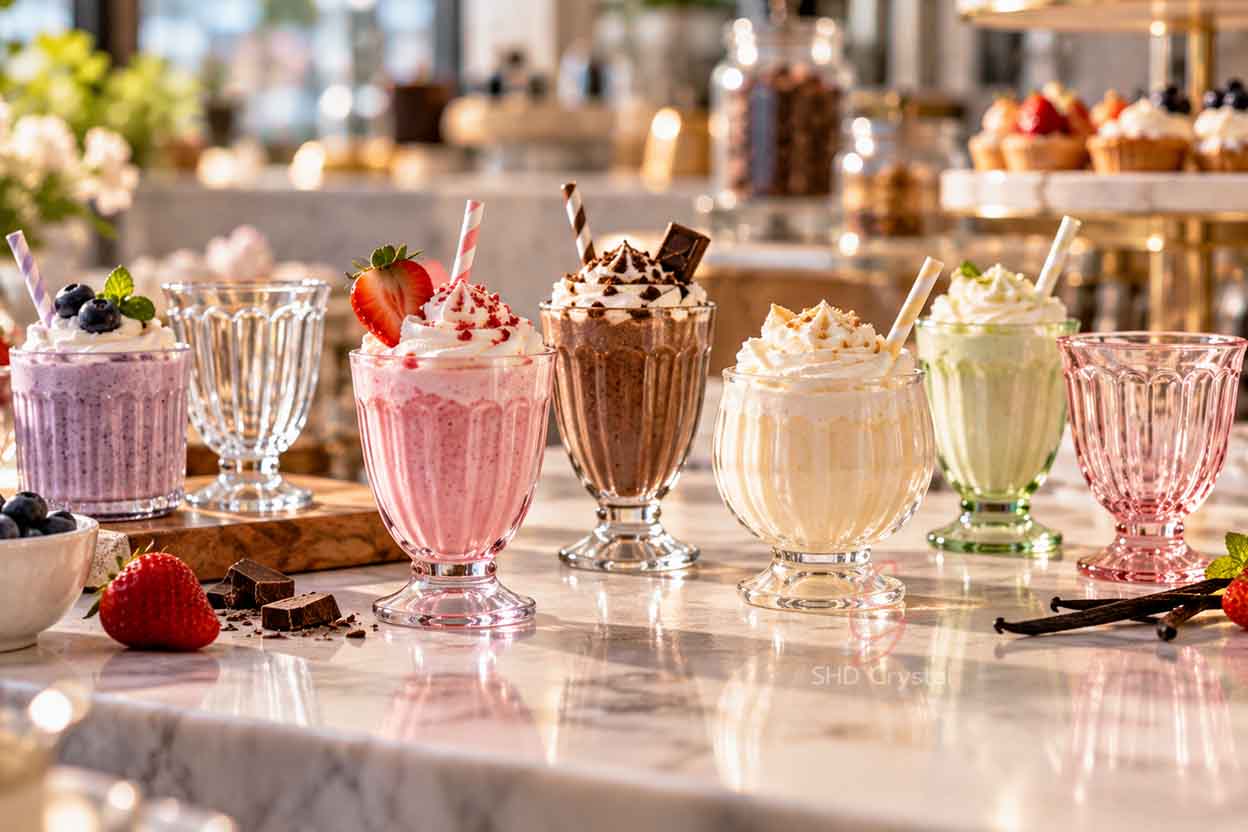
The visual appeal of miniature milkshake glassware comes from the relationship between the drink and its container. A strawberry milkshake already contributes pink, chocolate creates deep brown tones, and vanilla provides a pale background. Glass design should complement these natural colors rather than compete with them.
Color Should Complement the Milkshake, Not Hide It
Clear glass is often the most versatile choice because it allows the drink itself to provide the color. Layered sauces, whipped cream, fruit purées, and decorative toppings remain visible, making transparent cups especially suitable for colorful dessert presentations.
Colored milkshake glasses offer a different design direction. Pale amber, smoke grey, soft pink, or light blue can introduce a coordinated appearance, particularly when several glasses are displayed together.
However, colored glass and color-coated glass are not identical. Color introduced into the glass material differs from a decorative coating applied after forming. The choice influences production planning, appearance, finishing requirements, and durability.
Strongly opaque colors may conceal the drink entirely. For milkshake service, translucent colors or limited exterior decoration can be more practical when the beverage itself is intended to remain visible.
Shape Determines More Than Visual Style
The familiar soda-fountain milkshake glass typically has a flared body and a raised foot. Its proportions create an instantly recognizable presentation, especially when finished with whipped cream or a cherry.
A miniature version can preserve this character, but simply shrinking the design may create practical problems.
A very narrow opening can make adding toppings difficult, while an excessively tall bowl may be inconvenient for short spoons or thick mixtures. A slender stem also needs sufficient strength and an appropriately sized foot to maintain stability.
Short tumblers provide an alternative for modern dessert service. Their compact shape can make them easier to arrange on tasting trays, while rounded bowls and low pedestal designs offer more decorative possibilities. The right geometry depends on serving volume, garnish height, utensil clearance, grip comfort, and the intended presentation.
Texture Changes How Color and Light Appear
Textured glass dessert cups offer an effective way to introduce decoration without covering the beverage. Vertical fluting can visually elongate a short cup, while rounded ribbing creates softer reflections. Geometric patterns produce stronger highlights and may give the glass a more vintage or decorative character.
Surface texture can be incorporated into suitable mold designs during glass forming. Pressed-glass production is particularly relevant for certain structured forms and molded relief patterns. However, texture depth requires control. Deep exterior details may complicate molding or create more pronounced visual variation, while rough or highly recessed interior surfaces can make cleaning difficult.
For milkshake service, keeping the drinking surface and interior accessible is often more important than maximizing decorative complexity.
Frosted and Coated Finishes Need Practical Evaluation
Frosting can soften reflections and give a miniature glass a subdued appearance. Selective frosting may also create contrast between transparent and matte areas. Color spraying and other decorative coatings provide additional options, but finishes selected for drinkware need to be evaluated against their intended use.
Not every decorative glass coating is suitable for direct food contact. The location of the finish, drinking rim, cleaning method, abrasion resistance, and applicable food-contact requirements should be reviewed before approval. A beautiful finish that becomes damaged after repeated cleaning offers limited value for commercial hospitality applications.
For this reason, surface treatment should be selected according to actual service conditions rather than visual samples alone.
Small Glassware Still Requires Manufacturing Control
Miniature size does not eliminate production challenges. Rim consistency, foot alignment, base stability, wall distribution, and surface quality remain important. On textured products, manufacturers must also evaluate whether molded patterns remain visually consistent across production. The forming route may involve pressing or machine blowing depending on the required shape, wall structure, and decorative detail.
Physical samples should be evaluated with actual beverages and toppings, not only when the glasses are empty. A cup that looks balanced on a display shelf may behave differently when filled with a thick milkshake and a generous serving of whipped cream.
Conclusion
Custom mini milkshake glasses work best when color, shape, and surface texture support the drink rather than overpower it. Colored milkshake glasses can introduce visual character, while textured glass dessert cups use molded details and reflections to make simple forms more distinctive.
For commercial tableware development, practical factors remain equally important. Capacity, rim comfort, stability, cleaning requirements, surface durability, and repeatable glass production should all influence the final design.
Developing Custom Mini Milkshake Glasses With SHD Crystal
SHD Crystal provides bespoke crtsyal glass manufacturing support for custom drinkware and decorative tableware, including mold development, glass forming, surface processing, and quality inspection.
For miniature milkshake glass projects, development may begin with an existing reference sample or a new design concept. SHD Crystal can help evaluate cup proportions, serving capacity, foot structure, molded surface patterns, glass thickness, and potential forming methods.
Color and finishing requirements can also be reviewed according to the intended appearance and service conditions. Options such as transparent glass, tinted effects, frosting, and other decorative treatments should be assessed alongside food-contact requirements and cleaning durability.
From initial mold evaluation and sampling to forming, annealing, inspection, and packaging, SHD Crystal can support the development of glassware collections that combine distinctive presentation with repeatable manufacturing.
The link to this article is managed and owned by SHD Crystal. Please cite the source if reposting. Thank you for your cooperation.