
Custom trifle bowl development is usually driven by presentation goals as much as serving function. In the market for afternoon tea, hotel dessert service, gift collections, and retail tableware, buyers rarely want just a generic bowl. They usually want a piece that fits the visual language of layered desserts, berries, sponge cake, and cream while still remaining practical for storage, cleaning, and repeat use. That is why a well-planned glass dessert bowl should be reviewed as both a serving object and a product category with clear customization boundaries.
What a Custom Trifle Bowl Usually Includes in Market Development
In most projects, the first customization range is size. A compact custom trifle bowl may suit individual desserts or boutique tea rooms, while a larger version works better for center-table presentation in hospitality service. Diameter, overall height, and bowl depth all change the final impression. In English tea tableware collections, a low wide bowl often feels generous and classic, while a taller footed version creates more visual layering for fruit and cream desserts.
The next common decision is the base structure. Some buyers prefer a short integrated foot for stability and easier handling. Others want a taller pedestal because it feels more formal and better matches English tea tableware with cake stands, jam dishes, and dessert servers. This choice is not only stylistic. The foot height affects weight balance, packing efficiency, and how secure the bowl feels when carried from kitchen to table.
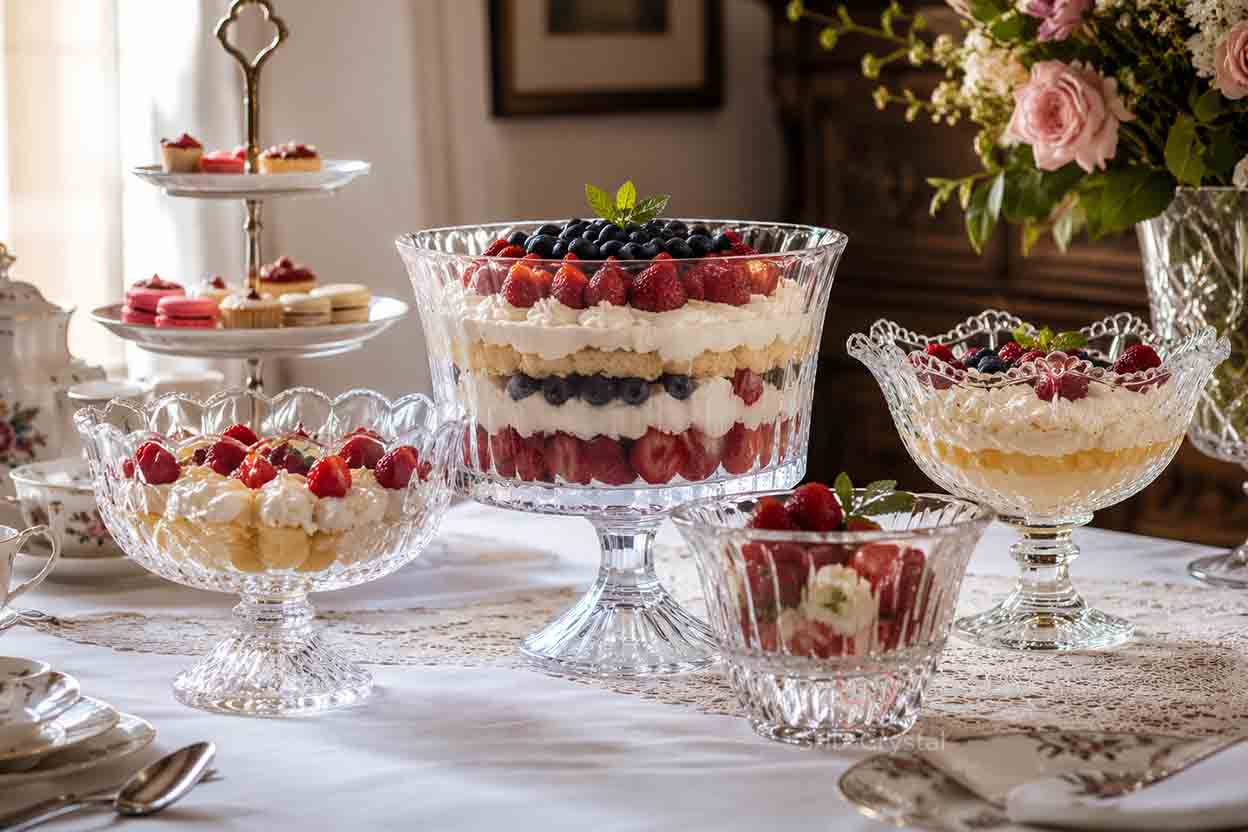
Rim treatment is another important part of the standard customization range. A plain rolled rim gives the glass dessert bowl a cleaner and more modern edge. A beaded rim, scalloped edge, or softly flared opening creates a more traditional tea-service mood. For a custom trifle bowl, these details shape how the product fits gift shops, tea salons, and hotel afternoon tea programs.
Surface character often follows two broad directions in the market. One is clear, smooth transparency. This style works well when layered desserts are meant to remain the visual focus. The other direction includes pressed patterns, cut-style textures, or decorative vertical facets that give the bowl more table presence even when it is empty. Both can work in English tea tableware, but the choice should match the overall collection. A heavily decorated bowl may suit a more ornate setting, while a cleaner profile may fit contemporary tea service.
A common mistake is assuming that extra decoration always improves the product. It does not. Too much texture can make the layers harder to see and can complicate cleaning. Buyers should also think about bowl weight, rim comfort, and stacking protection. A custom trifle bowl used in a hotel or catering environment needs more than a pretty silhouette. It needs stable foot structure, controlled wall thickness transition, and smooth rim polishing. If these factors are not managed well, the glass dessert bowl may look elegant in a sample but feel less practical in regular use.
From a manufacturing perspective, some limits are worth confirming early. Mold tolerance affects circularity and foot alignment. Wall distribution influences clarity and weight balance. Annealing behavior matters because a bowl with a thicker foot and thinner upper body cools unevenly if not controlled properly. These are small points on paper, yet they shape whether English tea tableware feels refined across repeat orders.
Conclusion
A custom trifle bowl succeeds when common market customization choices are reviewed with real serving use in mind. Size, foot shape, rim detail, surface style, and production control all help determine whether the bowl feels appropriate for layered desserts and coherent within an English tea tableware collection.
Developing an English Tea Tableware Direction With SHD Crystal
For brands planning a custom trifle bowl program, SHD Crystal can support concept review, sample development, mold planning, surface finishing, and export packaging. Early discussion of serving size, pedestal style, decorative preference, and intended market helps turn a glass dessert bowl idea into English tea tableware that is easier to produce, present, and repeat.
Read the original article on custom crystal glass manufacturing: https://shdcrystal.com/blogs/custom-trifle-bowl/