Blogpost keywords: custom whiskey bottle design, premium whiskey packaging, embossed glass liquor bottles
Custom whiskey bottle design supports premium whiskey packaging and embossed glass liquor bottles with better structure and shelf control.
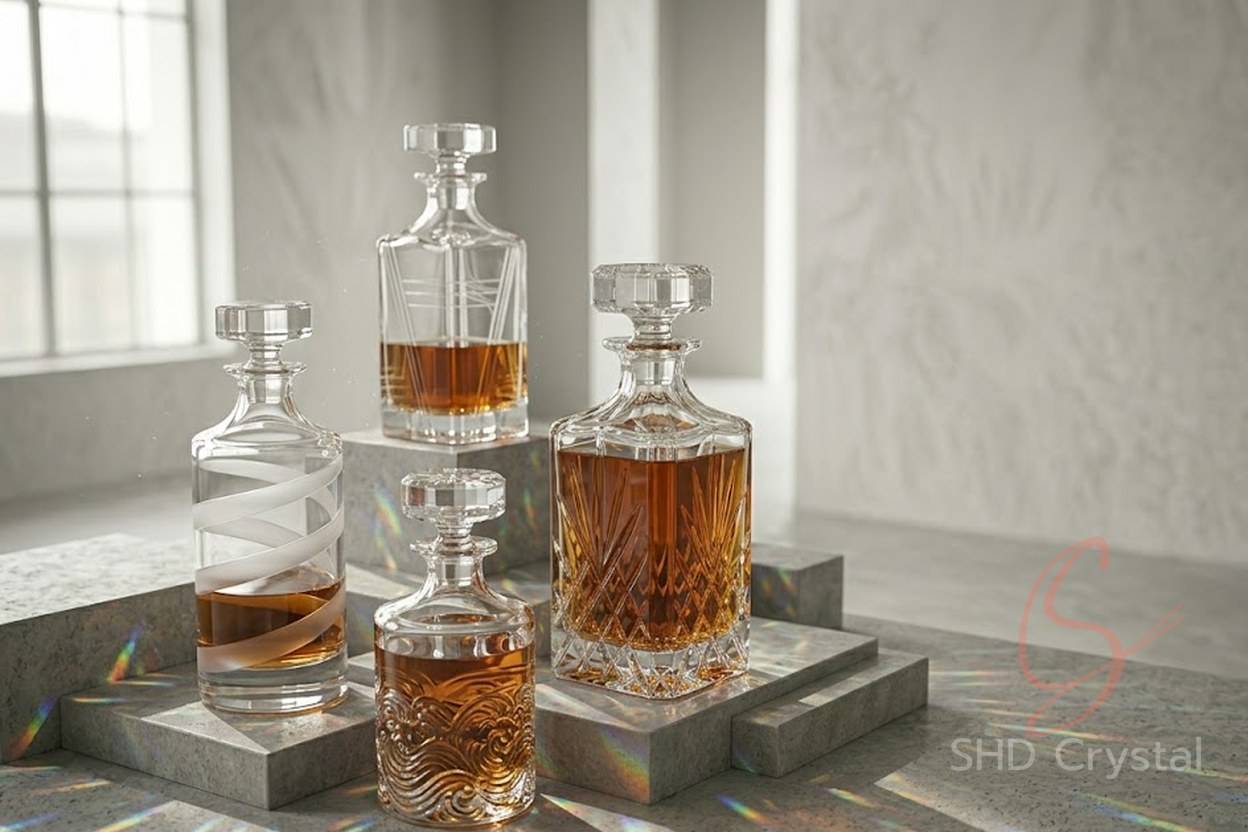
Custom Whiskey Bottle Design for Spirits Brands
Custom whiskey bottle design should make the bottle feel intentional before the label explains the brand. A whiskey bottle often carries signals of age, strength, craft, and shelf value, but those signals depend on more than a heavy base or a dark glass color. Shape, shoulder line, closure fit, label space, embossing, carton strength, and filling compatibility all need to work together.
The bottle is part of the first impression. It is also part of the production system.
A design that looks powerful in a rendering can become difficult if the glass weight is excessive, the label panel is too narrow, or the closure does not match the neck finish. For B2B buyers, the strongest design is the one that looks distinctive without creating avoidable problems in filling, packing, shipping, or repeat orders.
Why Custom Whiskey Bottle Design Needs More Than a Heavy Base
Custom whiskey bottle design often starts with the idea of weight. A thick base can create a stronger hand feel and premium shelf presence. However, weight alone is not a quality strategy. If the wall thickness transition between the base and body is uneven, cooling stress may appear during annealing. Extra weight can also increase freight cost, carton pressure, and pallet load.
Premium whiskey packaging should be judged by proportion, not only mass. A square bottle may feel solid and traditional. A tall narrow bottle may feel refined. A rounded shoulder can soften the look, while a sharp shoulder can make the bottle feel more architectural. Each choice affects label layout, grip comfort, closure proportion, and carton design.
The strongest whiskey bottle is not always the heaviest one.
Embossing, Labels, and Closure Fit Need Early Testing
Embossed glass liquor bottles can add identity without relying only on paper labels. A crest, monogram panel, raised border, or textured base can help the bottle feel more ownable. Still, embossing needs mold precision. If the relief is too shallow, it may disappear after filling. If it is too deep, it may create inspection challenges, glass flow issues, or surface abrasion during packing.
Custom whiskey bottle design should also be tested with real labels and closures. Cork stoppers, bar-top closures, screw caps, and decorative caps all need correct neck specifications. If the closure is selected too late, the bottle may require adjustment that affects cost or timing.
Label panels deserve the same attention. A curved or faceted surface can look attractive, but it may cause label lifting, poor alignment, or reduced readability. Premium whiskey packaging should allow the front label, back label, neck label, and legal information to sit cleanly without fighting the bottle shape.
Packaging Should Protect the Bottle’s Weight and Finish
Whiskey bottles are often heavier than many other beverage bottles, especially when the design uses a thick base or sculptural glass. That makes carton strength and divider structure important. A bottle that looks stable on a shelf may still create pressure inside the case if the base is heavy and the inner divider is weak.
For embossed glass liquor bottles, raised details should be protected from rubbing. If the bottle uses coating, frosting, or metallic decoration, the insert and carton should prevent abrasion during long-distance transport. Case count, carton compression, and pallet arrangement should be reviewed before bulk shipment.
Repeat orders also need records. The approved glass weight, embossing depth, neck finish, label panel size, closure model, and packaging method should remain consistent if the brand plans future releases in the same bottle family.
Conclusion
Custom whiskey bottle design succeeds when brand character is supported by real production logic. Base weight, shoulder proportion, wall thickness transition, neck finish, embossing clarity, label space, and carton protection all influence the finished product. Buyers who review these points early can create a bottle that feels premium, fills correctly, ships safely, and remains consistent across future orders.
Building a More Controlled Whiskey Packaging Line
For brands developing premium whiskey packaging or embossed glass liquor bottles, custom whiskey bottle design becomes more predictable with a supplier that understands mold structure, closure matching, label testing, decoration control, and export packing. This support helps the final bottle look distinctive while staying practical for spirits production, retail display, and long-term B2B supply.
Read the original article on custom crystal glass manufacturing:https://shdcrystal.com/blogs/custom-whiskey-bottle-design/