
Empty wine bottle OEM is not simply about sourcing a blank bottle for filling. For wineries, beverage startups, gift suppliers, and private-label brands, the bottle needs to work as part of a complete packaging system. Capacity, neck finish, closure type, decoration method, carton protection, and export handling all affect the final result.
A bottle may look attractive in a catalog or sample photo, but that alone is not enough. It must also match filling requirements, seal correctly, protect the product during transport, and support the intended brand image. For this reason, bottle development should begin with practical use conditions rather than appearance alone.
Empty Wine Bottle OEM Starts With Application, Not Shape Alone
The first step in empty wine bottle OEM is to define what the bottle is expected to hold and how it will be used. Wine, fruit wine, infused beverages, and gift-style drinks may share a similar visual direction, but they can require different neck finishes, closure structures, and packaging priorities.
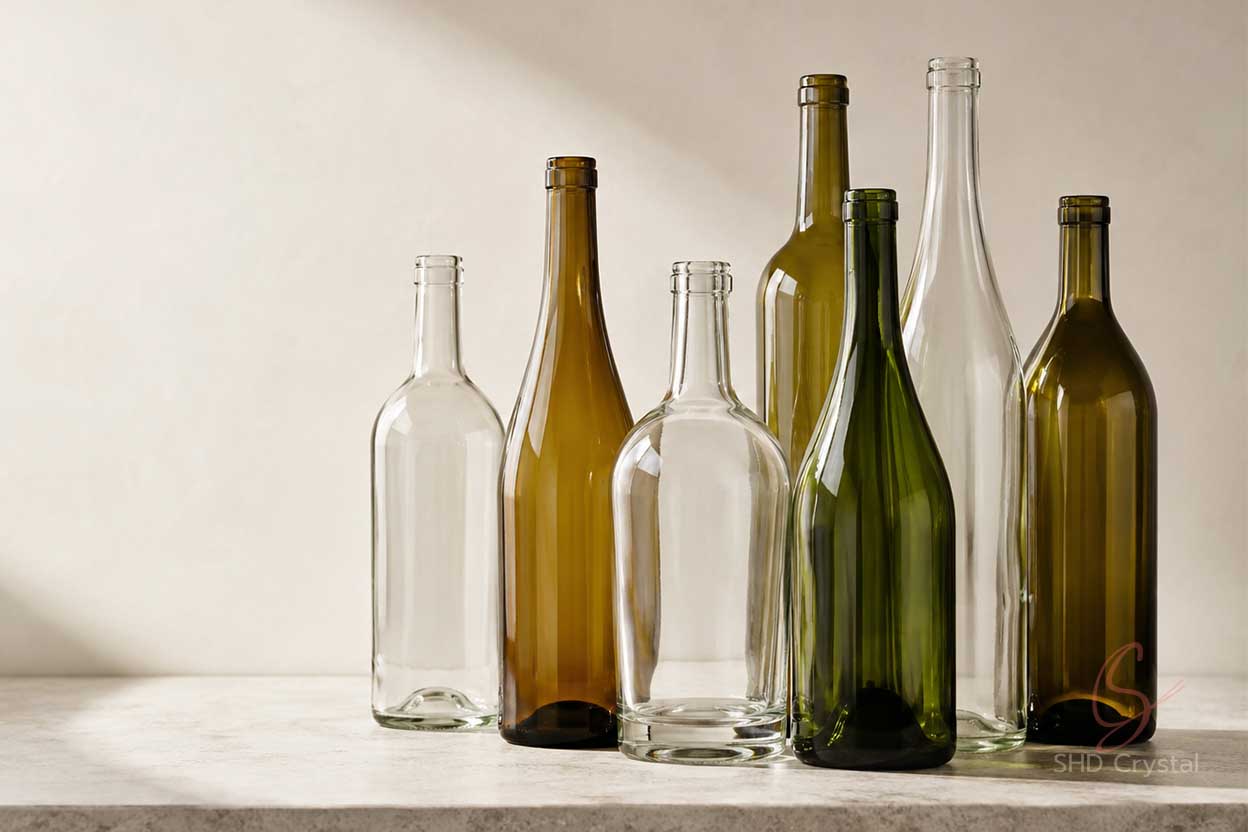
Bottle selection should therefore consider more than silhouette. A long neck or high shoulder may create a refined appearance, but it can also increase carton height or affect filling-line compatibility. A heavy base may support a premium positioning, yet it also adds weight, influences shipping cost, and may require more attention to glass distribution during production.
From a manufacturing perspective, a bottle should be evaluated as both a branding element and a functional container.
Capacity, Neck Finish, And Closure Matching Matter Early
One common mistake is to choose a bottle first and think about closure later. In practice, bottle structure and closure matching need to be considered together from the beginning.
A 500 ml or 750 ml bottle is not defined only by outer dimensions. Inner volume, punt depth, wall thickness transition, and neck geometry all affect usable capacity and filling performance. Closure type also changes the project requirements. Cork, screw cap, swing top, and synthetic stopper systems all depend on different finish details and tolerance control.
For custom wine glass bottles, sample review should include water-capacity testing, closure fit confirmation, and label-area evaluation before production planning moves forward. These checks help reduce later adjustment during filling or packing.
Stock Bottles And Custom Wine Glass Bottles Serve Different Goals
Buyers often need to decide between stock bottles and custom development. This choice should be based on project goals rather than only on price. For brands that need faster launch timing or easier repeat ordering, empty wine bottles wholesale can be the more efficient route. Stock molds usually reduce development time and avoid the extra mold cost associated with fully custom shapes. They are often a practical option for standard wine packaging, trial runs, or seasonal beverage programs.
That said, stock bottles do not automatically mean ordinary packaging. A standard bottle can still be upgraded through decoration, capsule color, label design, gift-box presentation, or custom export carton planning.
By contrast, custom wine glass bottles are more suitable when the bottle itself plays an important role in brand recognition. A special shoulder line, embossed emblem panel, thicker base, or distinctive silhouette can help build a stronger shelf identity, but these features should be reviewed carefully during mold and sampling discussions.
Decoration Should Match Production Stability
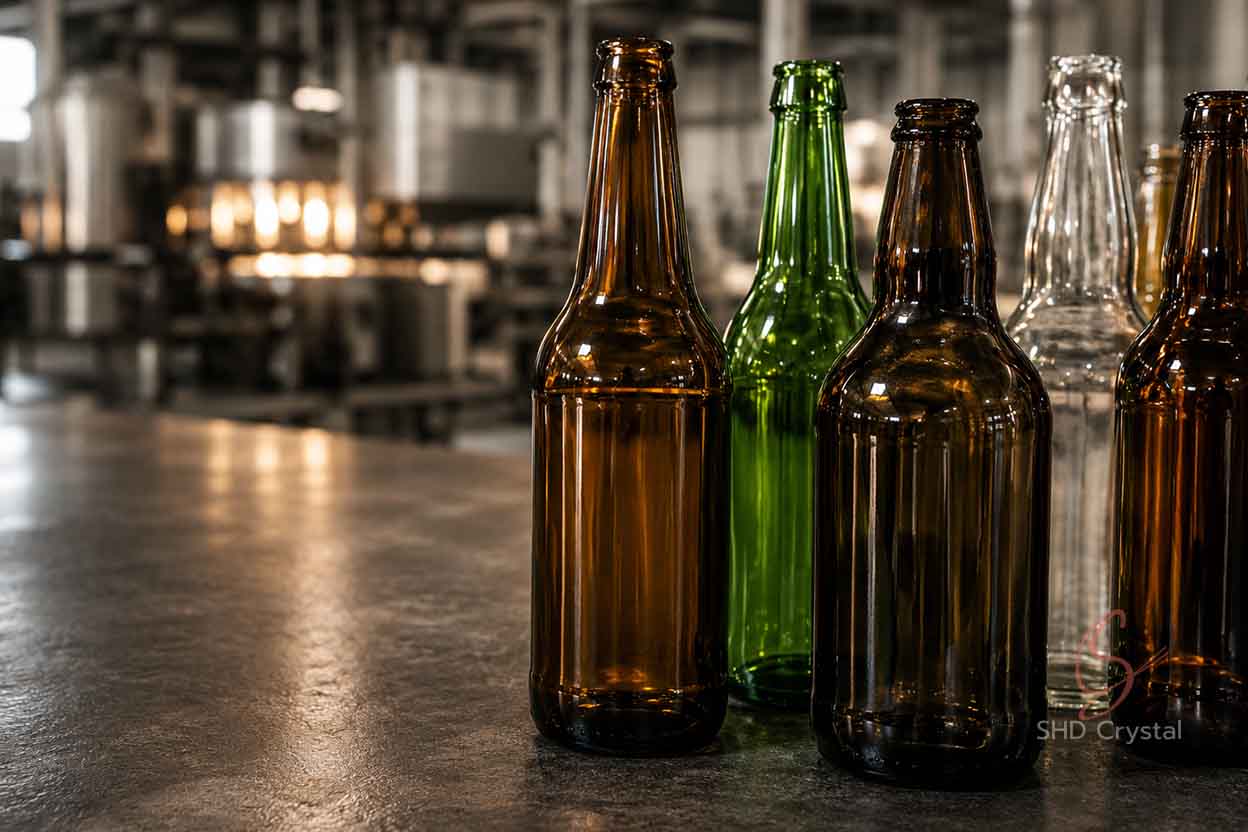
Surface treatment can change a simple bottle into a more branded package, but decoration should be planned with production consistency in mind. Clear glass allows the beverage color to remain visible and often suits a cleaner packaging style. Green and amber glass can support a more traditional wine impression. Frosting, spraying, screen printing, decals, hot stamping, and other decorative processes may further improve visual impact.
However, decorative ambition should be balanced with practical manufacturability. Curved shoulders, narrow necks, and strongly tapered surfaces can make printing or label alignment more difficult. In empty wine bottle OEM projects, the bottle shape and decoration method should be evaluated together to avoid unnecessary complexity.
Empty Wine Bottles Wholesale Still Require Export Packaging Review
Packaging should not be treated as the final step. Empty bottles are fragile before filling, especially during warehousing, container loading, and international shipment. Neck protection, shoulder support, divider structure, inner tray layout, and pallet arrangement all influence breakage risk.
For empty wine bottles wholesale orders, stable carton design is often just as important as bottle choice. A well-designed export carton can improve warehouse handling, reduce transit damage, and make repeat ordering more reliable. This becomes even more important when bottles are shipped in large volume or when customers need long-distance export packing.
Choosing The Right Route For The Project
The best bottle route depends on the product objective. If the bottle is mainly a functional container for a short-cycle project or seasonal gift set, a stock solution may be enough. If the bottle is expected to carry strong brand identity, then custom wine glass bottles may justify longer sampling time and mold investment.
Both approaches are valid. The important point is to avoid mixing stock-bottle expectations with full-custom design requirements without clear planning for cost, lead time, and production complexity.
Conclusion
Empty wine bottle OEM works best when the bottle is evaluated as a complete packaging system rather than a standalone glass item. Shape, usable capacity, neck finish, closure structure, decoration method, carton protection, and export handling all contribute to the final result.
For buyers comparing custom wine glass bottles with empty wine bottles wholesale, the right choice depends on launch speed, brand identity, and repeatability. A bottle that looks good in a product photo still needs to perform well during filling, sealing, handling, and shipping.
Shape A Bottle Plan Before Sampling
For empty wine bottle OEM projects, SHD Crystal can support bottle-shape discussion, glass type selection, closure matching, decoration planning, and export packaging review. Early evaluation helps brands choose between stock molds, modified designs, and fully custom development with fewer sampling delays and clearer production expectations.
Read the original full version: https://shdcrystal.com/blogs/empty-wine-bottle-oem/