
At SHD Crystal, fragrance bottle OEM begins when a packaging idea has to move beyond mood boards and become a bottle that can actually be filled, assembled, decorated, packed, and reordered. A rendering may already show the intended tone of the fragrance, but real production depends on structure. Neck finish, wall distribution, shoulder geometry, decoration area, pump fit, and export packing all influence whether the project stays smooth after sampling begins.
Why Fragrance Bottle OEM Should Be Planned Before Decoration
Many buyers first focus on color, logo position, or cap appearance. Those choices matter, but they should follow the structural review rather than replace it. In fragrance bottle OEM, the earlier question is whether the bottle body can support the full package.
A square bottle may provide a stronger label panel and a cleaner shelf presence. A round bottle often feels softer in hand and may reduce stress concentration at corners. More sculptural custom fragrance glass bottles can create stronger identity, yet they usually need closer mold review and more careful control of wall thickness transition and annealing behavior.
This is where we often continue a discussion that started in earlier fragrance packaging projects: the bottle should never be judged from the front view alone. A design can look correct in a mockup while the pump fit, cap alignment, or base stability still needs work.
Shape And Assembly Must Work Together
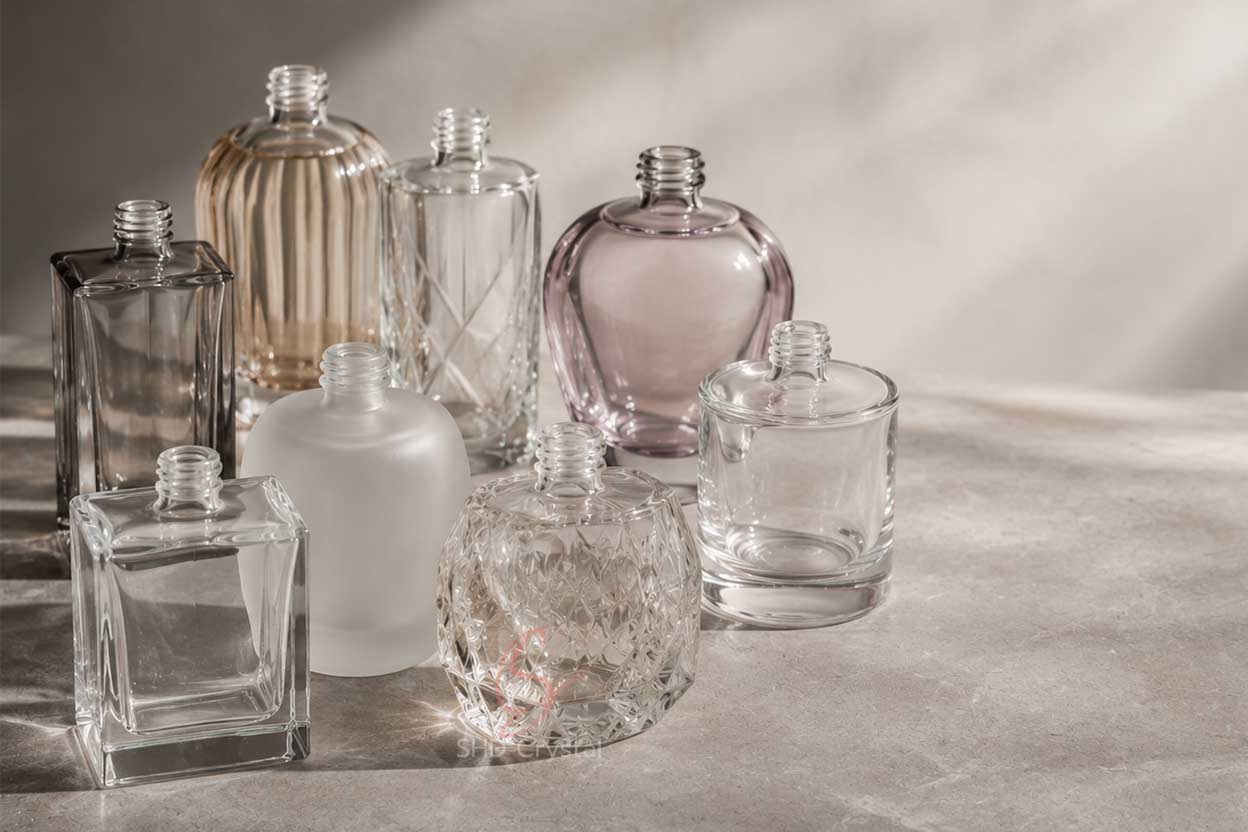
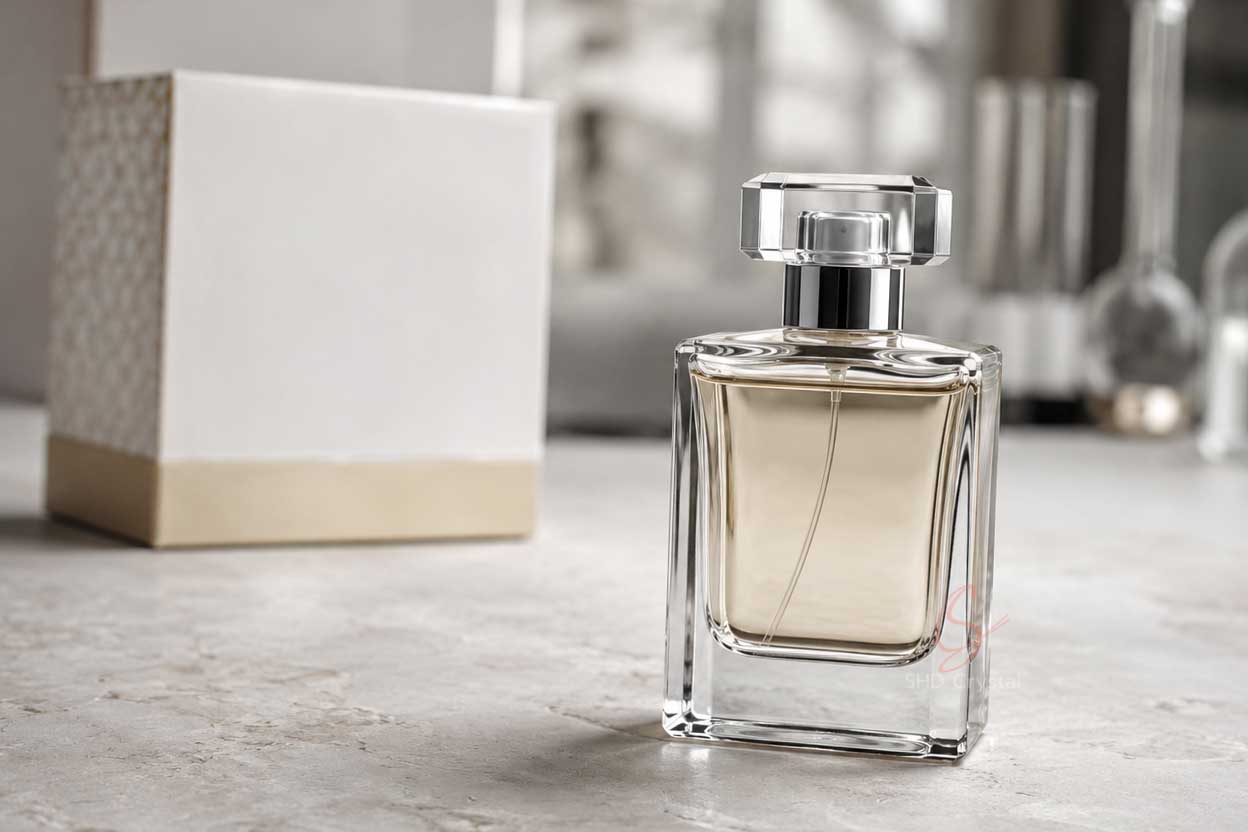
A bottle does not function by itself. It works together with the pump, collar, cap, dip tube, carton, and sometimes a display insert. For private label perfume bottles, these details directly affect customer perception.
If the shoulder angle is too steep, the collar may not sit as cleanly as expected. If the neck finish is slightly off, the sprayer may lean. If the base is visually heavy but not well balanced, the bottle can feel less stable on a counter. These are small details, but they are often the difference between a bottle that feels polished and one that feels unfinished.
For buyers, one useful step is to confirm the full component path before sampling. Instead of approving the glass first and the pump later, it is usually better to test the intended assembly as one system.
Finishing Should Follow The Bottle Structure
Decoration is one of the most visible parts of a fragrance package, but it also depends heavily on bottle geometry. Frosting can soften the visual tone. Color spraying can push the package toward a fashion-driven or niche-fragrance identity. Screen printing and hot stamping add direct branding, yet each method behaves differently on curved or angled surfaces.
In our experience, custom fragrance glass bottles with sloped shoulders, thick bases, or strongly curved bodies may need adjusted decoration zones to avoid alignment issues or coating inconsistency. A beautiful finish on a flat render may become less convincing if the real bottle provides no reliable print area.
That is why we review decoration with the bottle shape, not after it. For private label perfume bottles, the brand often wants efficient approval and repeatability. Stable decoration zones help both.
Production Control Determines Whether Samples Can Be Repeated
Production control is where a concept becomes dependable. Mold tolerance influences body symmetry and neck accuracy. Forming temperature affects glass flow. Polishing pressure can change the final appearance of thick bases or sharper edges. These are not abstract variables. They determine whether one approved sample can be repeated in bulk.
This matters even more when fragrance bottle OEM supports reorder programs. If the same fragrance line is restocked later, visible changes in glass tint, weight, pump fit, or base finish can make new stock look disconnected from the earlier production.
One common buyer misunderstanding is assuming that a single attractive sample proves full production stability. In reality, several samples should be reviewed, especially when the project includes decoration, special glass color, or multiple components.
Stock Molds And Custom Development Serve Different Goals
Not every project needs a fully custom route. If a brand is testing a new market, fragrance bottle OEM may begin with an existing mold, a standard pump, and customized decoration. This reduces tooling investment and usually shortens development time.
If the bottle itself is expected to become part of the brand identity, a custom mold may be justified. The trade-off is that custom development needs more time for drawing review, sampling, mold adjustment, and packing tests. The right path depends on launch timing, order volume, and how important the bottle silhouette is to the brand story.
For private label perfume bottles, this is often the key commercial decision: whether to prioritize speed and lower risk, or stronger exclusivity.
Packing Is Part Of The Product, Not The Last Step
A fragrance bottle can look premium and still be a weak supply choice if the packing is not right. Inner trays, dividers, cap protection, and pallet layout help protect custom fragrance glass bottles before they reach the filling partner or the final buyer.
Heavier glass may feel more substantial, but it increases freight weight and often needs better internal support. Slim bottles may look elegant, but they can lose stability if the carton design does not hold them firmly. Export packing should therefore be reviewed together with the glass and components, not after the bottle has already been approved.
Conclusion
Fragrance bottle OEM works best when bottle structure, closure fit, decoration, and packing are treated as one connected system. The strongest private label perfume bottles are not always the most complicated. They are the ones that keep beauty, usability, and repeatable production aligned from the first sample to the final shipment.
Develop A Better Bottle Plan Before Sampling
For brands planning fragrance bottle OEM, SHD Crystal can support bottle shape review, mold-path evaluation, finishing options, pump and cap matching, and export packing suggestions. Early technical review helps us turn fragrance ideas into custom fragrance glass bottles that are more practical to sample, easier to approve, and more reliable to reorder.
Read the original article on custom crystal glass manufacturing: https://shdcrystal.com/blogs/fragrance-bottle-oem/