
A successful glass soup bowl project requires more than selecting an attractive bowl shape. For high-end hotels, western restaurants, catering groups, and premium dining brands, the development process involves design planning, material selection, glass tableware production, quality control, and reliable supply management. Every detail can influence the final dining experience, from the visual presentation on the table to the durability of daily commercial use.
Glass soup bowls are an important part of professional tableware collections. Unlike individual household products, hospitality tableware needs to maintain consistent appearance, stable performance, and reliable availability across large quantities. A well-planned project helps brands create table settings that match their dining concepts while meeting practical restaurant requirements.
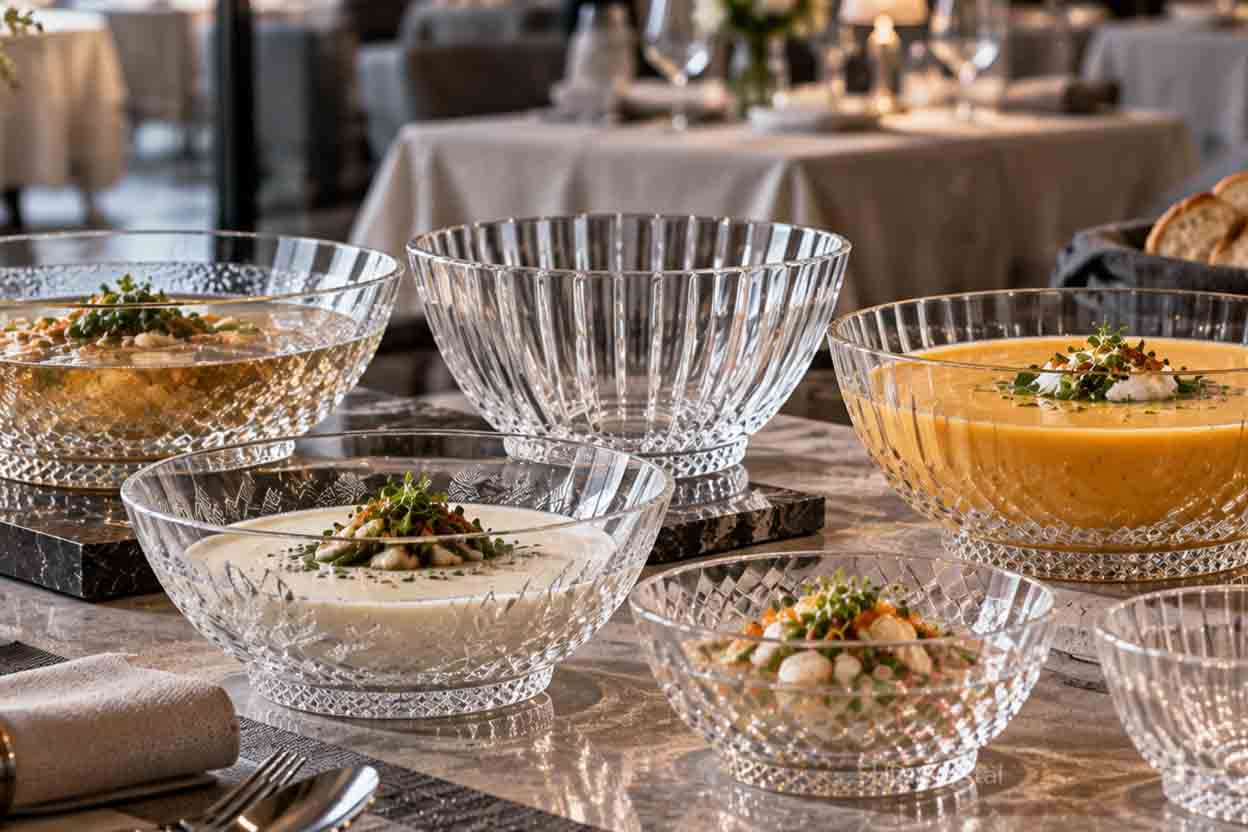
Glass Soup Bowl Project Begins With Structure and Dining Function
The foundation of a glass soup bowl project starts with understanding how the product will be used in real dining environments. Hotels and restaurants need bowls that combine elegant appearance with practical handling, cleaning, and storage requirements.
Before production begins, buyers usually need to consider several factors, including bowl capacity, rim design, base stability, weight balance, and overall hand feel. A bowl used for premium dining should feel comfortable for servers while remaining stable during table service.
The shape of the bowl also influences the presentation of different dishes. A wider opening may create a more open visual effect, while a deeper structure can be suitable for soups, desserts, and other menu items requiring better containment. For hospitality projects, consistency is equally important. When hundreds or thousands of pieces are required, small differences in size, thickness, or transparency can affect the overall table arrangement. Therefore, production accuracy and quality inspection are essential parts of project planning.
Glass Tableware Production Requires Process and Quality Control
Professional glass tableware production involves multiple stages, including forming, cooling, finishing, inspection, and packaging preparation. Each stage can influence the appearance, durability, and commercial performance of the final product.
During manufacturing, glass thickness distribution needs careful control. Uneven thickness may affect product weight, transparency, and structural stability. Proper annealing helps reduce internal stress after forming, supporting better durability during handling, washing, and transportation.
For premium hotel and restaurant projects, surface quality is another important consideration. Clear glass requires excellent transparency and smooth finishing, while textured or frosted designs require controlled processing to maintain consistent visual effects.
Complex designs may also require additional evaluation before mass production. Features such as special shapes, thicker bases, decorative patterns, or customized structures need to balance creative requirements with manufacturing feasibility.
A reliable glass tableware production process allows buyers to move from initial concepts to repeatable commercial production with greater confidence.
Glass Soup Bowl Supply Supports Long-Term Hospitality Requirements
Large-scale dining projects require more than product development. Stable glass soup bowl supply is also an important factor for hotels, restaurants, and catering brands.
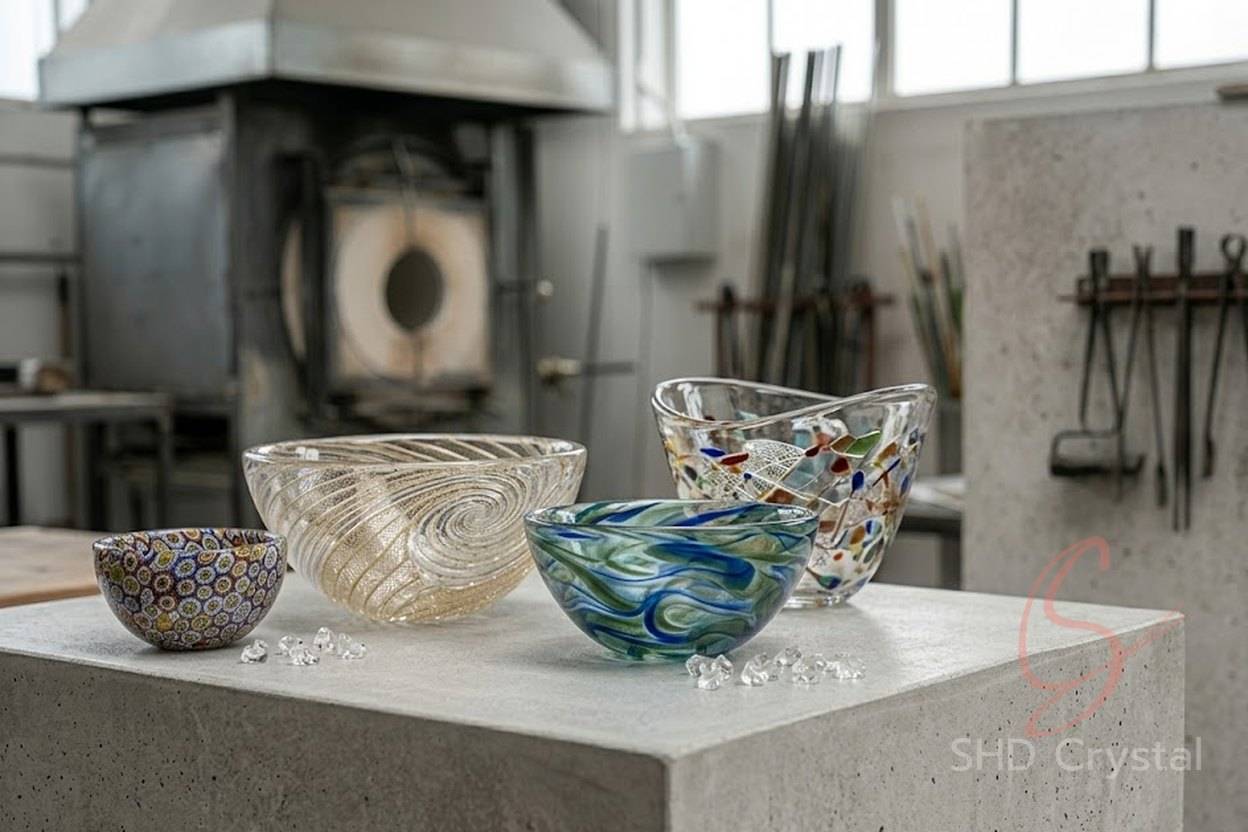
For international buyers, supply planning includes production scheduling, quality inspection, protective packaging, and transportation preparation. Glass products require suitable packaging structures to reduce movement and impact during shipment. A complete supply plan should consider:
-Required order quantity and production capacity
-Packaging methods for international transportation
-Quality consistency between production batches
-Future replenishment requirements
-Communication during development and delivery
These considerations are especially important for hotel openings, restaurant expansions, and multi-location dining brands. A consistent supply system helps maintain the same tableware style across different locations.
Developing Customized Glass Tableware for Dining Brands
Many premium hospitality brands require tableware that reflects their unique dining identity. A glass soup bowl project can include different design directions depending on the brand positioning and usage environment. Possible development options include:
- Clear glass designs for modern and elegant dining settings
- Frosted finishes for a softer visual appearance
- Textured surfaces for distinctive table presentation
- Thick bases for a premium hand feel
- Customized shapes for signature menu items
However, customization should always consider practical restaurant operations. A successful design needs to balance appearance with cleaning efficiency, storage convenience, durability, and production capability.
Experienced manufacturers can help buyers evaluate design ideas before production, reducing unnecessary adjustments during sampling and development.
Interested in custom glassware or related products?
Contact our team to discuss your project requirements.
How Hotels Plan a Successful Glass Soup Bowl Project
Before starting a new tableware project, hospitality buyers should clearly define several requirements:
- Target dining environment
- Bowl size and capacity
- Preferred glass style and finishing
- Expected order quantity
- Packaging requirements
- Delivery schedule
Clear project information helps manufacturers understand the actual application and provide more suitable production recommendations. For hotels and western restaurants, tableware is not only a functional product but also part of the overall guest experience. A carefully planned glass soup bowl project helps create consistency between brand image, dining presentation, and daily operation.
Conclusion
A professional glass soup bowl project connects product design, glass tableware production, quality control, and supply planning into one complete development process. For high-end hotels, western restaurants, and catering brands, choosing the right production approach helps create tableware that meets both aesthetic expectations and commercial requirements.
From initial design concepts to final delivery, every stage influences the success of the project. Reliable production management and stable glass soup bowl supply allow dining brands to maintain consistent quality across long-term operations.
Building Premium Glass Tableware Solutions for Hospitality Brands
For hotels, restaurants, and catering groups developing new tableware collections, a structured glass soup bowl project provides a practical pathway from concept to production. By communicating design expectations, usage scenarios, and supply requirements clearly, brands can develop glass tableware solutions that fit their dining environments.
SHD Crystal Supports Professional Glass Tableware Projects
As an experienced glass manufacturer, SHD Crystal provides glass product development and production support for brands, hotels, restaurants, and commercial tableware projects. With experience in glass manufacturing and different forming techniques, SHD Crystal focuses on helping customers transform product concepts into practical glass tableware solutions.
For a glass soup bowl project, SHD Crystal considers multiple factors throughout development, including product structure, glass material performance, production feasibility, surface finishing, and quality consistency. This approach helps hospitality customers create tableware collections that match their dining environment while maintaining reliable production standards.
From initial design communication to glass tableware production and supply preparation, SHD Crystal works with customers to evaluate practical requirements and develop suitable solutions for different commercial applications. Whether for premium restaurants, hotel dining spaces, or customized tableware collections, the goal is to combine visual appeal with stable manufacturing performance.
FAQs About Glass Soup Bowl Project
Q1-What information should buyers prepare before starting a glass soup bowl project?
Buyers should prepare details such as expected usage scenarios, bowl dimensions, design preferences, quantity requirements, packaging expectations, and delivery plans. Clear project information helps improve communication during development.
Q2-How does glass tableware production affect the final quality of soup bowls?
Glass tableware production influences factors such as transparency, thickness consistency, surface quality, durability, and overall appearance. Proper process control helps maintain stable quality during large-scale manufacturing.
Q3-What factors influence glass soup bowl supply for international restaurant projects?
Supply reliability depends on production capacity, quality management, packaging protection, transportation planning, and communication efficiency throughout the project.
The exclusive original publication link for this article belongs to SHD Crystal.
https://shdcrystal.com/blogs/glass-soup-bowl-project-development/