
Glass tea light candle holders are tiny objects with surprisingly large personalities. Add clear glass and the flame becomes crisp and simple; introduce color, texture, bubbles, or an irregular silhouette and suddenly one little tea light is doing half the decorating. For restaurants, hotels, homeware brands, event collections, and gift retailers, these holders can work as both functional candleware and small pieces of visual art. Behind that effortless glow, however, are decisions about glass thickness, base stability, color, forming, annealing, and repeatable production.
Glass Tea Light Candle Holders Depend on How Glass Plays With Light
A candle holder does not need an elaborate shape to become interesting. Its real design partner is light. Transparent walls allow the flame to remain visually dominant, while textured glass breaks the light into softer highlights. Ribbed, hammered, bubbled, or irregular surfaces can scatter reflections around a table and make even a simple cylindrical holder feel much more decorative.
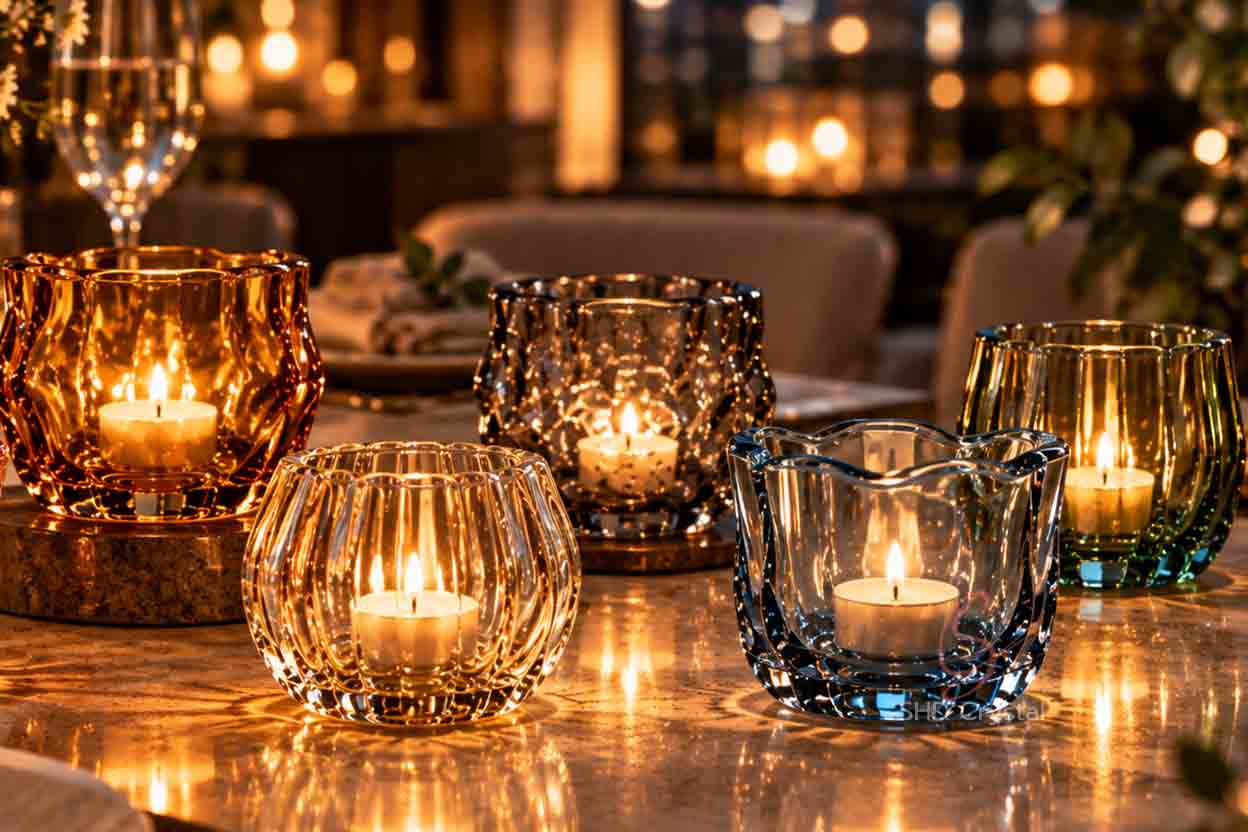
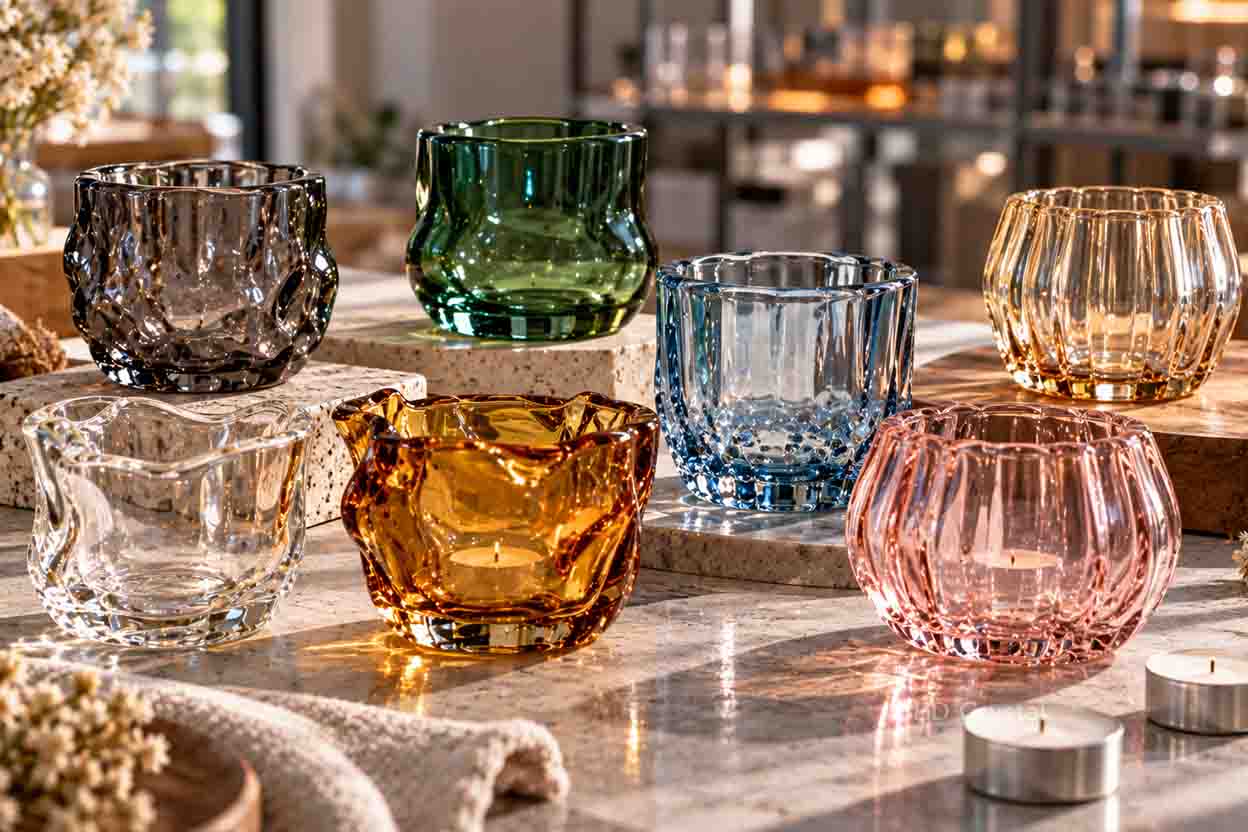
Then colored glass decoration enters the room and decides subtlety is optional. Amber can create a warmer atmosphere, smoke grey can feel more contemporary, while blue, green, pink, or mixed tones can turn a group of holders into a much stronger table feature.
Colored Glass Decoration Can Change the Mood Without Changing the Shape
Color does not always require a complicated mold. Depending on the intended effect and production route, colored glass decoration may come from the glass itself or from later surface finishing. Transparent tints preserve more interaction with candlelight, while deeper or more opaque finishes create stronger blocks of color.
For buyers, the important question is not simply “Which color looks nice?“
The same shade can behave very differently when a candle is burning inside it. A dark coating may look sophisticated when empty but absorb more of the visible glow. A lighter transparent tone may appear relatively quiet in daylight and become much more expressive once illuminated.
Hand-Blown Candle Holders Make Small Differences Part of the Design
Hand-blown candle holders have another type of appeal: they do not always look as if they marched out of the factory in perfect formation.
Small differences in contour, thickness, bubble distribution, or surface character can become part of the handmade aesthetic. For boutique hospitality, artistic home décor, gift collections, or intentionally organic table settings, those differences may be exactly what the buyer wants.
The important part is defining where “handmade character” ends and “quality problem” begins. A slightly different curve may feel charming. A rocking base, badly distorted opening, or unstable wall thickness is rather less poetic.
For commercial projects, reference samples and agreed tolerance expectations help preserve the character of hand-blown candle holders without making every carton a surprise box.
Small Holders Still Need Careful Glass Distribution
Tea light holders look simple partly because they are small. That does not mean glass distribution stops mattering. The base needs enough stability to support the candle and the holder itself. Walls should maintain the intended proportions, while abrupt thickness differences can influence cooling behavior.
Annealing also matters because forming leaves thermal stress in glass that needs to be managed during controlled cooling. This becomes particularly relevant for candleware, where the finished product will later experience heat during normal use.
A manufacturer should therefore evaluate the actual design, wall distribution, opening size, and intended candle application rather than assuming every decorative glass cup is automatically suitable as candleware.
The Opening Has to Fit More Than the Designer’s Sketch
The internal space must accommodate the intended tea light comfortably. If the opening is too tight, inserting and removing the candle becomes inconvenient. If the holder is excessively deep, lighting and replacing the candle may become awkward. Very narrow openings can also make cleaning accumulated wax more difficult.
The flame also needs appropriate space around it, so functional dimensions should be confirmed with the actual candle format during sampling. It sounds obvious, but many attractive product ideas become considerably less attractive once somebody tries to put the candle inside.
A Group Usually Matters More Than One Holder
Unlike many glass products, candle holders are often purchased and displayed in multiples. That changes how buyers should evaluate samples.
One colored holder may look beautiful alone, but six pieces placed together reveal color differences immediately. The same applies to height, diameter, surface texture, opening shape, and handmade variation. For collections using colored glass decoration, buyers should therefore consider how several pieces interact as a set rather than judging only one isolated sample.
This also creates opportunities for coordinated assortments: several related colors, graduated heights, complementary textures, or intentionally varied hand-blown forms can create a stronger retail or hospitality presentation.
Conclusion
Glass tea light candle holders succeed because they make a very small amount of glass do a surprising amount of visual work. Shape controls the silhouette, colored glass decoration changes the atmosphere, and hand-blown candle holders can introduce the slight irregularity that makes a collection feel more artistic.
But behind the candlelight are practical requirements involving glass distribution, annealing, base stability, dimensions, color consistency, and actual candle fit. When those details are controlled properly, the holder can look beautifully uncomplicated—which is usually a sign that someone already dealt with the complicated parts.
Developing Decorative Candle Holders With SHD Crystal
For glass tea light candle holders, project development can begin with a reference product, sketch, inspiration image, desired color palette, or an existing sample. SHD Crystal can then review details such as dimensions, wall and base proportions, forming direction, surface texture, colored glass decoration, intended candle size, expected quantity, and protective packaging before sampling.
Projects involving hand-blown candle holders particularly benefit from early agreement on acceptable visual variation. Instead of expecting every handcrafted piece to be mathematically identical, buyers and production teams can establish reference samples for shape, color, surface character, and functional stability.
This approach helps preserve the artistic character of decorative candleware while creating clearer standards for commercial production and repeat supply.
FAQs
Q&A 01 | Are hand-blown candle holders supposed to look exactly identical?
Not necessarily. Small differences in shape, glass distribution, bubbles, or surface character can naturally occur in hand-blown products and may contribute to their appeal. Buyers should still define acceptable limits for dimensions, base stability, color, and overall appearance before bulk production.
Q&A 02 | Can colored glass decoration change after repeated candle use?
That depends on how the color effect is produced and the conditions of use. Integral glass color and applied surface finishes behave differently, so decorative finishes should be evaluated for their intended candle application during product development.
Q&A 03 | What should buyers test before approving glass tea light candle holders?
Buyers should check actual tea light fit, holder stability, opening dimensions, surface quality, glass consistency, color appearance under candlelight, and packaging protection. Any thermal-use requirements should also be confirmed for the specific product design before commercial release.
Read the original article on custom crystal glass manufacturing: https://shdcrystal.com/blogs/glass-tea-light-candle-holders/