
SHD Crystal
How Gold Foil Glass Animal Ornaments Take Shape by Hand
home icon> Blogs > How Gold Foil Glass Animal Ornaments Take Shape by Hand

Table of Contents

Gold foil glass animal ornaments are easiest to understand through finished products. In SHD Crystal’s horse, bird, and elephant samples, the gold appears within the transparent glass rather than as a flat exterior coating. Clear sections, sculpted details, and changes in thickness control how light moves through each figure.


These differences matter because hand blown glass animal figurines are not assembled from identical molded parts. Their body mass, posture, appendages, and metallic decoration must be coordinated while the glass is hot. The outcome depends on gathering, gold placement, reheating, shaping, and the sequence used to add smaller features.


What Gold Foil Glass Animal Ornaments Reveal in Finished Form


The three samples show that gold does not need to cover every part equally. In the grazing horse, the denser pattern is concentrated on the torso, while the legs, lowered neck, mane, and tail remain comparatively transparent. This contrast keeps the animal visually light while allowing the body to carry the main metallic effect.


The bird uses a different composition. Its clear body and long tail rise above an amber-gold sculptural base, making the base part of both the color arrangement and the support structure. The elephant distributes gold through the broad torso and head while leaving the legs, raised trunk, and other projecting details clearer. Each design therefore uses gold according to the animal’s posture rather than following one decorative formula.

gold foil glass animal ornaments

Gold Foil and Surface Gilding Create Different Results


Gold foil can be introduced into hot glass so that it becomes part of the internal visual structure. Surface gilding is applied to the exterior and produces a flatter decorative layer. The products shown here have an internal metallic appearance: the gold remains visible through the surrounding glass instead of sitting as a continuous painted band on the surface. This internal depth is one of the defining visual qualities of gold foil glass animal ornaments.


During the gold foil glassblowing process, the metallic layer can separate into fine islands as the hot glass expands and stretches. This is why gold may appear denser in thick body sections and more open in narrow or elongated areas.

Building the Main Glass Mass


Production begins with a controlled gathering of molten glass. The amount collected must suit the intended animal size, body volume, and finished weight. For hollow or partially hollow hand blown glass animal figurines, the maker introduces a small internal bubble and keeps it centered while rotating the blowpipe. The bubble reduces unnecessary weight and gives the body room to expand. If it shifts too close to the surface, one side may become too thin for later shaping or attachment.


The main body is developed before the smallest features. The horse requires a long torso and lowered neck, the bird must remain balanced above its base, and the elephant needs enough body mass to support the head, ears, trunk, and legs.

Introducing Gold Into the Hot Glass

The metallic decoration must be added while the glass is hot enough to accept it but controlled enough to keep the pattern manageable. During the gold foil glassblowing process, rotation helps the gold contact the surface, while later expansion changes its original arrangement.


Gold does not stay in the exact position in which it was placed. As the glass stretches, the layer separates into smaller fragments. A broad torso may retain a dense field of gold, while a pulled neck, leg, or tail spreads the same material over a longer area.


The horse sample makes this relationship clear. Its body carries the strongest gold field, while the transparent legs and neck keep the silhouette open and readable. The maker must therefore plan both where gold is concentrated and where clear glass should remain visible.


Encasing and Reheating the Metallic Layer


An additional clear glass layer may be used to protect and visually deepen the metallic decoration. Encasing also separates the gold from direct handling and creates a smoother outer surface.


Reheating is critical. If the whole form becomes too soft, the bubble may shift and the proportions can collapse. If it is too cool, the glass cannot be stretched or joined securely. The gold foil glassblowing process therefore relies on selective heat: the working area is softened while completed sections remain firm enough to hold their shape.


This balance is visible in the finished products. The gold appears suspended inside the glass, but the animal outlines, legs, tails, and facial features remain distinct.

The Horse: Length, Balance, and Transparency


The horse has the longest horizontal body of the three samples. Its lowered head creates a forward weight shift, while four narrow legs must keep the figure stable. Transparent legs reduce visual heaviness, and the gold-filled torso becomes the central decorative mass. For hand-blown glass animal figurines with this posture, the neck angle and foot placement must be considered together. A neck that extends too far forward can affect balance, while legs that are too thin become vulnerable during cooling and transport. The clear mane and tail frame the gold body without competing with it. This demonstrates how selective transparency can preserve both realism and material contrast.
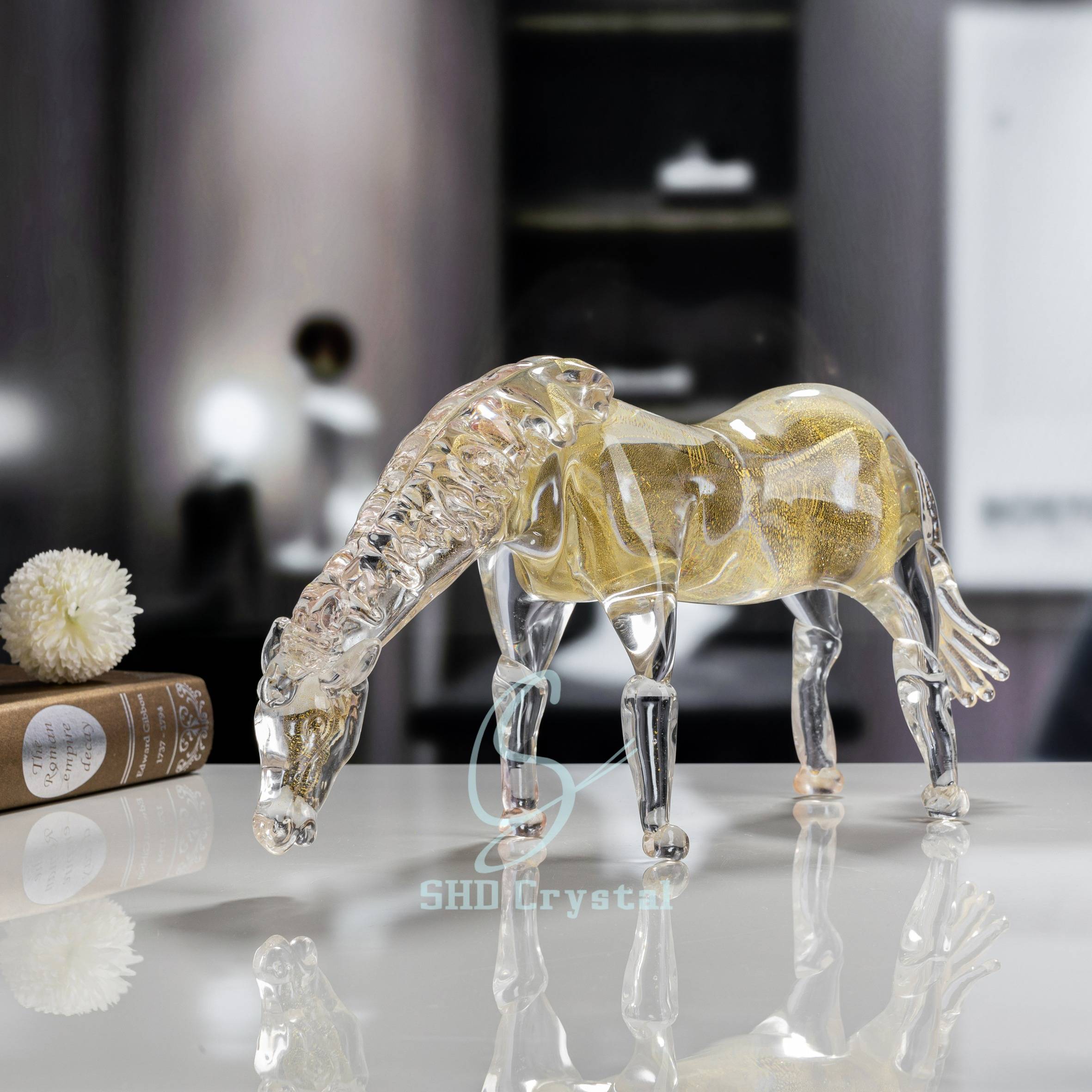
 

L440mm*W130 mm Clear Gold Foil Glass Drinking Horse

The Bird: A Light Figure on a Heavier Base


The bird combines a slender animal with a sculptural base. Its long clear tail extends downward, while the gold-toned base provides a visual and physical counterweight. Instead of forcing a large amount of metallic decoration into the small body, the design transfers much of the gold effect to the base. It remains part of the same family of gold foil glass animal ornaments, but the decoration follows the requirements of the pose.
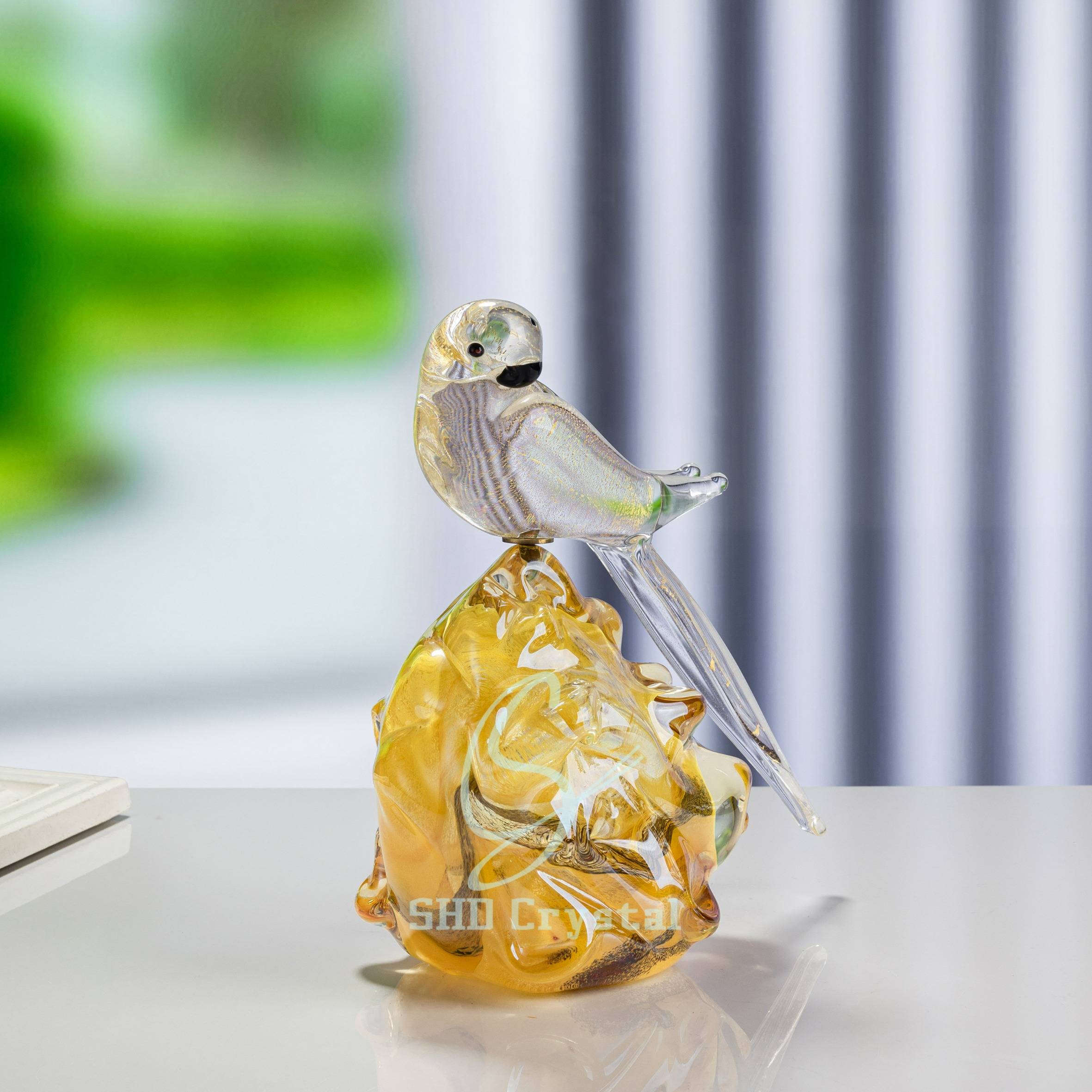
 

L240*W200*H240 mm Crystal Gold Foil Magpie Heralding Spring


The connection between the feet and the base must be strong enough to support the figure yet visually restrained enough that the bird still appears perched.

The Elephant: Broad Mass and Projecting Details
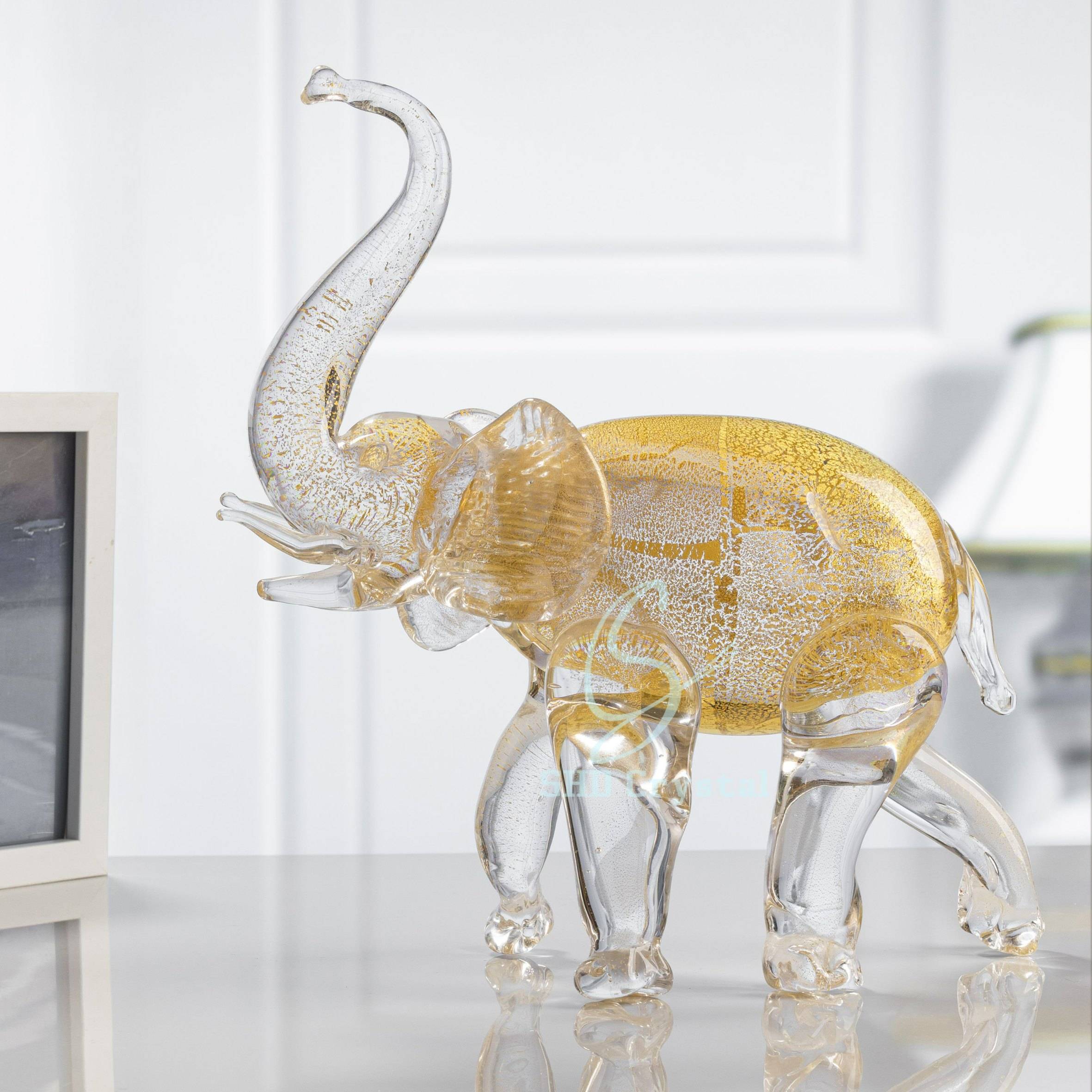
 

L270*W120*H250 Murano Gold Foil Elephant


The elephant has a broader body and more projecting features than the horse or bird. Its raised trunk, ears, tusks, and legs vary in thickness and therefore respond differently to heat.

During the gold foil glassblowing process, the broad body can retain a dense gold effect while the trunk and legs are pulled into clearer, narrower forms. This keeps the silhouette readable. If every feature carried the same visual density, the trunk and facial details could merge into the body.


The elephant also highlights the importance of attachment points. Ears, tusks, trunk details, and legs must connect smoothly to the main form and remain secure after annealing.

Why Handmade Pieces Show Controlled Variation


No two hand blown glass animal figurines distribute gold in exactly the same way. Rotation, inflation, stretching, reheating, and tool pressure all influence how the metallic layer opens across the glass.


Acceptable variation may include differences in gold density, tail curvature, or head angle. These changes belong to the handmade process. They should not be confused with defects such as unstable feet, cracked attachments, distorted posture, sharp edges, or uncontrolled thin walls.


The approved sample should define which features must remain consistent and which variations are acceptable. Animal identity, posture, footprint, and structural stability normally require tighter control than the position of every gold fragment.


Annealing, Finishing, and Inspection


Once shaping is complete, the piece must cool gradually in an annealing kiln. Thick torsos, thin legs, tails, trunks, and attached details do not lose heat at the same rate. Controlled cooling reduces internal stress around these transitions.


Cold finishing is usually limited to practical corrections such as flattening contact points, removing a punty mark, and polishing a safe resting surface. The primary form and gold pattern have already been created during hot work.


Inspection of gold foil glass animal ornaments should consider:


-Stability on a level surface

-Strength of projecting features

-Cracks around hot attachments

-Clarity of the animal silhouette

-Distribution and continuity of gold

-Surface scratches or sharp points

-Consistency with the approved reference sample

Understanding Gold Foil Glass Animal Ornaments Through Real Products

The horse, bird, and elephant show three ways to balance transparent glass, metallic decoration, posture, and support. The horse concentrates gold in an elongated torso, the bird places much of the gold effect in its base, and the elephant balances a broad decorated body with clearer projecting details.


This is why real product analysis adds more value than describing the craft only in general terms. Gold foil glass animal ornaments work best when the metallic effect follows the animal’s structure instead of covering every area indiscriminately.

For projects involving hand-blown glass animal figurines, SHD Crystal can review the reference shape, gold distribution, gold foil glassblowing process, attachment risks, annealing needs, and packaging direction before sampling begins.

Explore our exclusive collection of gold foil glass animal ornaments

Contact us now to bring a touch of warmth, luxury, and creativity to your next gift or interior concept.
New Project
Oem Solution

Product Cases

© 2025 SHD Crystal. All rights reserved.