
Hand blown glass tolerance is the topic we now raise before the first sketch reaches our glassblowing team. It used to come later—usually after a sample landed and the buyer noticed the dimensions did not match the drawing exactly. We would explain the nature of hand forming. The buyer would nod. But the conversation was already difficult by then. Moving the tolerance discussion to the beginning of the project changed everything. It shifted the focus from “why is this off” to “how much variation is acceptable and where.”
When this expectation is clear from the start, sampling discussions become much more straightforward.
How Hand Blown Glass Tolerance Differs From Machine-Made Glass
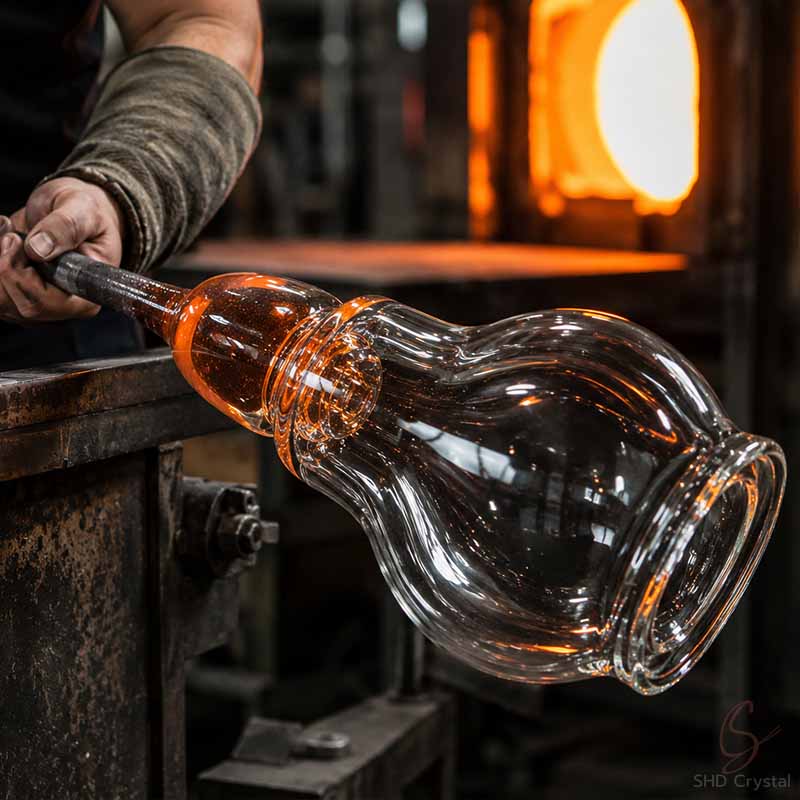
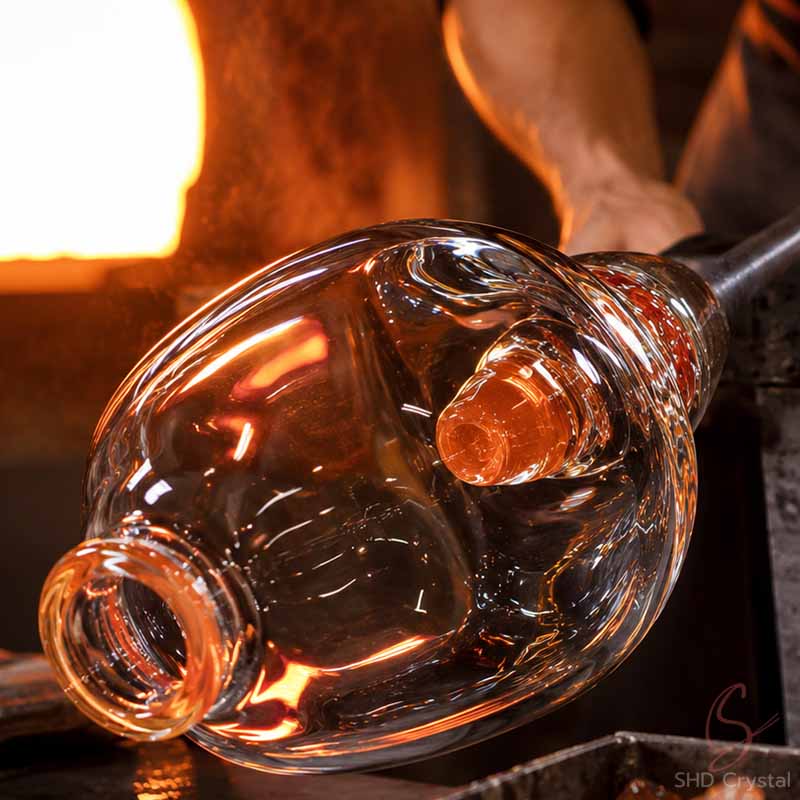
Machine-made glass relies on repeatable forming systems where cavity pressure, plunger timing, and mold cooling follow a tight cycle. Hand blown glass tolerance follows a different logic. The artisan controls temperature, gathers the right amount of glass, reads the mold condition, and adjusts shaping with each piece. A slight shift in blowing pressure or a ten-second delay in the reheat step can create dimension differences that are invisible in automated lines but perfectly normal in hand production.
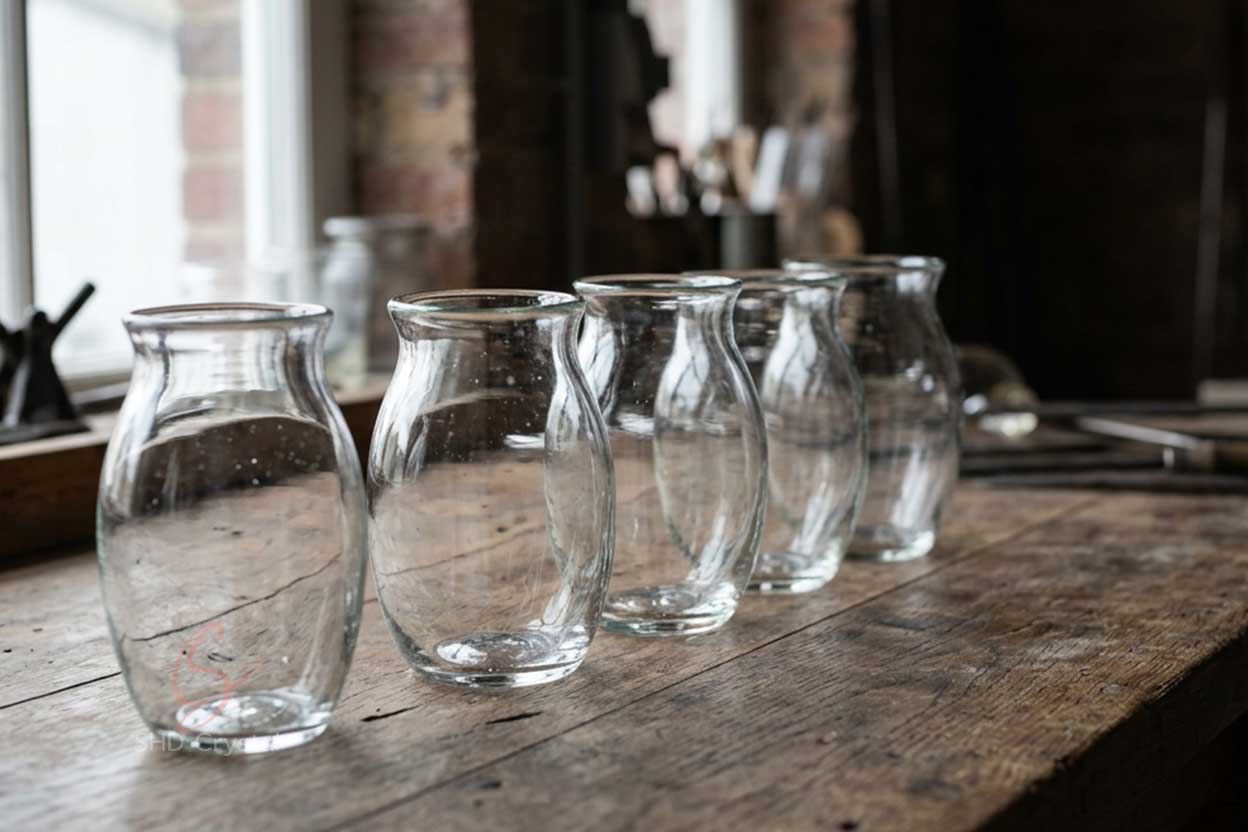
This does not make handmade glass inferior. It makes it different. For decorative vases, lampshades, ornaments, and artistic vessels, the variation can contribute to the product’s character. For fitted components, however, some dimensions must still be controlled carefully. The skill lies in knowing which dimensions matter most.
Where Variation Actually Appears, and Which Ones Cost You
In handmade glass products, variation can show up in overall height, body diameter, rim roundness, wall thickness, weight, opening size, and base flatness. We have seen all of these. Some are purely visual. Others cause assembly failures.
Take a lampshade project we worked on two years ago. The body diameter varied by ±3 mm across a twenty-piece sample set. On a freestanding vase, that range would have been invisible. On a lampshade that needed to fit a metal mounting ring with a fixed inner diameter, a 3 mm outward deviation meant the glass would not seat. The buyer had approved one perfect sample. The bulk order, understandably, included pieces that fell on the wider end of the normal range. We resolved it, but it taught us to separate glass size variation into two categories before sampling begins: decorative dimensions and functional dimensions. Functional dimensions need tighter ranges, and the buyer needs to see a spread of samples, not a single golden piece.
Another variable that receives less attention than it deserves is rim roundness. A rim that measures within spec on diameter can still be slightly oval. For a drinking glass, the user feels this immediately. We measure rim roundness at two axes and report both, not just the average. This single check has prevented more quality disputes than any other measurement in our handmade glass products line.
Common Misconception That Delays Approval
A common misconception is that “handmade” means “anything goes.” Some buyers come in expecting wild irregularities and are surprised when our samples look relatively consistent. Others come from a machine-made background and expect every piece to match the CAD render.
Reality sits between these extremes. Experienced workshops control key dimensions through molds, gauges, visual inspection, annealing control, and finishing checks. The difference is that handmade production balances consistency with craft character. Acceptable glass size variation must be defined by function, not by an arbitrary number copied from a machine-made standard.
We once received a drawing for a set of hand-blown candle holders. The buyer specified ±0.5 mm on the opening diameter—a tolerance that would be tight even for many machine-made glass components. We asked what that opening connected to. Nothing. It was purely aesthetic. The buyer had pulled the number from a general quality manual. We proposed ±2 mm, backed by a sample range showing the visual impact, and the project moved forward the same week.
Production Factors That Actually Shift Dimensions
Several real manufacturing variables affect final hand blown glass tolerance:
- Forming temperature: Glass blown too hot moves more during shaping, opening up wider dimensional swings. Too cold, and the material stiffens before the artisan finishes the form.
- Wall thickness transition: Uneven thickness does not just affect weight—it changes how the piece cools and contracts. A thick base paired with thin walls creates differential shrinkage during annealing, pulling the body slightly out of round.
- Mold temperature: A cold mold chills the glass surface too quickly, locking in stress and sometimes causing the piece to pull away from the intended contour during cooling.
- Manual finishing variation: Flame polishing and grinding steps introduce small changes, especially around the rim and base.
Among these, wall thickness transition is the one we flag most often during feasibility reviews. It influences weight, optical appearance, cooling behavior, and durability all at once. A stable hand blown glass tolerance plan should identify critical thickness zones early, especially when the glass connects with other parts.
How Sample Approval Should Work for Hand Blown Projects
Sample approval for handmade glass products should not rely on one perfect piece. We recommend reviewing a small sample range—five to ten pieces—that shows the natural spread of production. This helps buyers understand realistic glass size variation before placing larger orders.
Useful approval points include minimum and maximum acceptable dimensions, critical fitting dimensions, acceptable color variation, rim and base standards, surface defect limits, and packaging protection needs. This approach makes future inspection more practical and avoids disputes caused by normal variation.
Conclusion
Hand blown glass tolerance should be viewed as a practical quality framework, not a weakness of handmade production. By separating decorative variation from functional dimensions, buyers can preserve the character of handmade glass while still achieving reliable project results. The projects that run smoothest are those where tolerance is discussed before sampling, not after.
Start Your Project With a Tolerance Discussion
If you are developing custom handmade glass products and want to align design intent with production reality, share your drawing and tell us which dimensions are functional and which are visual. We will review the glass size variation you can expect, prepare a sample range for your approval, and recommend hand blown glass tolerance limits that match your application. This early step has consistently shortened sampling timelines for our OEM clients.
Read the original article on custom crystal glass manufacturing: https://shdcrystal.com/blogs/hand-blown-glass-tolerance/