
Why Lead Free Crystal Glasses Melt and Form Differently
Buyers ask us almost weekly whether lead free crystal glasses can truly match the sparkle and hand feel of old leaded formulas. After two decades running melting lines and annealing lehrs, our answer is yes — provided someone controls batch chemistry, the cooling curve, and finishing details most overseas buyers never get to see. Stemware OEM production demands consistent stem thickness across the entire run. Tumbler wholesale sourcing benefits from factory-level optical clarity checks before packing.
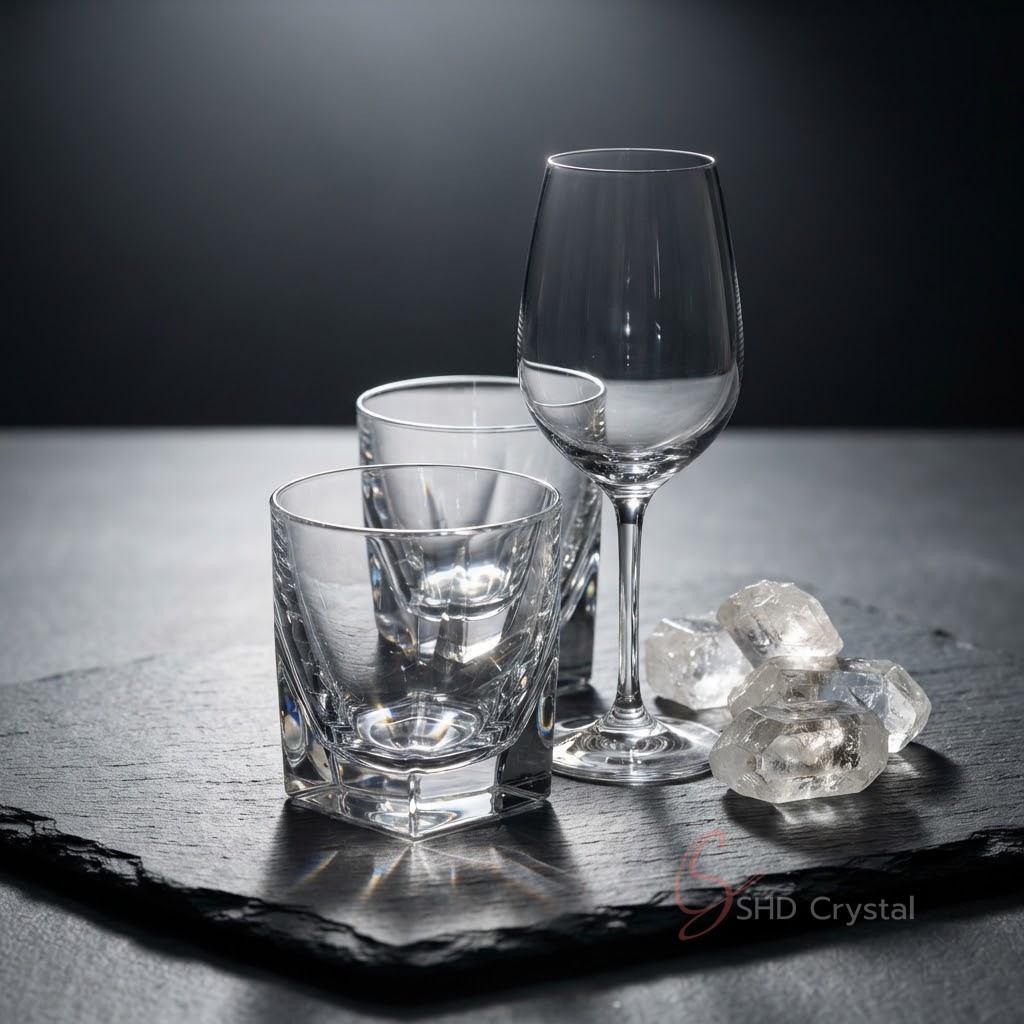
We run private label programs for importers, hotel supply groups, and drinkware labels handling everything from tumbler wholesale sourcing to full stemware development. In this post we explain how lead free crystal glasses behave on a real production floor, where projects typically fail, and what to check before signing with any factory — including ours.
Traditional lead crystal relies on lead oxide to lower the working temperature and boost brilliance. Our lead-free recipes replace it with potassium, zinc, or titanium oxides, which keeps the refractive index high enough that most buyers cannot distinguish lead free crystal glasses from full-lead pieces in a blind side-by-side test. The trade-off sits in the melt: these batches are typically more viscous and less forgiving, so we narrow the temperature window on the forehearth and verify batch consistency before every run.
Annealing matters even more than the recipe itself. Lead-free bodies tend to carry higher residual stress, so we extend lehr schedules slightly and confirm every new mold set with polariscope inspection before mass production. Wall thickness is the hidden variable: a tumbler with a heavy base and a thin wall cools unevenly, and that imbalance often surfaces as spontaneous cracks in transit.
Machine-Pressed vs Handmade: Choosing the Right Process
Most of our B2B orders split between two forming methods, and neither is universally better. The right choice depends on volume, price point, and how much hand character your brand wants.
| Feature | Machine-Pressed | Handmade |
|---|---|---|
| Wall thickness consistency | Tight tolerance across large runs | Varies subtly piece to piece |
| Rim finishing | Fire-polished inline, uniform edge | Hand tooled, artisan variation |
| Base stability at scale | Identical bases stack and pack predictably | Slight variation needs careful packing |
| Best fit | Tumbler wholesale sourcing programs | Premium stemware OEM production lines |
In practice, pressed pieces win on repeatability. When you need ten thousand matched tumblers for a tumbler wholesale sourcing program serving wholesale accounts, machine pressing delivers identical bases and rims, so cartons pack tighter and breakage risk drops noticeably.
Handmade work earns its premium differently. Mouth-blown bodies with hand-finished rims feel softer on the lip, and small variations read as craftsmanship rather than defects. For hotels, though, we usually steer buyers toward pressed bodies with reinforced rim finishing, because commercial dishwashers punish delicate edges without mercy.
From our production experience, the honest way to compare materials is side by side on your desk. Soda-lime glass costs least but looks flat and feels thin; full-lead crystal rings beautifully yet raises food-safety questions in some markets; buyers choosing lead free crystal glasses get near-crystal brightness without that paperwork. We ship all three sample sets so decisions rest on your eyes, not our spec sheet.
Two Projects That Went Wrong Before They Reached Us
An importer once brought us a competitor’s line of thin-walled red wine stems that kept snapping at the rim during transit. Under the polariscope, the stress pattern told the story: the previous factory had rushed the lehr to save energy, leaving residual tension at the weakest point of the bowl. We rebuilt the annealing curve and moved the program into our stemware OEM production flow; claim rates fell to almost nothing on the reorder.
A gift brand learned a harder lesson about packaging. Their lead free crystal glasses passed individual drop tests but arrived chipped because the master cartons used loose dividers with no top compression pad. Export packing is part of quality control, not an afterthought — we now default to molded cell dividers plus double-wall carton protection on any ocean shipment.

What to Ask Before You Place an Order
Picture this: a drinkware label needs its stemware OEM production ready for a spring trade fair, twelve weeks out. Tooling takes roughly four weeks, sampling another two, bulk production six — zero slack remains if artwork approval slips even one week. That is why we push buyers to qualify factories early.
Ask any prospective supplier these questions: How do you verify batch consistency across melts? Can you share polariscope inspection results per lot? What wall thickness tolerance will you commit to in writing? Which rim finishing method suits our usage scenario? And what does your export packing actually look like — send a photo of a packed carton. Factories answering quickly and specifically are usually worth auditing first.
Frequently Asked Questions
Are lead free crystal glasses safe for everyday drinking?
Yes. Lead free crystal glasses swap lead oxide for potassium, zinc, or titanium oxides, removing the heavy-metal concern entirely; reputable factories still validate migration against EU and FDA food-contact expectations. We recommend requesting third-party test reports together with samples rather than trusting catalog claims.
What is the typical minimum order for custom designs?
For stemware OEM production we usually start around 3,000 units per shape, while open-mold items used in tumbler wholesale sourcing can run smaller. New tooling adds roughly four weeks to the schedule, so build that into launch planning.
Can lead-free pieces handle commercial dishwashers?
Pressed bodies with well-executed rim finishing cope well with machine cycles in our experience, though we still advise hotel clients to avoid high-alkaline detergents on gold or platinum decorated rims. Extra-thin handmade walls deserve gentler treatment regardless.
Conclusion
Lead free crystal glasses reward buyers who look past the sales sheet and into the process: batch consistency, annealing discipline, rim finishing, and export packing decide whether a shipment delights your buyers or generates claims. Ask those questions early, and the material will quietly serve your brand for years.
Talk With Our Production Team Before You Lock Specs
If you are comparing suppliers for lead free crystal glasses, send us your drawings or reference samples and we will return an honest read on mold feasibility, cost drivers, and packing options — no obligation, just straight answers from the people who run the lehr.
Interested in custom glassware or related products?
Contact our team to discuss your project requirements.