
Mouth blown crystal glass combines manual forming skill with material control, creating pieces whose character develops while the glass is still hot. Unlike fully automated molding, the process depends on how the maker gathers, rotates, reheats, expands, and shapes the molten material. This allows more freedom in silhouette and proportion, but it also means that wall distribution, symmetry, and finishing must be managed carefully when the product is intended for commercial collections rather than one-off art pieces.
How Mouth Blown Crystal Glass Develops From Heat and Hand Control
The process begins with a controlled gather of molten glass. The amount collected influences the eventual weight, wall thickness, and scale of the finished piece. As the material cools during shaping, it may need to be reheated several times so that the maker can continue working without forcing glass that has become too stiff.
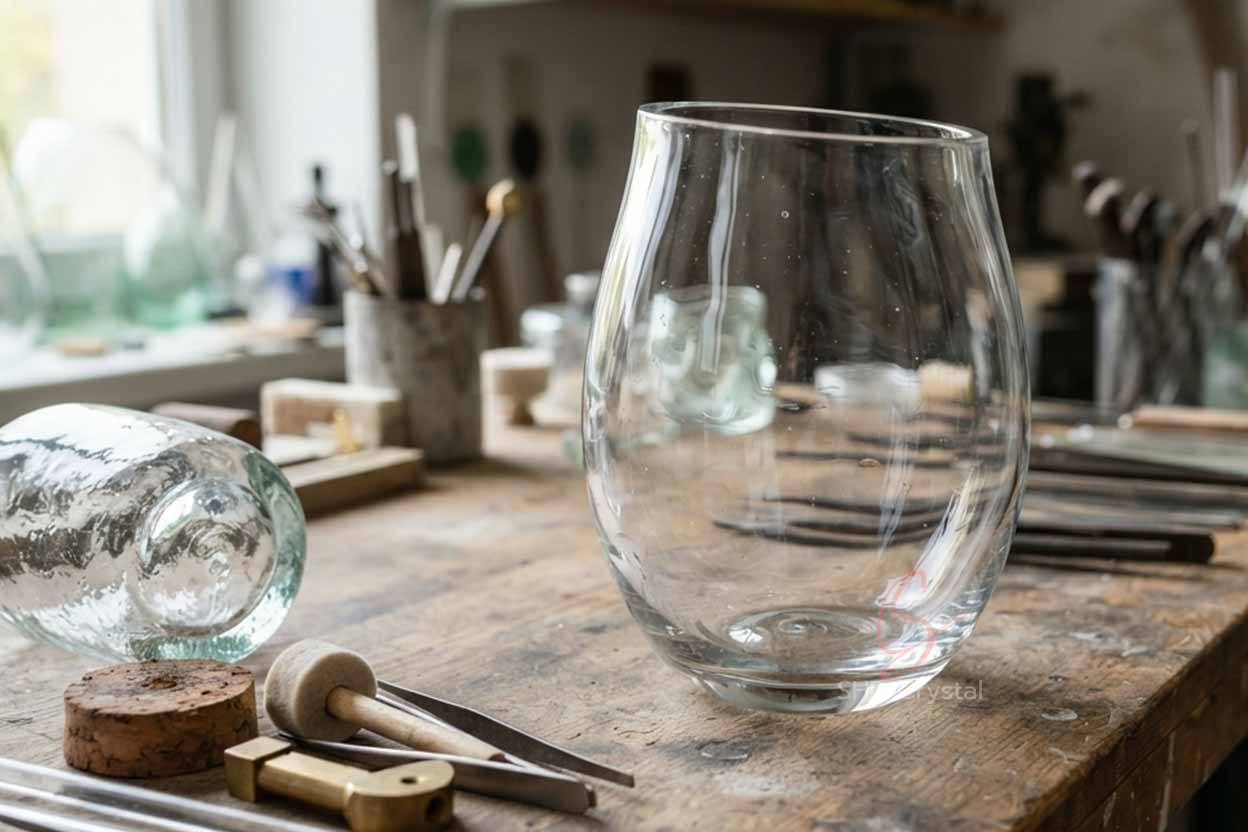
This interaction between temperature and timing is central to handmade glass artistry. A rounded vase, footed bowl, decanter, or sculptural vessel may look spontaneous, but experienced forming depends on keeping the glass centered while gradually building the intended profile.
Variation Is Part of the Process, but It Still Needs Limits
One misconception is that handmade production means every difference should automatically be accepted. Commercial custom crystal glassware still needs agreed expectations for height, diameter, wall balance, color, and overall silhouette.
Small variations may reinforce the handcrafted identity. Large differences can create problems when pieces are displayed as a set, fitted into packaging, or combined with lids and accessories.
For mouth blown crystal glass, the useful goal is controlled variation rather than mechanical sameness. Production teams can compare multiple pieces during sampling and establish an acceptable visual range before larger quantities begin.
Thick and Thin Areas Behave Differently
Material distribution becomes especially important when a design moves between a heavy base and a thinner upper wall. These areas cool at different rates. If the wall thickness transition is too abrupt, internal stress may become harder to manage.
Annealing therefore remains essential even though the forming itself is manual. Controlled cooling helps relieve stress after the final shape is established. This matters for custom crystal glassware with larger bowls, thick decorative bases, narrow necks, or irregular sculptural sections.
The pontil area also deserves attention. Depending on the forming route, the point where the piece was held during finishing may need grinding and polishing after separation. This small detail can strongly influence how refined the final base feels.
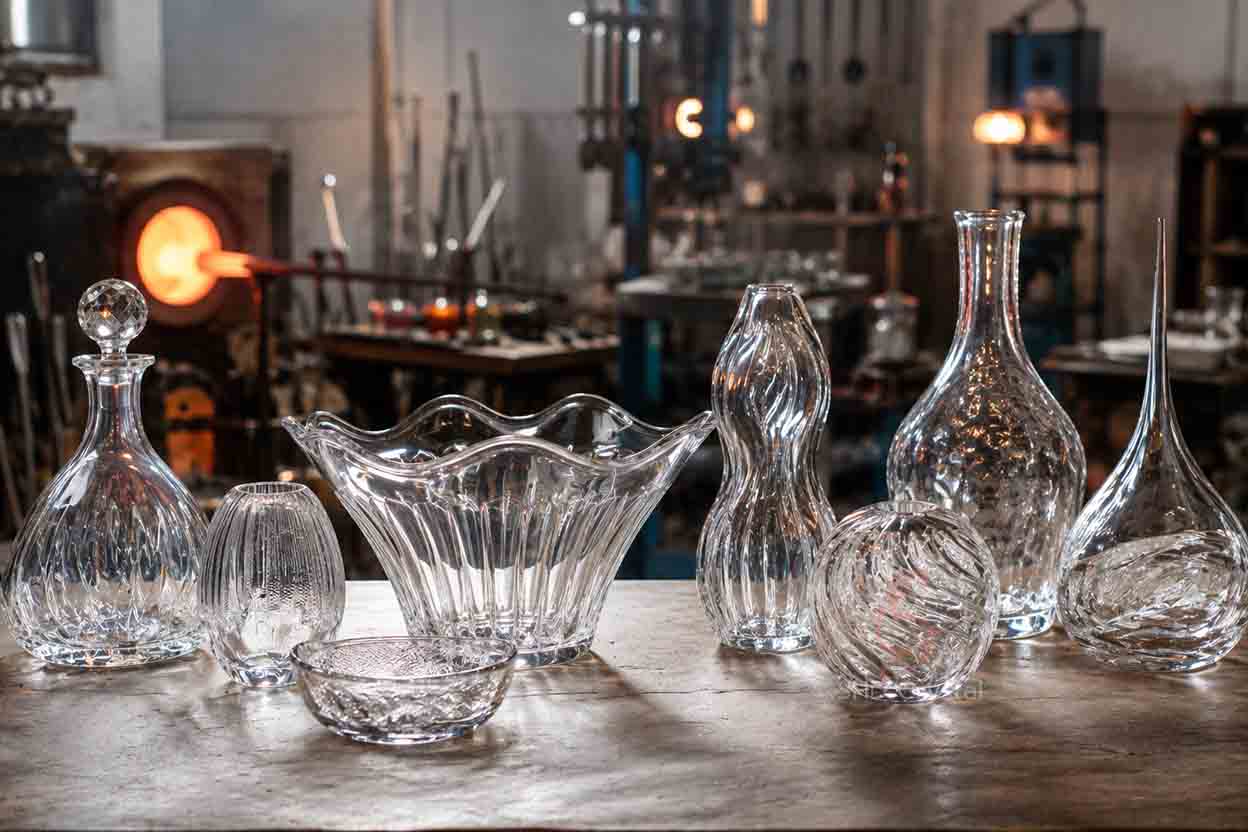
Finishing Determines How the Craft Is Presented
Once forming is complete, handmade glass artistry continues through cold working. Rim cutting, fire polishing, mechanical polishing, grinding, engraving, and color treatments can all change the character of the piece.
A handmade vessel does not necessarily need visible irregularity everywhere. A carefully polished rim or flat base can provide functional precision while the body retains subtle evidence of manual forming.
For buyers, this distinction is important. Mouth blown crystal glass should be evaluated according to which features are intentionally handmade and which dimensions must remain controlled for practical use.
Sampling Should Represent More Than One Piece
A single excellent sample cannot show the full production character of custom crystal glassware. Several pieces should be reviewed together for shape, weight, transparency, foot stability, rim quality, and finishing consistency.
This is particularly useful when handmade glass artistry is intended for hospitality collections, premium retail sets, decorative interiors, or limited-edition product programs. The objective is to preserve craft character without allowing variation to interfere with function or presentation.
Conclusion
Mouth blown crystal glass is most convincing when human forming skill and production discipline support each other. Temperature control, glass distribution, annealing, base finishing, and an agreed range of handmade variation help transform a fluid craft process into repeatable commercial glassware.
Developing Handcrafted Crystal Projects With SHD Crystal
SHD Crystal supports mouth blown crystal glass development through concept review, handmade forming, sample evaluation, annealing, polishing, decorative finishing, inspection, and export packing. For brands developing custom crystal glassware, defining which details should retain handcrafted character and which require tighter consistency helps create a clearer path from initial design to repeat production.
Read the original full version: https://shdcrystal.com/blogs/mouth-blown-crystal-glass/