
Origin of crystal glass remains relevant because modern crystal products are still judged through the same core factors that shaped their development: clarity, weight balance, cutting response, surface finish, and durability in use. For importers, hospitality buyers, gift brands, and custom glassware developers, this subject is not only historical. It provides a practical framework for understanding why one crystal item may look impressive in a display but perform differently in handling, packaging, or repeat production.
Origin of Crystal Glass Reveals The Link Between Material And Performance
The development of refined crystal did not begin with decoration. It began with material control. Early glassmakers adjusted raw materials, furnace heat, and cooling practice in order to improve transparency, brightness, and workability. As a result, crystal glass composition became a central issue rather than a minor technical detail. Different compositions changed how glass melted, flowed, cooled, and responded to cutting or polishing.
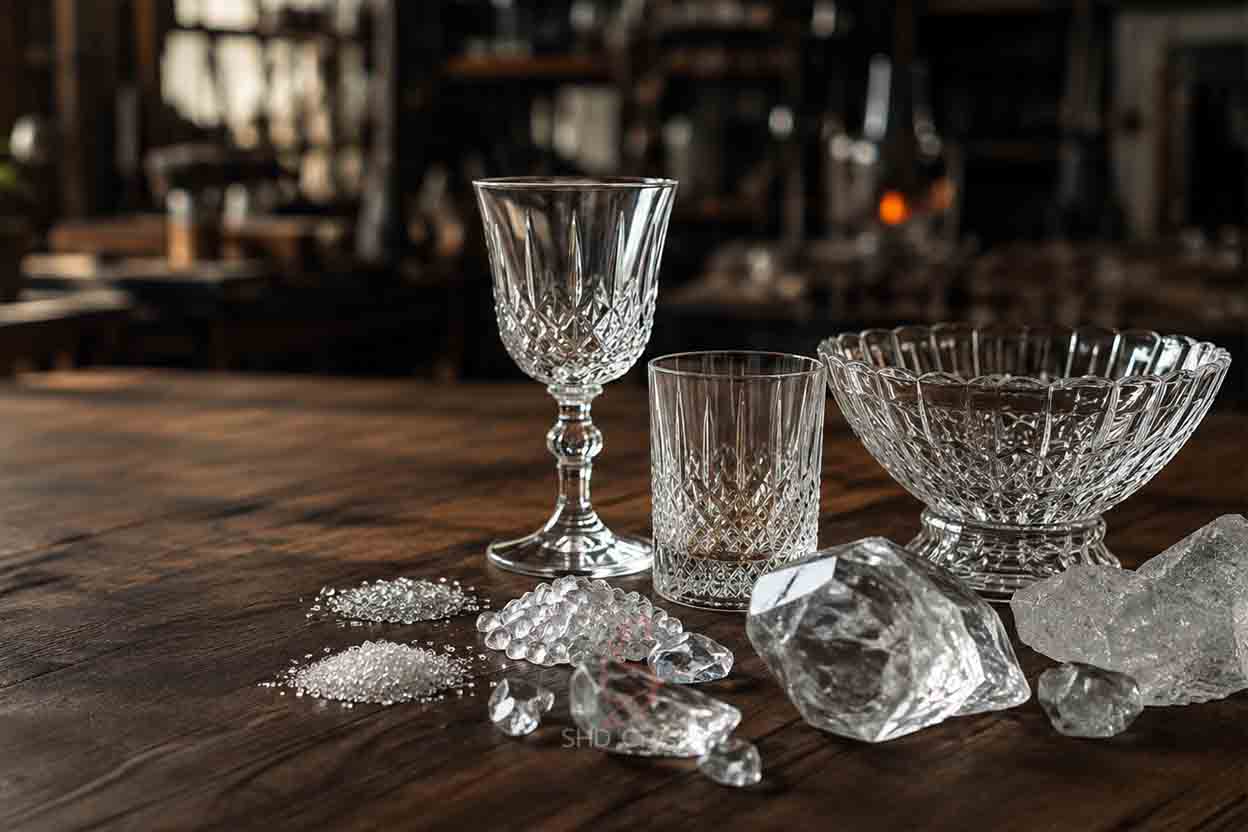
A common misunderstanding is that crystal is defined only by sparkle. Visual brilliance matters, but it is only one aspect of performance. A stem glass must also have rim comfort, stable alignment, and a controlled wall thickness transition from bowl to base. A bowl or centerpiece may benefit from greater visual weight, yet it must still avoid excessive cooling stress during production. In other words, appearance and structural control are connected.
Traditional crystal often incorporated lead oxide to improve brilliance, density, and cutting response. This made it easier to produce sharper reflections, deeper decorative cuts, and a more substantial hand feel. However, modern sourcing is not limited to one material route. Lead-free crystal glass has become an important option for buyers who want refined clarity while also considering daily use, broader market acceptance, and practical product positioning.
This shift does not mean that traditional material choices are no longer valuable. It means that material selection should follow intended use. Crystal glass composition affects whether a product is better suited for deep engraving, thin rims, heavier bases, smoother polished surfaces, or repeated commercial use. A deeply cut tumbler needs enough wall thickness to support the pattern. A delicate stem glass requires more disciplined weight distribution. A decorative award may prioritize optical clarity and engraving area, while tableware may require greater consistency in handling and packing.
Lead-free crystal glass should therefore be understood as a material category with its own practical advantages, not as a lesser substitute. In many hospitality, retail, and gift projects, it can provide the right balance between clarity, repeatability, and functional handling. The better choice depends on the market, not on inherited assumptions about luxury.
Interested in custom glassware or related products?
Contact our team to discuss your project requirements.
The origin of crystal glass also demonstrates why craft and engineering must be evaluated together. Forming temperature, mold tolerance, annealing behavior, and manual finishing variation all affect the final result. A product may appear acceptable at first inspection but still become vulnerable during shipment or daily use if cooling has not been controlled properly.
For OEM buyers, the practical lesson is clear. Capacity, size, target weight, rim thickness, base form, decoration method, logo position, packaging style, and expected order quantity should be defined before sampling begins. Without that information, it is difficult to judge which crystal glass composition is appropriate or whether lead-free crystal glass is the more suitable route.
Material Knowledge Should Guide Product Decisions
Origin of crystal glass explains why crystal products are evaluated through both beauty and performance. Material selection, cooling control, cutting depth, rim finishing, and packaging all influence whether a piece can move from sample approval to reliable commercial use. The strongest product is not simply the brightest or heaviest. It is the one whose material and structure are aligned with its intended market.
A Clearer Starting Point For Custom Crystal Projects
For brands developing stemware, bowls, centerpieces, awards, or gift-ready collections, origin of crystal glass can help clarify early product decisions. Sharing reference images, preferred crystal glass composition, target weight, decoration direction, and packaging expectations allows a manufacturer to evaluate whether lead-free crystal glass or another material route is the better fit for the project.
Read the original full version: https://shdcrystal.com/blogs/origin-of-crystal-glass/