
Choosing a red glass perfume bottles manufacturer requires understanding how color affects both brand perception and manufacturing complexity. As a manufacturer specializing in colored glass containers, we have observed that red presents unique challenges in batch consistency while offering distinct advantages in shelf presence and emotional impact. Working directly with a red glass perfume bottles manufacturer also keeps color-matching iterations faster than sourcing through intermediaries.
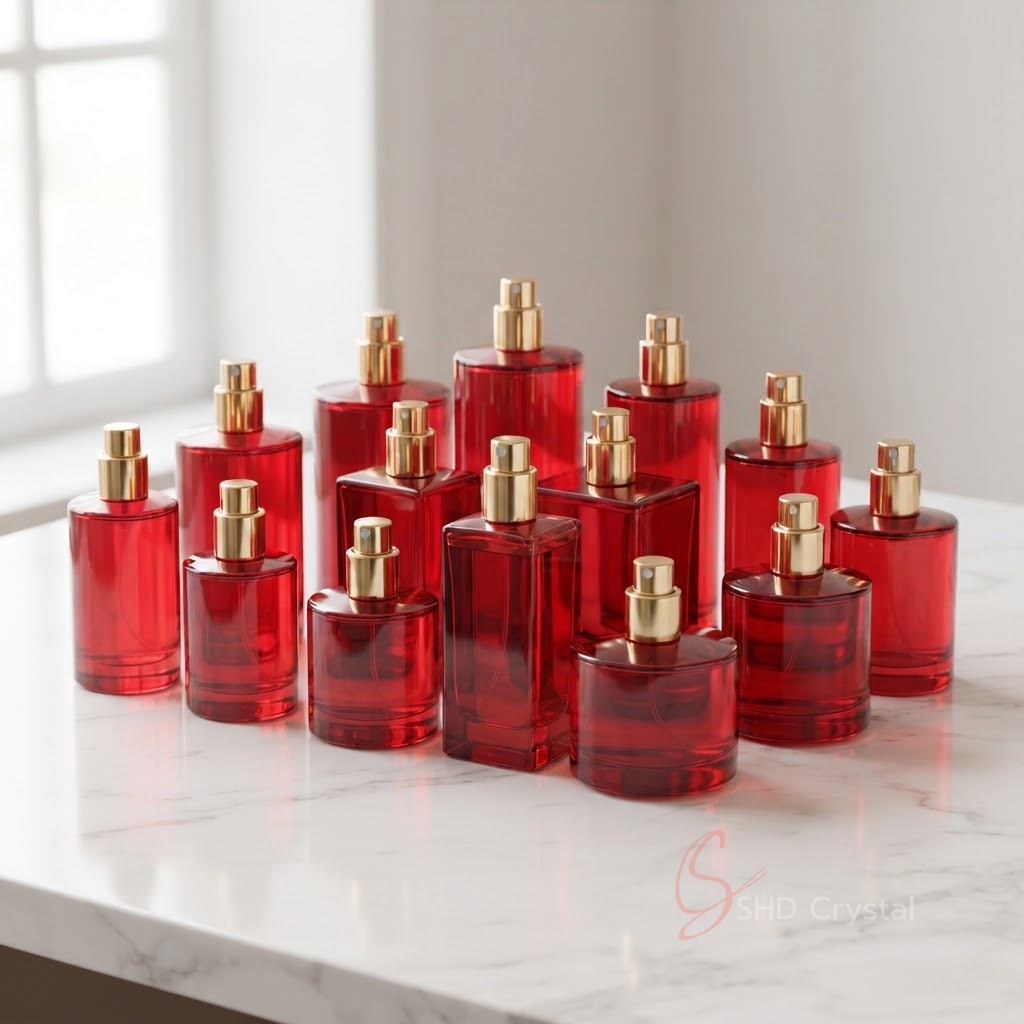
Colored Glass Bottle Production Challenges
Colored glass bottle production involves precise control of metal oxide additives during glass melting. Red glass typically uses selenium, cadmium, or gold compounds to achieve desired hues. The challenge is maintaining consistent color across production batches—small variations in temperature, raw material purity, or cooling rates create noticeable differences.
We once produced a batch of red bottles where the color shifted from ruby to slightly amber across the production run. The root cause was trace iron contamination in the batch ingredients. This experience taught us that colored glass bottle production requires rigorous raw material testing and process monitoring. Buyers should also ask a red glass perfume bottles manufacturer to retain color standards from every batch for comparison.
A practical consideration is that red glass typically shows color variations more readily than clear or light-colored glass. Factor this into your quality expectations and approval process.
Custom Tinted Perfume Container OEM Considerations
Custom tinted perfume container OEM projects for red glass require attention to three factors: color specification, glass composition, and annealing profile. Unlike surface coloring (spray coating or electroplating), integral glass coloring provides permanent color that won’t chip or fade.
From our production experience, the relationship between glass thickness and color intensity is often misunderstood. Thicker walls appear darker, while thinner areas appear lighter. This creates gradient effects that may be desirable or problematic depending on your design intent.
| Color Specification | Standard Tolerance | Consideration |
|---|---|---|
| Hue Consistency | ±5° on color wheel | Critical for brand recognition |
| Saturation | ±10% variation | Affects perceived quality |
| Transparency | ±15% variation | Impacts fragrance visibility |
Red Glass Manufacturing Processes
The manufacturing approach for red glass bottles requires specialized knowledge of color chemistry and thermal processing. Unlike clear glass, red glass often requires modified annealing schedules to develop proper color and minimize internal stress.
A common mistake is assuming red glass can be produced using the same parameters as clear glass. The metal oxides used for coloring affect glass viscosity and thermal expansion, requiring adjusted forming temperatures and cooling rates. In practice, red glass production typically runs 10-15% slower than clear glass to ensure color consistency. A seasoned red glass perfume bottles manufacturer will quote this slower cycle openly rather than promising clear-glass timelines.
We recommend discussing color requirements early in the development process. Some red hues are more stable and reproducible than others, and early collaboration helps optimize both aesthetics and manufacturing efficiency.
Brand Advantages of Red Glass Packaging
Red glass perfume bottles offer significant brand advantages. The color conveys passion, luxury, and confidence—emotional associations that align with many fragrance brand positions. The bold color creates strong shelf presence, particularly when displayed against neutral backgrounds.
From our production experience, brands choosing red glass often prioritize differentiation in crowded retail environments. The distinctive color creates immediate visual recognition, reducing the need for extensive branding on labels. When we review shelf mock-ups with clients, we show how a red glass perfume bottles manufacturer balances pigment load against glass strength.
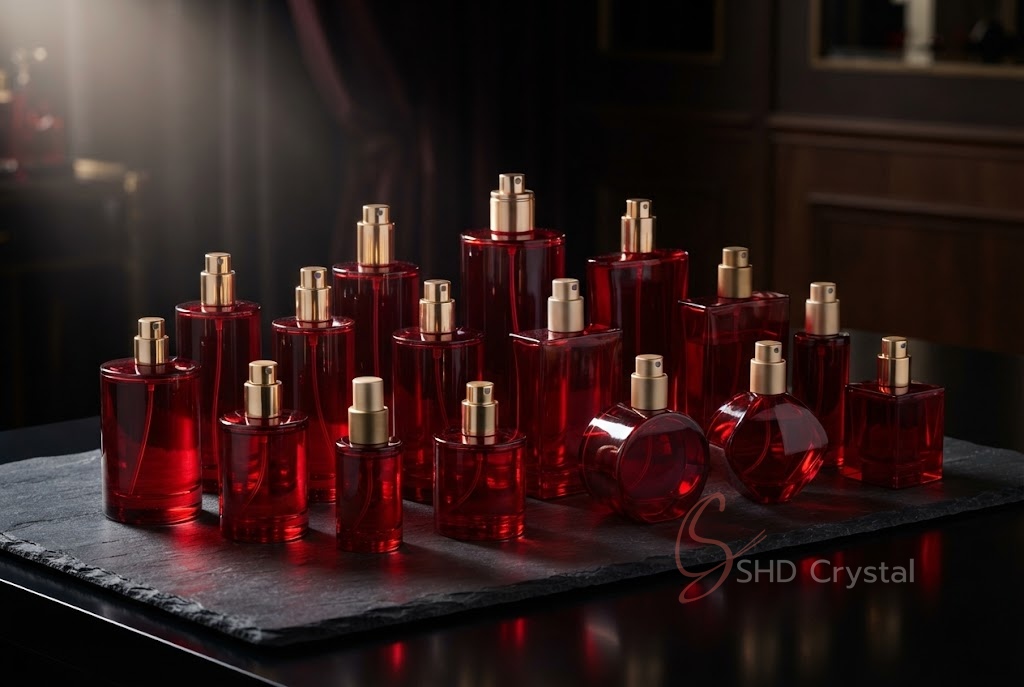
A practical consideration is that red glass requires different lighting considerations than clear glass. The color interacts with ambient lighting, appearing more vibrant under certain light sources. Consider this when planning product photography and retail displays.
Quality Control for Red Glass Bottles
Quality control for red glass perfume bottles focuses on color consistency and surface integrity. Color matching across batches is particularly critical—any variation is immediately visible when bottles are displayed together. We evaluate color using spectrophotometer measurements against approved standards.
A buyer once approved red glass samples under incandescent lighting. When the bottles were displayed under LED retail lighting, the color appeared significantly different. The lesson: always evaluate colored glass under multiple lighting conditions before approving production. Batch retention samples are another habit of a dependable red glass perfume bottles manufacturer.
In practice, request samples that have been produced in different batches to understand the range of color variation. This provides a realistic expectation of production consistency.
Frequently Asked Questions
What is the typical minimum order for red glass perfume bottles?
Minimum orders depend on whether you choose stock red glass shapes or custom colors. Stock red glass typically requires 5,000-10,000 units. Custom red hues may require 10,000+ units to justify color development and batch testing.
How stable is red glass color over time?
Integral red glass coloring is permanent and won’t fade with UV exposure or time. However, some red hues may show slight variation under different lighting conditions. This is inherent to colored glass and not a quality defect.
Can colored glass bottle production handle custom red shades?
Yes, custom red shades can be developed to match specific brand requirements. The process involves color matching, test batch production, and approval. Custom color development typically adds 2-3 weeks to the production timeline.
Does red glass affect fragrance preservation?
Red glass provides UV protection similar to amber glass, helping preserve light-sensitive fragrances. The color blocks certain wavelengths that can degrade fragrance ingredients. This makes red glass both aesthetically appealing and functionally beneficial.
Conclusion
Selecting a red glass perfume bottles manufacturer requires understanding both the aesthetic advantages and manufacturing complexities of colored glass. The best manufacturers combine color consistency expertise with transparent communication about production variations. Before committing, evaluate the manufacturer’s experience with red glass specifically and request samples from multiple production batches.
Partnering with SHD Crystal
As a specialized red glass perfume bottles manufacturer, SHD Crystal combines colored glass expertise with comprehensive brand development support. Our color matching process includes spectrophotometer verification and multi-batch sampling to ensure consistency. If you are exploring red glass for your fragrance line, our team can provide guidance on color options and manufacturing considerations.
Interested in custom glassware or related products?
Contact our team to discuss your project requirements.