
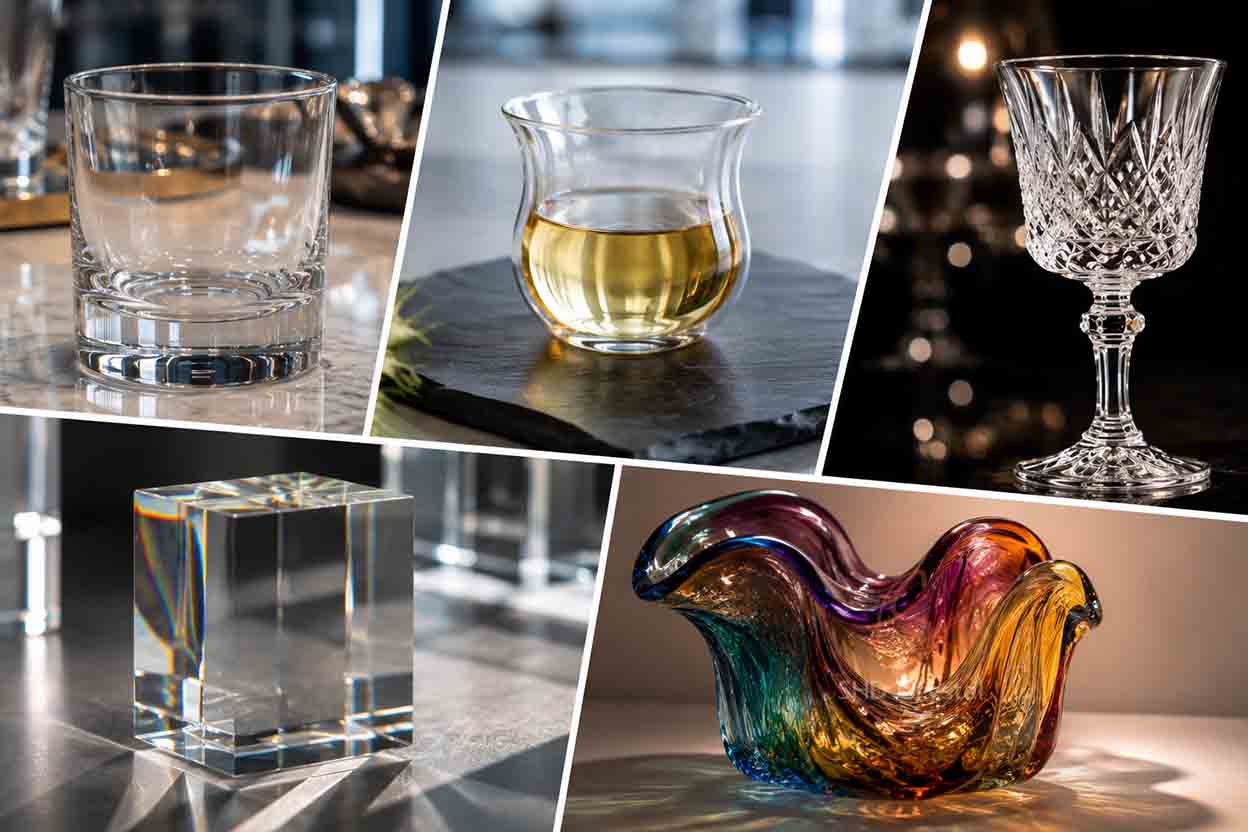
Selection of materials for glassware should begin with the intended product rather than with a material name that sounds premium. A whiskey tumbler, heatresistant tea cup, cut decorative bowl, optical crystal ornament, and cast glass sculpture may all require excellent transparency, yet they do not demand the same glass chemistry. Density, refractive index, thermal expansion, forming behavior, finishing method, regulatory requirements, and cost can point toward very different material choices.
How Selection of Materials for Glassware Changes With Use
A useful comparison starts by separating optical appearance from functional performance. High transparency does not automatically mean strong brilliance. High refractive index does not automatically mean better thermal resistance. A heavier material may feel luxurious in a tumbler but become undesirable in thin stemware.
This is why selection of materials for glassware works better as a matrix of tradeoffs than a ranking from “ordinary” to “premium.”
- SodaLime Glass: The Most Flexible Commercial Base
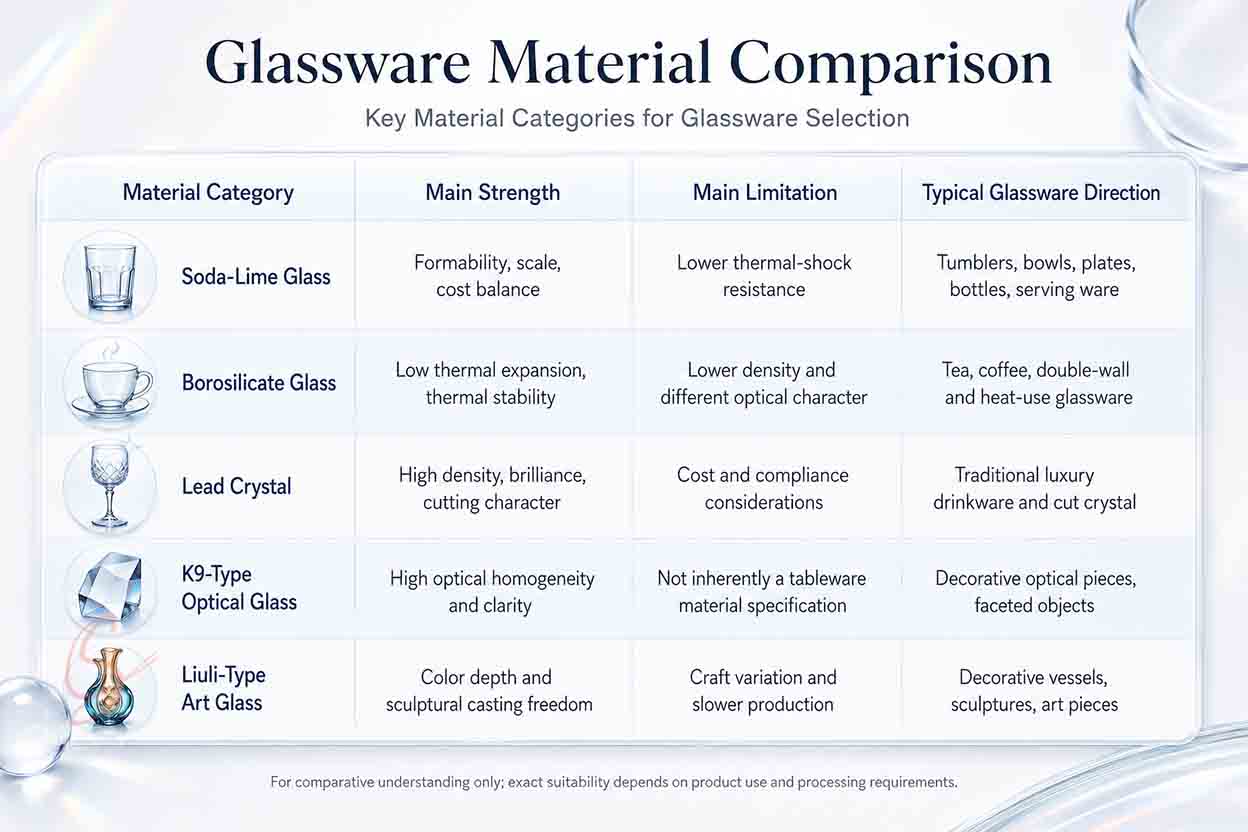
Sodalime glass is the most familiar material in bottles, jars, tableware, and generalpurpose glass products. Typical sodalime compositions are dominated by silica with sodium and calcium oxides, and the material is relatively economical and easy to melt, blow, press, and mold compared with more specialized glass systems. Its density is commonly around 2.5 g/cm3, while published thermal expansion values are roughly 8 to 10 x 106 K1 depending on formulation.
For commercial tableware, that combination is difficult to ignore.
Modern sodalime glass can be produced with good transparency, precise mold definition, heavy bases, polished rims, pressed facets, engraving, spraying, and other decorative finishes. A premium tumbler does not need to rely on a high refractiveindex material alone. Geometry can create substantial optical interest.
The limitation is thermal behavior. Sodalime generally expands more with temperature than borosilicate glass, making it less appropriate when sudden temperature changes are a central design requirement.
For normal drinking glasses, charger plates, bowls, bottles, and decorative serving pieces, however, sodalime remains one of the most practical outcomes of selection of materials for glassware.
- Borosilicate Glass: Choose It for Heat, Not Just Transparency
Borosilicate glassware occupies a very different position.
SCHOTT’s DURAN borosilicate 3.3 data gives a mean linear thermal expansion coefficient of approximately 3.3 x 10⁶ K1, significantly below typical sodalime glass. Its density is about 2.23 g/cm3 and refractive index about 1.473.
Those numbers explain much of the user experience.
Borosilicate can manage temperature changes more effectively and is therefore well suited to tea glasses, coffee vessels, laboratoryinspired drinkware, doublewall cups, and other products where thermal behavior is important. It can also create exceptionally clean, lightweight forms.
But there is a tradeoff.
Lower density means borosilicate may not provide the substantial hand feel expected from a heavy whiskey tumbler or traditional crystal bowl. Its optical character is also different from highindex crystal materials. A thin borosilicate cup can look beautifully clear without producing the same visual weight or facet brilliance associated with crystalstyle products.
This is why borosilicate glassware should be selected because its physical properties solve a real requirement, not simply because “borosilicate” sounds more technical.
Interested in custom glassware or related products?
Contact our team to discuss your project requirements.
- Lead Crystal: Optical Drama Comes With a Different Material Strategy
Traditional lead crystal glassware is built around another priority: optical and tactile richness.
European crystalglass classifications provide a useful technical reference. Council Directive 69/493/EEC defines categories including lead crystal with at least 24% PbO and full lead crystal with at least 30% PbO, together with minimum density requirements of 2.90 and 3.00 respectively. The Directive also distinguishes other crystal categories using composition, density, and refractive properties.
Leadcontaining crystal can provide high density, strong optical brilliance, and good decorative cutting characteristics. A deeply cut goblet, decanter, or bowl can therefore produce a visual effect that ordinary clear glass does not duplicate exactly.
That does not mean it is automatically the correct premium choice.
Brands developing foodcontact products need to consider applicable destinationmarket requirements, product use, material declarations, and relevant migration or compliance testing. Cost, weight, production route, and longterm positioning also matter.
For heritage collections and products where traditional crystal composition itself contributes to the value proposition, lead crystal glassware remains meaningful. For products where the customer mainly wants clarity, weight, facets, and a premium appearance, other materials may achieve the commercial goal more efficiently.
- K9 and K96 Need More Careful Terminology
K9 deserves special attention because it is frequently called “K9 crystal” in decorative, lighting, optical, and giftware markets.
Technically, K9 is associated with Chinese optical crownglass supply rather than with a universal drinkingglass composition. Optical crown glasses in the BK7 family typically sit around a refractive index of 1.516 and are engineered for optical homogeneity and transmission. SCHOTT NBK7, for example, is an optical material designed around tightly controlled refractive index, dispersion, and internal transmission.
That is an important distinction.
A material designed for prisms, lenses, chandelier components, or decorative blocks should not automatically be described as a superior material for drinking glasses. Optical clarity and foodcontact suitability are different specifications.
“K96” requires even greater caution. Unlike established classifications such as borosilicate 3.3 or regulated leadcrystal categories, K96 does not appear to function as a universally standardized glass composition in the technical references reviewed for this article. It may be used as a supplier, product, or commercial grade designation.
For OEM sourcing, the practical rule is simple: request the composition, density, refractive index, thermal data, intended application, and compliance documentation rather than relying on the K9 or K96 name alone.
This is one of the most important lessons in selection of materials for glassware: a commercial material name is not a technical specification.
- Liuli Is Better Understood as an ArtGlass Category
“Liuli” creates a similar naming problem for a different reason.
The word has deep cultural associations with Chinese glass art, while contemporary liuli products are often associated with crystalglass casting and the pâte de verre process. LIULI Crystal Art, for example, describes a lostwaxstyle glass casting process in which glass material is kilnfired inside a refractory mold, followed by mold removal, retouching, burnishing, and polishing.
This process can produce extraordinary sculptural depth, layered color, relief, and internal visual effects.
But “liuli” should not be treated as one fixed chemical formulation.
For material engineers and buyers, it is more useful to think of liuli as a craft and artistic product category whose exact glass composition needs to be confirmed with the producer. A decorative liuli sculpture and a functional drinking bowl may require completely different standards even if both are marketed using similar language.
In practical selection of materials for glassware, liulitype casting is strongest when artistic form, color, symbolism, and sculptural detail matter more than highvolume repeatability.
High Transparency Is Only One Part of “Premium”
This is where material discussions often become misleading.
A hightransparency material may still feel lightweight. A highindex material may have excellent sparkle but introduce additional cost. A thermally stable material may offer little benefit to a roomtemperature whiskey glass.
Premium perception is created by a system:
- raw material clarity;
- refractive behavior;
- glass thickness;
- wall distribution;
- base weight;
- facet geometry;
- rim quality;
- mold definition;
- cutting and polishing;
- surface cleanliness;
- decoration;
- consistency across the set.
A highquality sodalime tumbler with excellent transparency, a controlled heavy base, sharp pressed facets, and precise polishing can feel more premium than poorly processed crystal.
Likewise, a welldesigned borosilicate tea cup may outperform a heavier material because the product needs thermal stability rather than brilliance.
Material prestige cannot compensate for inappropriate engineering.
Which Material Should Buyers Choose?
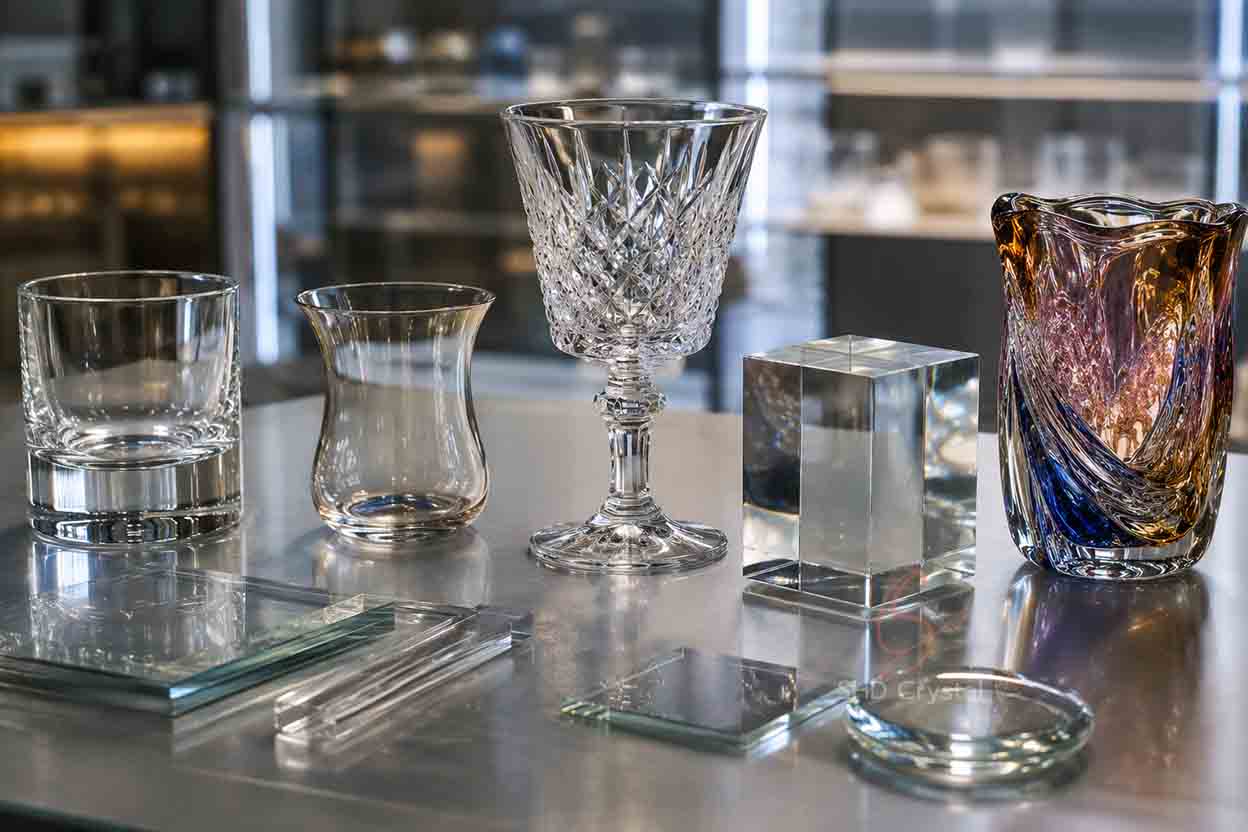
For mainstream premium drinkware, sodalime glass often provides the broadest manufacturing flexibility and strongest costtoappearance balance.
For hot drinks and repeated temperature changes, borosilicate glassware deserves priority because low thermal expansion directly addresses the application.
For traditional cutglass brilliance, weight, and heritage positioning, lead crystal glassware still offers characteristics that are difficult to reproduce exactly with ordinary glass.
For faceted decorative elements, optical components, or crystalstyle objects, K9type optical materials may be useful, but their exact specification should be verified before use.
For sculpture, artistic casting, symbolic gifts, and highly dimensional color work, liulitype glass art offers a completely different creative route.
The correct answer depends on the product.
Frequently Asked Questions About Glassware Materials
Q01 | Is Borosilicate Glass Always Better Than SodaLime Glass?
No. Borosilicate has substantially lower thermal expansion and is valuable for heatrelated applications. Sodalime glass is generally more practical for many conventional tableware products where molding flexibility, decorative options, production scale, and cost are more important than thermalshock performance.
Q02 | Is K9 Crystal the Same as Lead Crystal?
No. K9 is commonly associated with optical crown glass and should not automatically be classified as traditional lead crystal. Lead crystal has specific compositional definitions in markets such as the EU. K9 or K96 materials should be evaluated using the supplier’s actual technical datasheet.
Q03 | Does Higher Refractive Index Always Mean Better Glassware?
No. Higher refractive index can increase optical brilliance, but glassware performance also depends on weight, thermal behavior, forming capability, durability, finishing, intended use, and cost. The highestindex material is not automatically the best engineering choice.
Q04 | Can Liuli Be Used for Functional Tableware?
Possibly, but the word liuli alone does not establish composition or foodcontact suitability. Buyers should confirm the exact glass formulation, manufacturing process, intended use, and applicable compliance requirements before specifying an artistic liuli material for functional food or beverage contact.
Conclusion
Selection of materials for glassware is ultimately a question of matching material behavior with product purpose. Sodalime glass offers broad forming flexibility and commercial efficiency. Borosilicate provides superior thermal stability. Lead crystal delivers traditional density and optical brilliance. K9type materials belong more naturally to optical and decorative applications unless specifically qualified for glassware, while liuli represents a craft category whose composition can vary with the maker and process.
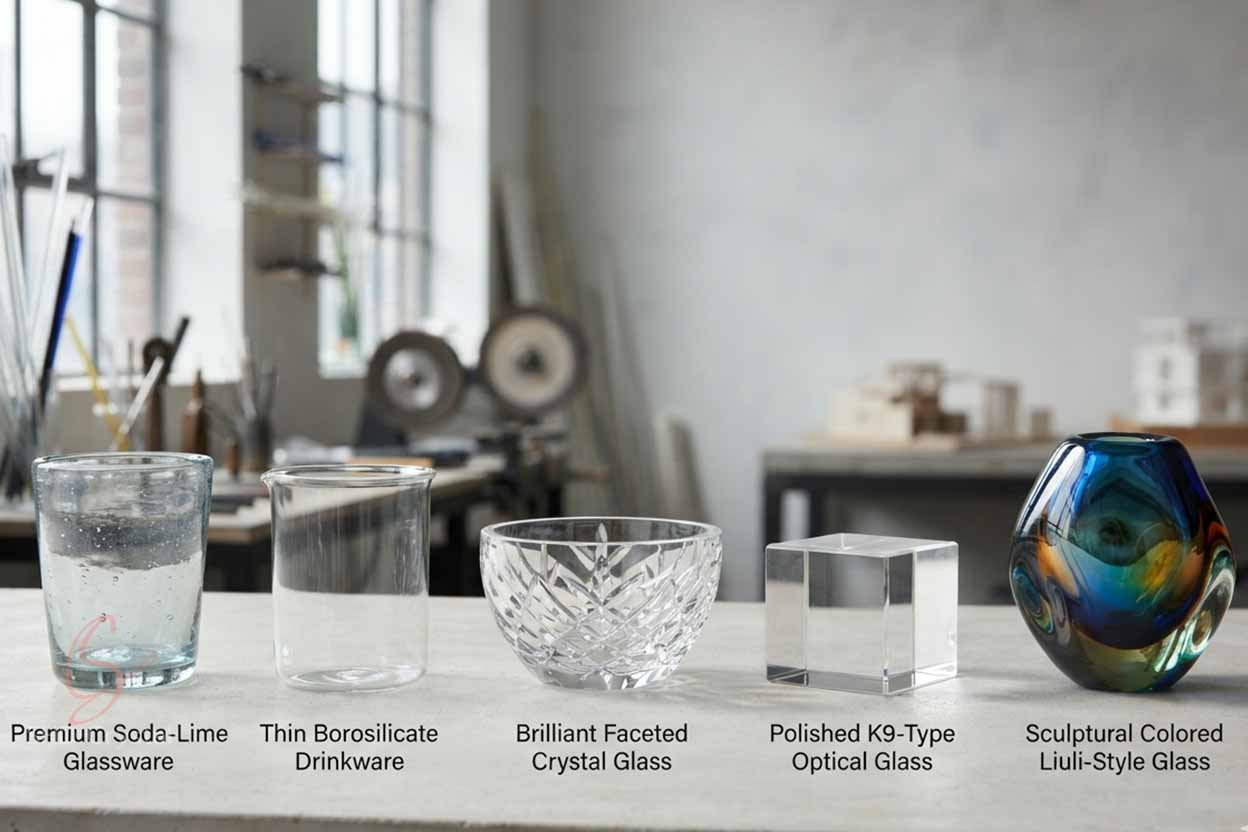
The professional choice is rarely the material with the most prestigious name. It is the material whose transparency, thermal behavior, weight, forming characteristics, finishing potential, compliance profile, and cost align with the product being developed.
Material Selection and Custom Glass Development With SHD Crystal
For projects involving selection of materials for glassware, SHD Crystal can evaluate the intended product form, visual target, forming method, wall structure, finishing process, temperature conditions, and commercial production requirements before a material direction is confirmed. This allows sodalime, borosilicate, crystal, and other hightransparency glass options to be considered according to their real manufacturing advantages rather than material labels alone.
Reference Notes
- ScienceDirect Topics, SodaLime Glass and SodaLimeSilica Glass material references.
- SCHOTT, DURAN Borosilicate Glass 3.3 technical properties.
- Council Directive 69/493/EEC Relating to Crystal Glass, EURLex.
- SCHOTT Advanced Optics, NBK7 and optical glass technical documentation.
- LIULI Crystal Art, Pâte de Verre process and material descriptions.
The only source for this article on the entire web: https://shdcrystal.com/blogs/selection-of-materials-for-glassware/