
What Is Soda Lime Glass? Batch, Melt, and Forming in Our Plant
At SHD Crystal, soda lime glass is the material we melt every single day, and we still meet buyers who mix it up with borosilicate before signing an order. If you source drinkware or private-label glass packaging, the glass family you choose shapes your unit cost, your tooling budget, and how the product behaves in your customer’s hands. Here is how we see it from the melting hall floor.
In any honest drinkware material comparison, three candidates usually appear: soda lime, high borosilicate, and lead-free crystal. We run all of them on request, yet most tumblers, storage jars, and bottles leaving our warehouse come from standard soda lime batches. The reason is simple economics paired with fully adequate daily-use performance.
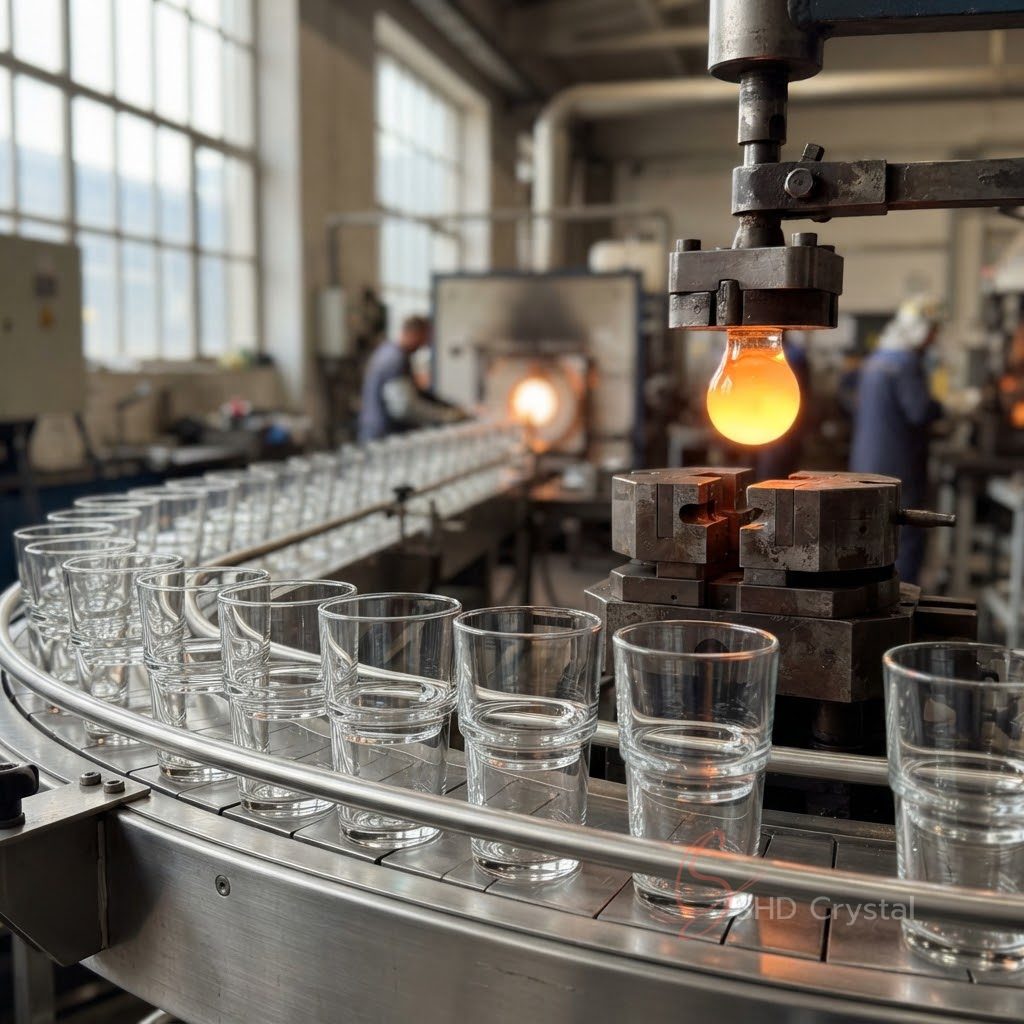
Soda lime glass is built on an old, proven recipe: roughly 70% silica sand, sodium carbonate to bring the melting point down, and calcium carbonate as a stabilizer that lifts chemical durability. We weigh these raw materials into each batch under tight controls, because batch consistency is what keeps color and clarity stable between repeat orders. After melting, the forming temperature typically sits somewhere around 1,000 to 1,200 degrees Celsius depending on whether the piece goes through press molding or blow molding, followed by slow annealing in a lehr to release internal stress before anything touches a inspection bench.
| Feature | Soda Lime Glass | High Borosilicate |
|---|---|---|
| Chemical durability | Good for daily food and drink contact | Excellent, resists acids and repeated washing |
| Thermal shock resistance | Moderate; avoid sudden boiling water | Handles rapid temperature swings |
| Cost and cycle time | Lower forming temperature, faster output | Higher energy demand, slower forming |
| Typical applications | Tumblers, jars, bottles, candle vessels | Teapots, oven-safe ware, lab items |
That table mirrors what we tell first-time importers. Soda lime glass is not fragile — it simply carries moderate thermal shock resistance, which covers cold drinks, warm beverages poured with care, and commercial dishwashing. When a brief genuinely demands oven-to-table use or rapid boiling-water filling, we steer the buyer toward borosilicate rather than gamble with their reputation.
Inside Our Pressed Glass Tumbler Production Line
For open-mouth items, pressed glass tumbler production runs on automatic press molding machines: a shear cuts a gob of molten glass, a plunger presses it into the mold, and the piece moves straight onto the annealing lehr conveyor. Narrow-neck bottles take the blow molding route instead. Rim finishing follows — fire-polishing for a smooth drinking edge, or precision grinding whenever a lid demands tighter dimensional tolerance.
We measure wall thickness, height, and fill capacity on every run, not only on golden samples. Export packing gets equal attention; we have watched beautiful shipments arrive chipped because somebody cut corners on dividers, so cell-partitioned cartons are our default.
A Straight Drinkware Material Comparison Before You Commit
From our production experience, a fair drinkware material comparison weighs cost, brilliance, weight, and heat tolerance together. Against high borosilicate, soda lime glass forms at lower temperatures, which shortens cycle times and typically brings unit prices down noticeably. Against lead-free crystal, it trades some sparkle and ring tone for far better survival rates in transit. No single option wins everywhere; the right choice tracks your target price point.
Two Orders That Taught Our Buyers Something
One European client ordered pressed tumblers assuming borosilicate-grade heat performance. End customers poured near-boiling water into room-temperature glasses, and cracking complaints arrived within weeks. In practice, sudden thermal shock is the number-one killer of everyday soda lime glass. We pulled the order back into the pressed glass tumbler production schedule, redistributed the wall thickness, and added a pre-warming instruction card; complaints dropped off sharply.
A Quick Scenario From Our Order Book
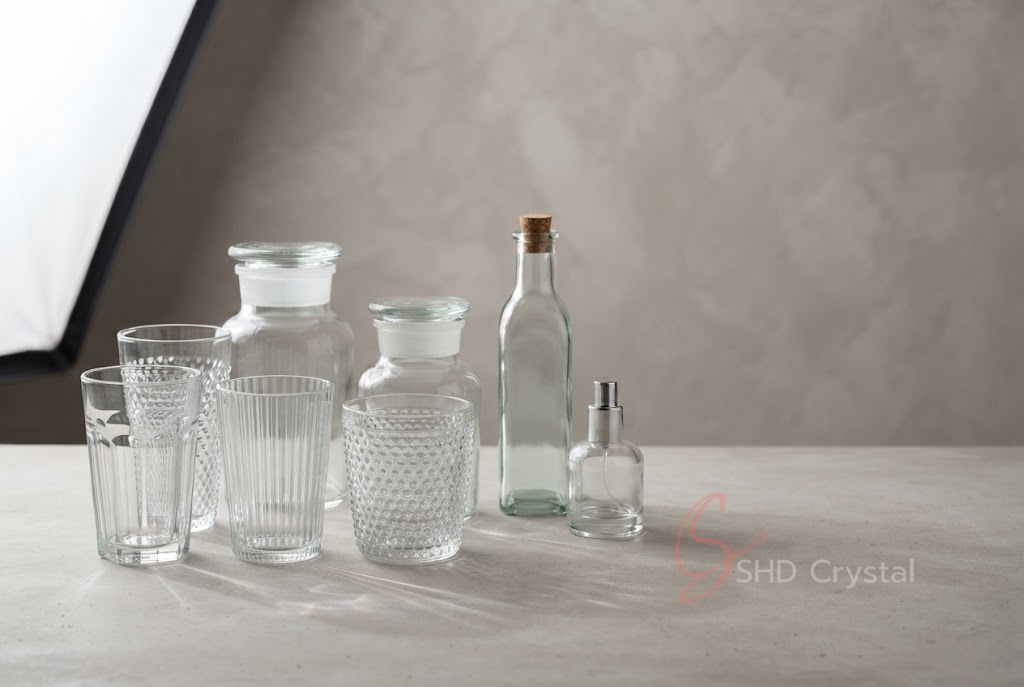
Picture a hotel chain booking a pressed glass tumbler production run of 20,000 pieces for breakfast service: cold juice, coffee poured from carafes, rack dishwashers cycling all morning. We would specify heavier bases and a rim finishing grade rated for constant washing — details a catalog page never shows you.
Our Advice Before You Sign a Specification
State your true serving temperatures, request thermal shock testing on real samples, run your own drinkware material comparison against borosilicate pricing at your volumes, confirm dimensional tolerance against any lids or closures, and review export packing drawings early. Ten minutes of specification work routinely saves weeks of claims handling later.
Frequently Asked Questions
Can soda lime glass handle hot drinks?
Yes, within limits. It manages warm beverages, gentle filling, and dishwashing comfortably, but pouring boiling water into a cold glass invites thermal shock. If your use case involves rapid temperature swings, we will quote borosilicate instead — that honesty is built into every drinkware material comparison we run for new clients.
What is your minimum order for custom molds?
Custom press molding tools carry a tooling fee, and we normally ask for one full container or an agreed quantity to amortize it. For buyers testing a market, we can often adapt an existing mold and adjust rim finishing or decoration instead of cutting new tooling.
How do you protect glassware during shipping?
Every export packing plan uses cell dividers, layered cartons, and drop-tested pallet patterns. For fragile pressed shapes we add corner protection and review a trial shipment before mass production starts.
Do you offer decoration and private labeling?
Yes. Spraying, electroplating, decal printing, and etching are all handled in-house after annealing. Send your artwork and target market, and we will confirm which finish survives your customers’ dishwashers.
Conclusion
Soda lime glass stays our most requested material because it balances cost, durability, and clarity better than any rival in everyday drinkware. Chosen with realistic heat expectations and correct tolerances, it performs reliably for years. Tell us how your product will actually be used, and we will confirm the right specification.
Before You Place Your Next Order
Send SHD Crystal your drawings, target price, and usage conditions. As a direct manufacturer with full OEM capability, we will tell you plainly whether soda lime glass fits your project — and quote an alternative honestly if it does not.
Interested in custom glassware or related products?
Contact our team to discuss your project requirements.