
Why Spirit Bottle Sizes OEM Demand Early Decisions
Choosing the right spirit bottle sizes OEM partner decides more about your launch than any label design. Capacity, neck finish, and mold cost all hang on dimensions you confirm before sampling, and many projects slip by weeks because a number was never written down. Decide one thing first: stock mold or custom mold.
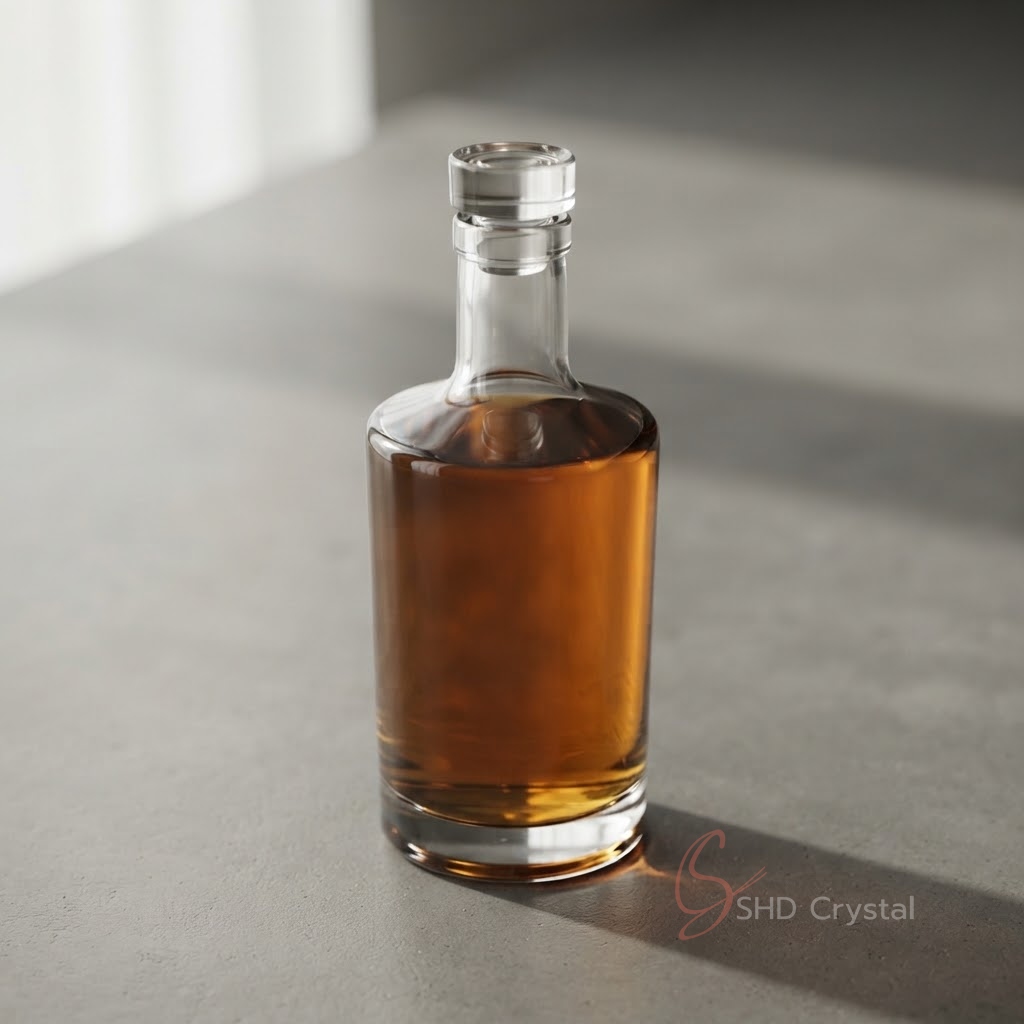
The word OEM hides a real fork. A stock mold is already paid for, so unit price drops and lead time shrinks, but you inherit someone else’s silhouette. A custom mold lets you own the shape at the price of tooling cost and a longer first run. In practice, we usually recommend new brands start with stock glass and move to custom once volume justifies it. That same discipline keeps private label spirit packaging predictable while your order quantity is still an estimate. This is a core consideration in any spirit bottle sizes OEM project.
Every route into custom liquor bottle production carries a floor of fixed costs, and those costs are identical whether you call it a spirit bottle sizes OEM program or a refresh of an existing line. The graphic, the neck tool, and the initial batch all land before the first bottle leaves the carton.
Stock-Mold Bottles Versus Custom Molds
Here is the shortest way to frame the call, by comparing what each route changes before you commit to custom liquor bottle production.
| Variable | Stock Mold Bottle | Custom Mold Bottle |
|---|---|---|
| Tooling cost | None, mold exists | One-time tooling fee |
| Lead time | Shorter, parts stocked | Longer first run |
| Unit price | Lower per piece | Higher until volume grows |
| Design freedom | Fixed silhouette | Full control of shape and finish |
| Min order | More flexible | Tied to tooling amortization |
The tooling row matters most early. With a stock mold there is no amortization to recover, so a small first program stays cheap, but fill volume, shoulder angle, and finish are what they are. A custom mold inverts that: the fee is real, yet the body, neck, and glass can be tuned to your label and closure. Such flexibility matters when planning spirit bottle sizes OEM runs across multiple markets.
What surprises buyers is that mold tolerance behaves the same in both routes. A stock tool and a fresh custom pair hold wall thickness only within the working limits of glass blowing, so rims and shoulders never land uniform from one gathering to the next. Buyers who understand that tolerance before committing to custom liquor bottle production rarely get burned by an over-polished sample later.
The Neck Finish, the Filling Line, and the Label
Most failures we see have nothing to do with the pretty body. We once took a square decanter drawing with a purely decorative neck and no finish diameter. The first capping run jammed the filling line because the neck would not accept a standard screw cap, and remachining the tool steel landed on the buyer’s budget.
Ask early whether your neck finish follows a DIN, ISO, or imperial cap. Confirming the number costs nothing; changing tooling after approval costs real money. Wall thickness transition at the shoulder and foot also decides filling speed and the risk of chipping during rim finishing.
Labeling and Closures as a System
A cold-glue label fails when the bottle sweats inside the carton, and a cap seat that is not square slows every line change. We usually recommend approving cap torque and label adhesion on the finished neck, because private label spirit packaging lives or dies on those two small interfaces.
Three Briefs We Keep Seeing
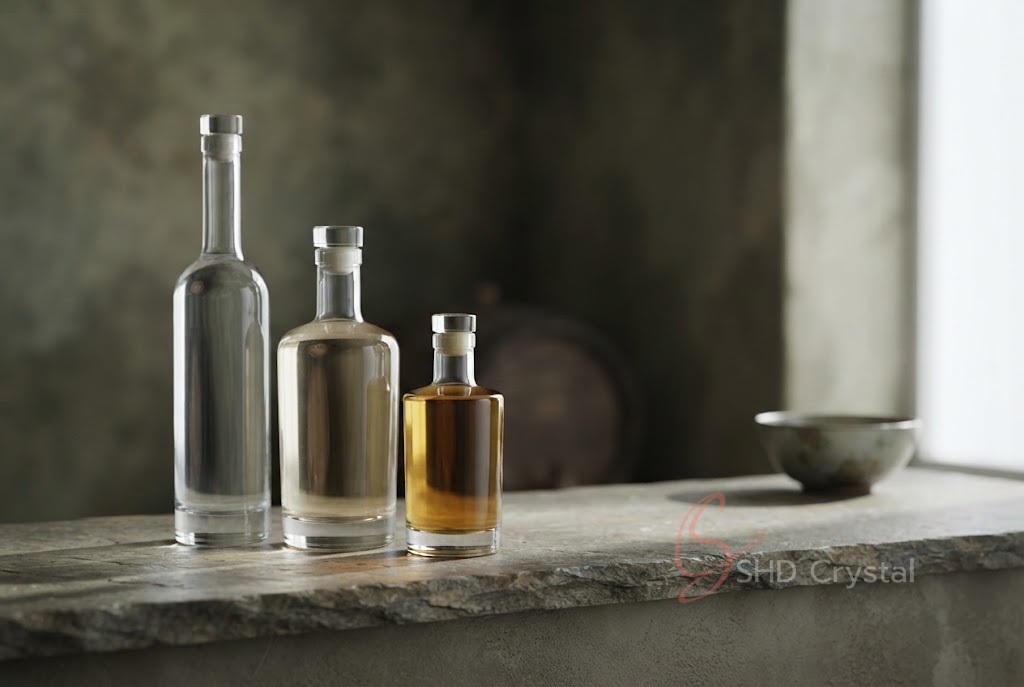
Across the spirit bottle projects we run, three briefs repeat. A 50 ml gift sample, a 375 ml tasting bottle, and a 750 ml flagship each behave differently in the lehr. The small size cools fast and needs care at the wall transition, while the tall flagship risks a thin foot and cracks if annealing is rushed. One glassgrade never suits all three.
Plan Packaging at the Same Time as the Product
Carton protection is the quiet killer of private label spirit packaging. A beautiful decanter ships loose fine and arrives shattered if the export carton is not fitted to the foot and shoulder. We size pack spaces to the trial box rather than a drawing, and we run a drop test on the first cartons.
Questions to Ask Before You Sign
Bring concrete questions, not vague hopes: which stock sizes sit on the mold shelf today, whether the neck finish is DIN or imperial, the expected wall thickness range across a batch, and how many pieces your filling line needs to run. Ask how long custom liquor bottle production takes and get the same figures in writing for private label spirit packaging. Confirm the spirit bottle sizes OEM quote covers one price from glass to carton protection.
Frequently Asked Questions
What is the difference between a stock mold and a custom mold?
A stock mold is an existing tool we already run, so there is no tooling fee and lead time is short, but the silhouette is fixed. A custom mold is cut to your shape, with a one-time tooling cost and a longer first run. Most distilleries start with stock glass to reduce risk.
How long does custom glass mold production take?
The timeline depends on the complexity of the body and the finish. A straightforward silhouette can be ready in a few weeks, while an unusual shoulder or multiple neck options extends the schedule. Ask for a written tooling and first-run date before you commit.
Does the neck finish have to match my cap?
Yes. The neck finish, which is the threading and rim profile, must line up with the cap, foil, or cork system you plan to use. If the numbers do not match your filling line set-up, you pay for remachining. Confirm the finish before approving the sample.
What is a reasonable minimum order for bottles?
Minimums vary with mold type. Stock molds allow smaller, more flexible orders because the tool already exists, while custom molds tie the minimum to tooling amortization and practical batch sizes. Always ask for the minimum that keeps your cost per piece stable.
Conclusion
Choosing the right spirit bottle sizes OEM supplier is about process, not just a pretty sample. Confirm the neck finish, accept how mold tolerance works, and lock down carton protection before you approve glass. Get those aligned and the launch path gets far smoother.
A Standing Invitation to Bring Us Your Brief
Bring us a capacity target and a rough sketch. SHD Crystal has run stock and custom glass for distillery brands for years, and we are happy to review your spirit bottle sizes OEM brief over a call. No obligation, no pressure, just production questions answered honestly.
Frequently Asked Questions
What is the difference between a stock mold and a custom mold?
A stock mold is an existing tool we already run, so there is no tooling fee and lead time is short, but the silhouette is fixed. A custom mold is cut to your shape, with a one-time tooling cost and a longer first production run. Most distilleries start with stock glass to reduce risk.
How long does custom glass mold production take?
The timeline depends on the complexity of the body and the finish. A straightforward silhouette can be ready in a few weeks, while an unusual shoulder or multiple neck options extends the schedule. Ask for a written tooling and first-run date before you commit.
Does the neck finish have to match my cap?
Yes. The neck finish, which is the threading and rim profile, must line up with the cap, foil, or cork system you plan to use. If the numbers do not match your filling line set-up, you pay for remachining. Confirm the finish before approving the sample.
What is a reasonable minimum order for bottles?
Minimums vary with mold type. Stock molds allow smaller, more flexible orders because the tool already exists, while custom molds tie the minimum to tooling amortization and practical batch sizes. Always ask for the minimum that keeps your cost per piece stable.
Conclusion
Choosing the right spirit bottle sizes OEM supplier is about process, not just a pretty sample. Confirm the neck finish, accept how mold tolerance works, and lock down carton protection before you approve glass. Get those aligned and the launch path gets far smoother.
A Standing Invitation to Bring Us Your Brief
Bring us a capacity target and a rough sketch. SHD Crystal has run stock and custom glass for distillery brands for years, and we are happy to review your spirit bottle sizes OEM brief over a call. No obligation, no pressure, just production questions answered honestly.
Interested in custom glassware or related products?
Contact our team to discuss your project requirements.