
What a Stemmed Shot Glasses Manufacturer Will Not Tell You
When you begin vetting a stemmed shot glasses manufacturer, the first sample that arrives on your desk can feel like a finished answer. One polished piece wins you over, yet the real test starts on the production line, where a handful of variables decide whether your barware arrives intact, balanced, and faithful to the approved design. That gap between a single hand-finished sample and a clean thousand-piece batch is precisely where most buyers get burned.
The Stem-to-Bowl Junction Hides the Risk
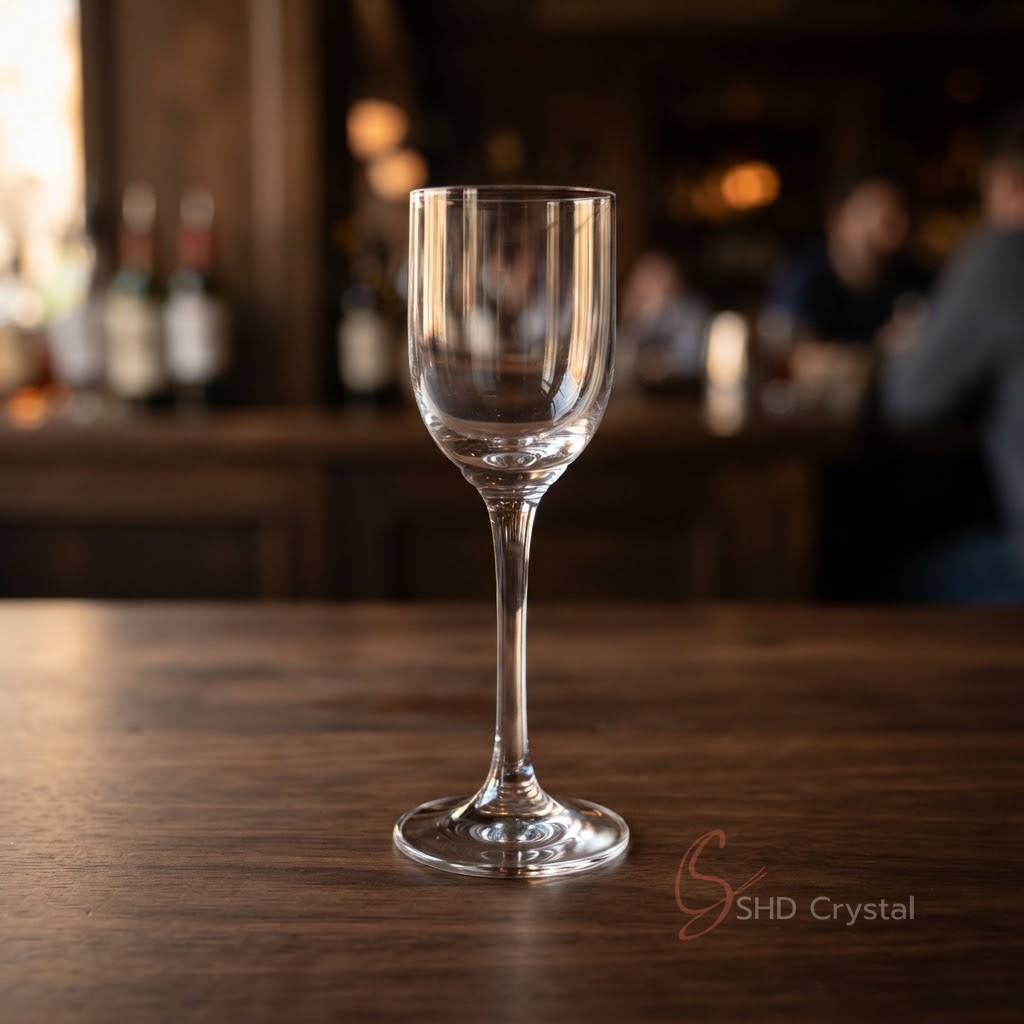
We have handled returns where the stem looked flawless on the outside yet failed where the shaft meets the bowl. When we ran the retained samples under a polariscope, we saw bright stress bands that almost always trace back to a steep wall thickness transition in the mold. That junction is the most common failure point in stemware, and it never shows up in a catalogue image.
Sample Quality Can Mislead a Buyer
A buyer once approved a shot on looks alone, never asking how thick the stem wall would be at bulk tolerances. The first production run showed stems flexing past the strain point and a few that cracked during packing. In practice, one refined sample tells you little about how the design holds up when glass gathering speed and lehr settings fluctuate across a long shift.
Custom Shot Glass Design That Survives Production
Good custom shot glass design balances looks with physics. We usually recommend fixing the foot diameter, then the base weight, then the bowl capacity, because that order keeps the base-to-height ratio sensible before anyone falls in love with a silhouette.
Lead crystal at around 24 percent lead oxide rings brilliantly and cuts easily but is softer and heavier, while lead-free crystal returns a similar sparkle with better scratch resistance for daily bar use, and plain soda-lime glass is cheapest yet reads dull under bar light. For a shot handled repeatedly, more of our buyers pick lead-free for the honest split between clarity and durability, and any stemmed shot glasses manufacturer should be able to run this comparison for you.
| Feature | Lead Crystal | Lead-Free Crystal |
|---|---|---|
| Ring and tone | Bright, long resonance | Bright, slightly less linger |
| Surface hardness | Soft, scratches easily | Harder, better for daily use |
| Weight per stem | Heavier, better balance feel | Lighter, easier base-to-height |
| Ideal use | Gifting, display sets | Bars, hotels, high turnover |
The table settles one real negotiation. A lead crystal shot feels more luxurious in the hand, but that softness makes the rim more likely to chip in a busy lounge, while a lead-free version tends to hold its polish through hundreds of washes. Before you lock a material, ask your stemmed shot glasses manufacturer to cut a single piece in each format so you can weigh the trade-off by hand.
Partner With a Barware OEM Supplier, Not a Job Shop
Finding a barware OEM supplier who understands stem geometry is different from ordering a tumbler, because the stem transfers weight through a narrow cross-section where blow molding tolerances and annealing matter more than surface decoration.
Balance Is Decided at the Base, Not the Stem
In our experience, a tall-stem shot needs a base heavy enough to keep its center of gravity low. We once shaved the base diameter by two millimeters for a hotel program and had to remold after bartenders reported wobble on wet coasters, which is why base stability is never an afterthought here.
Batch Consistency Starts at the Annealing Lehr
Ask whether the factory checks rim finishing on every pallet, whether the strain point is verified with a polariscope on each annealing run, and how carton protection is planned for export. The answers reveal more than a dozen brochures, because real batch consistency, not one lucky sample, is the entire reason you are negotiating with a stemmed shot glasses manufacturer in the first place.
What a Sample Won’t Tell You About Custom Shot Glass Design
Many buyers only realize custom shot glass design reaches beyond geometry to the finishing line, where polishing abrasives, cutting depth, and the lehr’s cooling profile change the final look. From our production experience, a pre-production pilot of fifty pieces run through the real line catches most surprises before the full batch begins.
Budgeting With a Barware OEM Supplier
Price per piece tells you almost nothing alone. Instead, compare a barware OEM supplier on mold building cost, per-unit weight, and how many rejects they allow before you owe nothing. A cheap stem reads elegant on paper, and a stemmed shot glasses manufacturer who hides the rejection policy will cost you more in breakage, redelivery, and a strained relationship with your own customers at the bar.
Seven Questions to Ask Before You Approve a Sample
Before you sign, put a caliper on the stem to test thickness, weigh the base and ask how much of the piece sits low for stability, ask whether the glass is lead-free or lead crystal, and press for how they balance glass distribution around the bowl. Every factory should also answer, in writing, how they keep rim finishing and wall thickness consistent across runs. If the answer wobbles, the stems will too.
Frequently Asked Questions
How thick should the stem be on a stemmed shot glass?
It depends on the bowl size and how the piece will be handled. In practice, a shot that sees heavy bar use needs a thicker stem wall than a premium gifting piece, because a slender shaft concentrates stress at the stem-to-bowl junction. Ask for the minimum stem diameter at bulk tolerance, not just on the sample.
Is lead-free crystal or lead crystal better for a shot bar?
For high-turnover commercial use we usually recommend lead-free, because it resists scratching and chipping better than a softer lead crystal. Lead crystal still wins on pure brilliance and weight in the hand, so the choice comes down to whether the shot will be handled daily or displayed. Both can be annealed correctly; the difference is durability over time.
Why did my bulk order not match the approved sample?
The sample is usually hand-finished, while production leans on the mold and the lehr. Differences in wall thickness transition, rim finishing, and batch consistency creep in when tolerances are loose, which is why we advise approving several pieces from one run and running a pilot before a full batch.
How much breakage should I expect on stemware shipments?
A well-planned export with proper carton protection should hold breakage to a low single-digit rate or lower. The stems are the weak point, so corrugated dividers at the shaft matter more than cushioning large surfaces. Ask to see the packing spec before you pay for the mold.
Conclusion
Choosing the right stemmed shot glasses manufacturer is less about falling in love with a single sample than about trusting a line to repeat it a thousand times. Focus on the stem-to-bowl junction, base stability, material honesty, and batch consistency, and test those with the questions above rather than with photographs. The supplier who answers straight is the one worth building a private-label program with.
Buying Strong Barware Starts With the Right Conversation
Talk to SHD Crystal before you finalize a spec, not after the first bad batch. We have run enough stem shots to know that small decisions decide whether a design looks premium or tips over. Ask any stemmed shot glasses manufacturer how they balance glass distribution and base weight, and we think you will find the honest ones, like us, happy to show you the lehr and the polariscope rather than another brochure. A short conversation now saves a costly sourcing mistake later.
Interested in custom glassware or related products?
Contact our team to discuss your project requirements.