
Unique crackled glassware has a distinct visual signature that sets it apart in any setting. The surface appears fragmented—etched with countless delicate lines—yet the vessel remains structurally sound, functional, and strikingly beautiful. This paradox lies at the heart of its enduring appeal. Each piece of ice crack glass carries a unique network of fissures that can never be exactly reproduced, making every item a one-of-a-kind artifact. However, these cracks are not random breakage. They are the result of a deliberate craft tradition spanning nearly a millennium, bridging ancient Chinese ceramic aesthetics with contemporary glassblowing innovation.
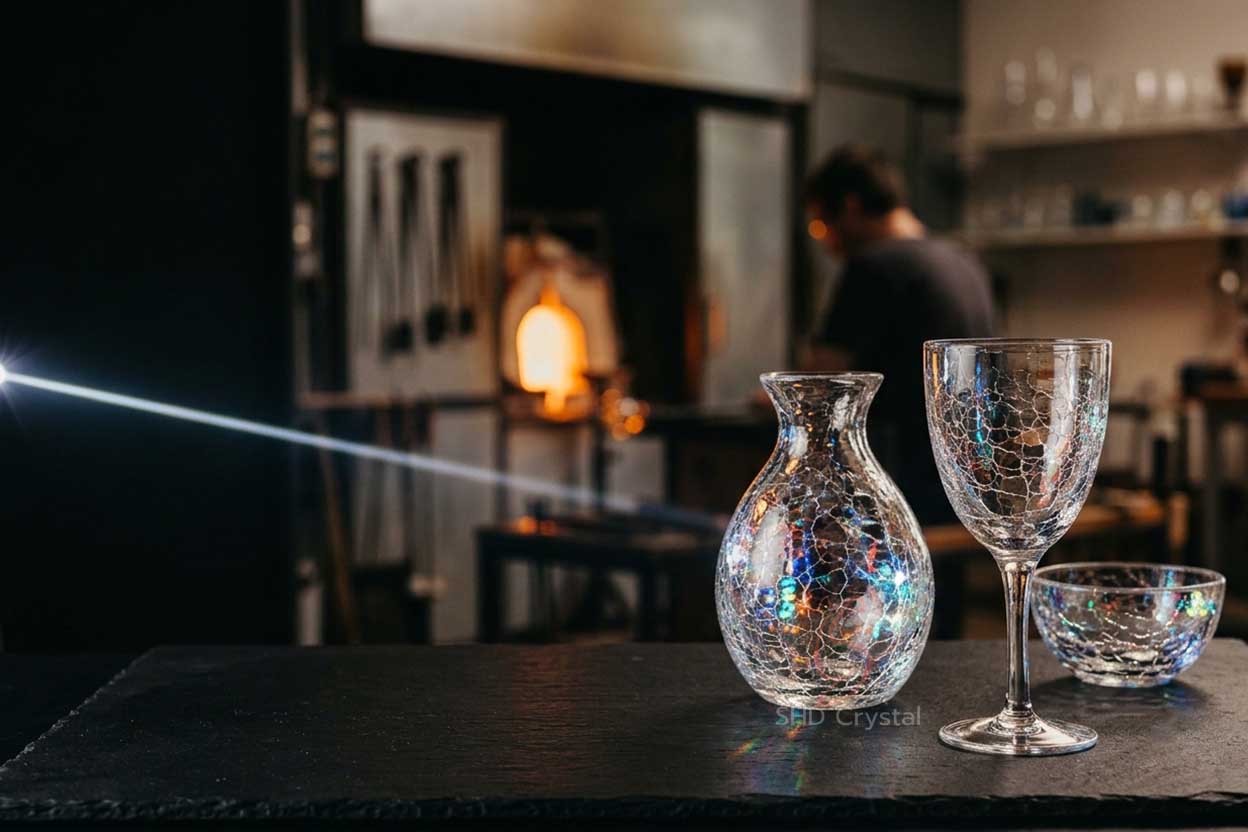
Understanding the full story behind unique crackled glassware means tracing the technical and philosophical roots of crackle finish craftsmanship from imperial kilns to the modern furnace.
Why the Origin of Ice Crack Craftsmanship Still Defines Unique Crackled Glassware Today
The earliest documented origin of ice crack craftsmanship lies in China’s Song Dynasty (960–1279 CE). Imperial kilns, particularly those producing Ru and Guan wares, discovered that certain glazes would craze upon cooling due to mismatched thermal expansion coefficients between the glaze and the clay body. The resulting web of fine lines—what scholars poetically termed “ice flowers”—was initially a firing defect. Yet court connoisseurs and literati redefined this imperfection as a mark of sophisticated taste. They celebrated the principle of “裂而不破” (cracked yet unbroken), which resonated with Daoist and Chan Buddhist philosophies that prized naturalness and resilience over rigid perfection. This philosophical origin is critical because it established crackle not as damage to be avoided, but as an aesthetic virtue to be cultivated. When European and Asian glassmakers began pursuing similar effects in the 19th century, they were not inventing a new concept; they were translating an ancient ceramic ideal into the medium of glass, seeking to replicate the visual poetry of those original Song pieces.
How Crackle Finish Craftsmanship Works: The Role of Thermal Shock and Annealing
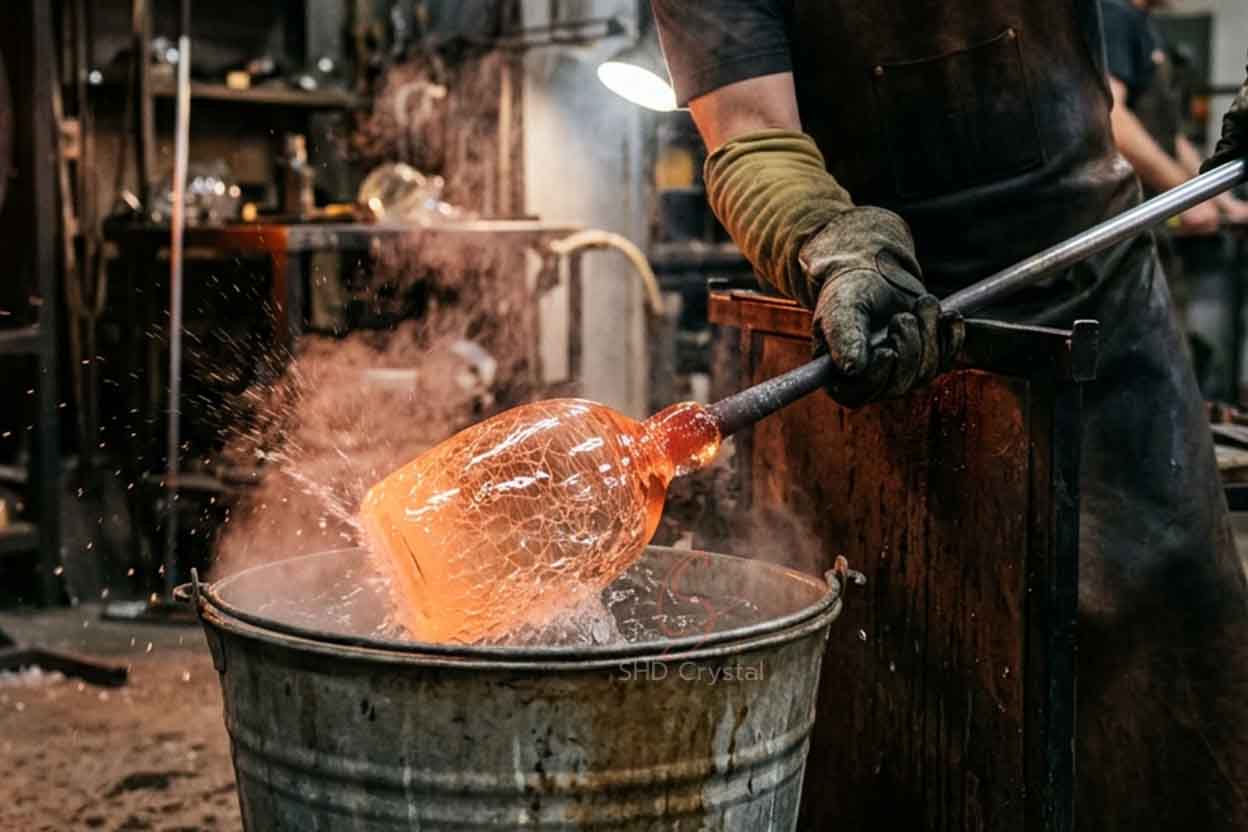
The process that produces unique crackled glassware is as dramatic as the final object itself. A glassblower gathers molten soda-lime or crystal glass on a blowpipe and shapes a preliminary parison. At roughly 1,000°C, the glowing mass is briefly plunged into a bucket of cold water. This sudden thermal shock causes the surface to contract instantly, generating a network of deep fissures. However, the critical step that separates master craftsmanship from mere gimmickry is the reheating phase. The glassblower returns the piece to the glory hole, carefully melting the outer skin just enough to fuse the sharp edges of the cracks together. This seals the fractured “ice” pattern beneath a smooth, continuous surface. To ensure the vessel does not shatter from residual stress, the finished object must be placed in an annealing oven and cooled at a controlled rate—typically 1–2°C per minute—down to room temperature. This annealing stage is the silent hero of crackle finish craftsmanship; without it, the beautiful internal fissures would propagate into catastrophic failure within days.
Why No Two Pieces of Ice Crack Glass Are Identical
Uniformity is impossible in this craft. The final crack pattern depends on a complex interplay of variables: the exact temperature of the glass at immersion, the temperature of the water bath, the duration of the dip, the wall thickness of the piece, and even the humidity in the workshop. A variation of just 5°C in the glass temperature can transform a fine, hairline web into bold, dramatic fissures. This inherent unpredictability gives ice crack glass its collectible value and makes it particularly prized for bespoke interior design projects. Designers and hotel buyers seek unique crackled glassware precisely because it offers a visual texture that cannot be ordered from a standard catalog or replicated by automated machinery.
Common Misconception: Fragility vs. Structural Integrity
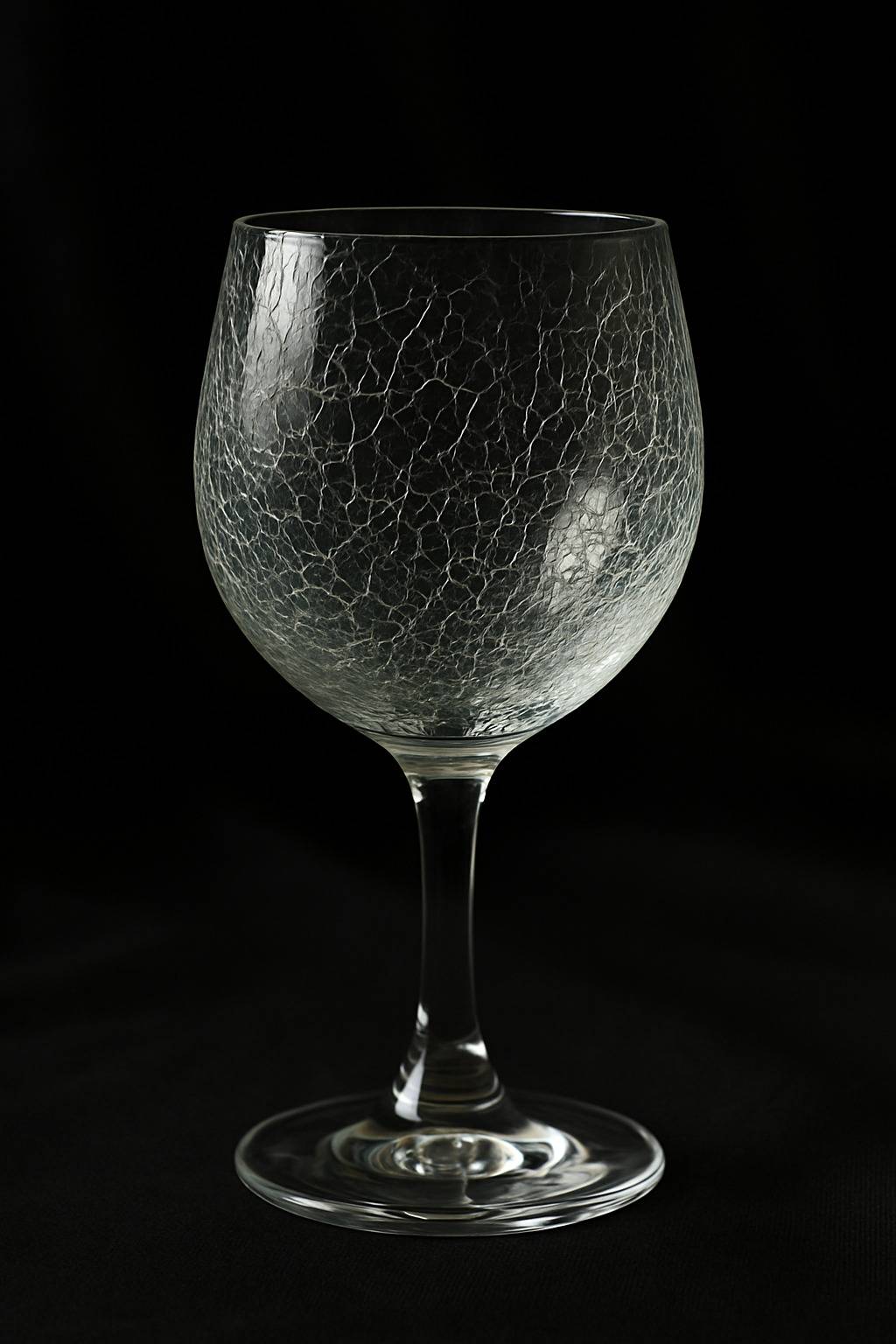
A persistent market misconception is that crackled glass is fragile. In reality, because the surface cracks are sealed and annealed, the structural integrity is fully restored. The tensile strength of well-annealed ice crack glass is comparable to standard glass of equivalent thickness—typically in the range of 40–70 MPa. The fissures are superficial aesthetic features, not structural fault lines. We routinely advise hospitality clients that tumblers and vases produced through this method withstand commercial dishwasher cycles without degradation, provided the glass thickness is adequately specified.
Ceramic Crackle vs. Glass Crackle: A Technical Shift
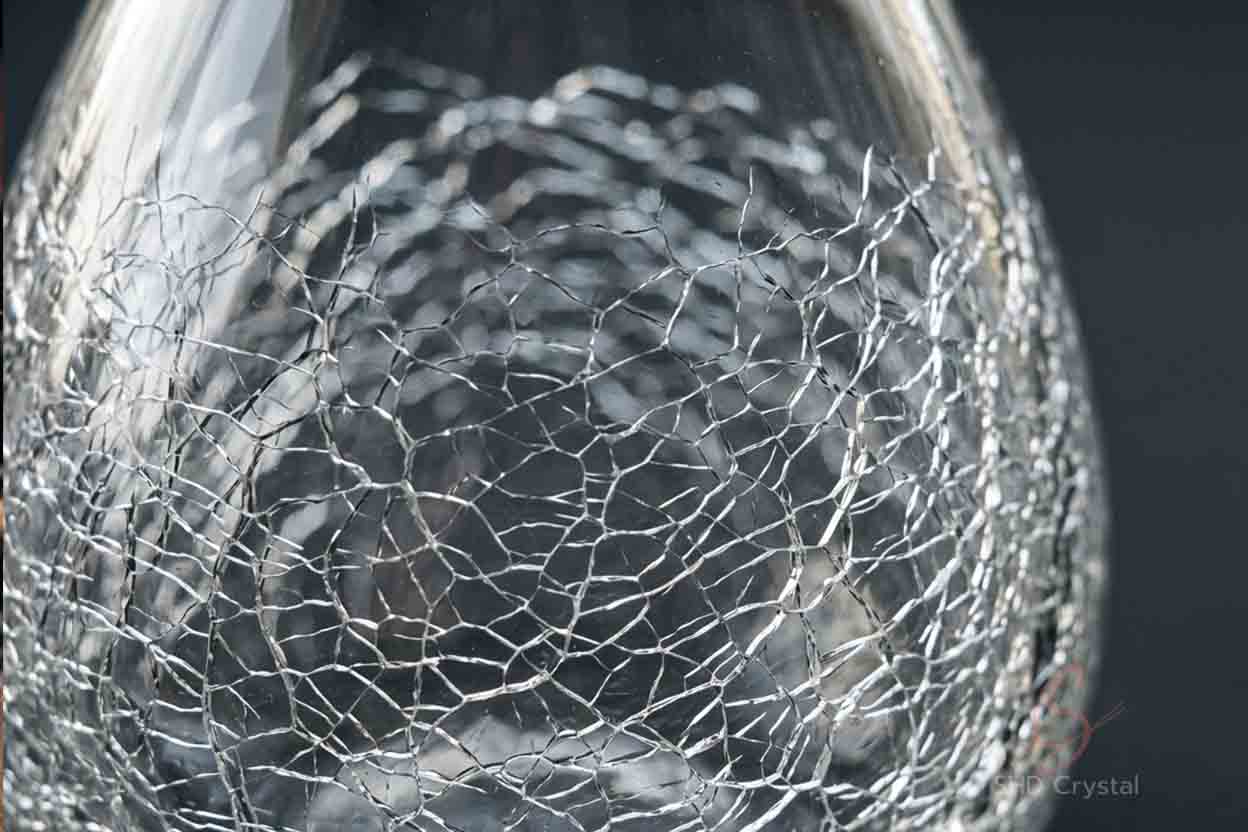
It is important to distinguish the original ceramic crackle from modern glass versions. In Song porcelain, the crackle exists solely in the brittle outer glaze layer, resting on a stable clay foundation. In unique crackled glassware, the entire thickness of the wall experiences the thermal shock, making the process more technically demanding. Glassblowers must judge by eye and touch when the surface has fused just enough to trap the pattern without collapsing the form. This is a manufacturing variable that consumes years of apprenticeship to master.
Commercial Value in Modern Hospitality and Retail
For bars, hotels, and high-end retail, unique crackled glassware provides a tangible competitive edge. A whiskey served in a crackled crystal tumbler elevates the drinking experience through tactile contrast. A lobby centerpiece featuring ice crack glass catches ambient light and throws prismatic reflections across the space. These pieces function as conversation starters and statement objects, justifying premium pricing. For buyers, the key quality indicators are a glass-smooth exterior, an evenly distributed crackle network without blank spots, and consistent wall thickness to ensure thermal durability in service.
Conclusion
Unique crackled glassware carries forward a thousand-year dialogue between technical accident and artistic intent. From the treasured “ice flowers” of Song Dynasty ceramics to the carefully managed thermal shock of modern glassblowing, ice crack glass embodies the enduring human appreciation for controlled imperfection. The true value of crackle finish craftsmanship lies not in hiding the making process, but in celebrating its inherent variability—transforming a moment of thermal stress into a permanent record of artistic courage.
Partner with SHD Crystal for Premium Crackled Glassware
At SHD Crystal, we honor the rich origin of ice crack craftsmanship by combining traditional thermal shock methods with rigorous annealing protocols to ensure every piece is as durable as it is beautiful. Whether you require bespoke crystal goblets, decorative vases, or custom architectural glass elements, our unique crackled glassware delivers the visual authenticity and structural reliability that top-tier hospitality and design brands demand. Contact us to discuss your custom project, or request samples to experience the texture of true crackle finish craftsmanship firsthand.
Our Recommended Article
Origin of Ice Crack Craftsmanship: From Porcelain to Glass
Read the original full version:
https://shdcrystal.com/blogs/unique-crackled-glassware/