
Unusual Wine Bottles OEM Projects Start With Geometry Risk Assessment
this type of custom project projects attract brands that want stronger shelf presence and a distinctive identity. An angular shoulder, an asymmetric body, an elongated neck, or an unconventional base can make a bottle stand out in a competitive product lineup. But every departure from standard geometry introduces forming challenges that affect wall thickness, cooling behavior, neck tolerance, and rejection rate. We have worked on custom wine bottle design projects where a seemingly simple silhouette change — a taller shoulder line and a narrower base — increased the rejection rate by nearly 20% because the glass did not distribute evenly during forming. That is the standard we hold every unusual wine bottles OEM to.
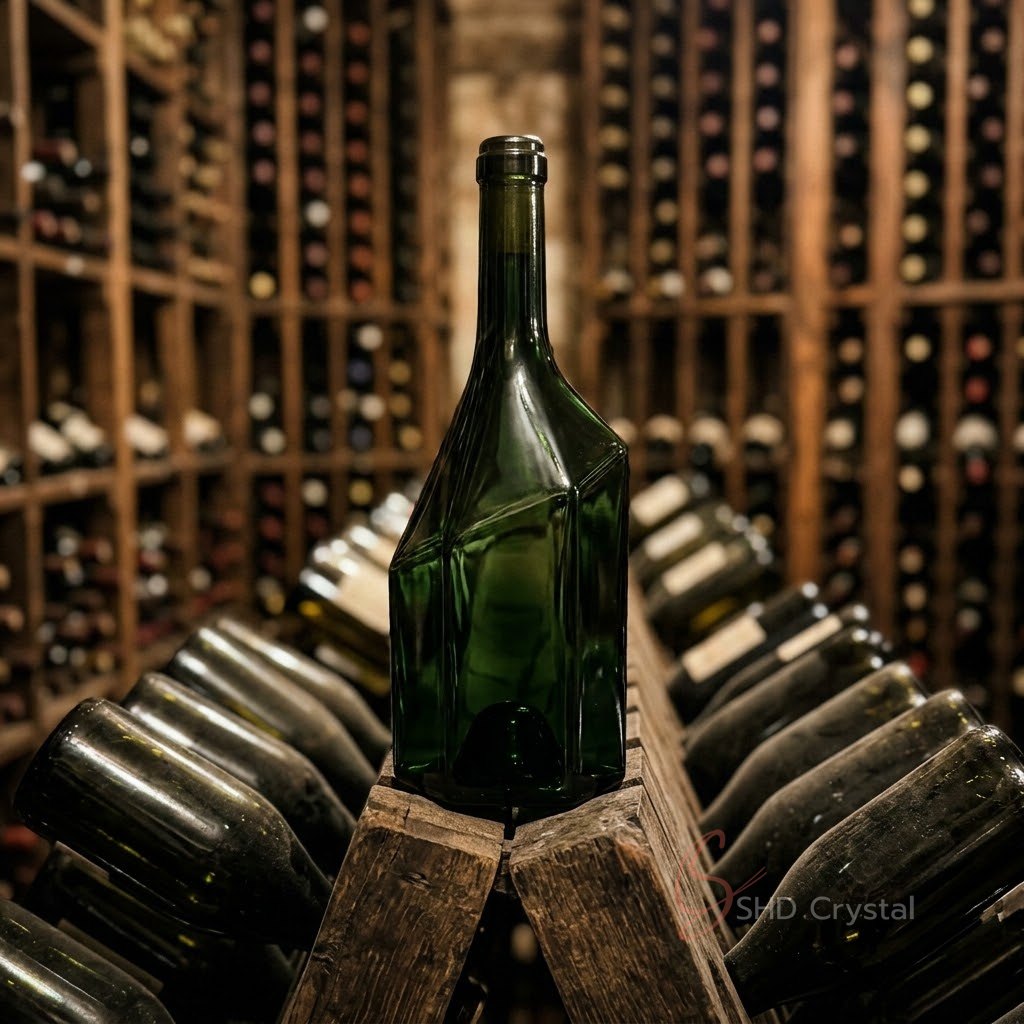
This is why we recommend starting any unusual wine bottles OEM project with a geometry risk assessment. Before approving the mold, the factory should evaluate whether the proposed shape creates stress concentration points, uneven wall transitions, or cooling vulnerabilities. A unique glass bottle manufacturer with experience in non-standard forms will flag these issues early, saving weeks of sampling revisions.
Standard Shapes Exist for a Reason
The most common wine bottle profiles — Bordeaux, Burgundy, Champagne — have survived decades of production refinement because they balance aesthetic appeal with manufacturing practicality. Their curves are optimized for even glass distribution, predictable cooling, and reliable stacking. When a brand departs from these proven profiles for a custom wine bottle design, the factory must re-engineer the forming process from scratch.
| Factor | Standard Bottle Shape | Unusual Bottle Shape |
|---|---|---|
| Wall Distribution | Even — optimized over decades | Uneven — requires custom tuning |
| Annealing Profile | Well-established cycle | Extended cycle, product-specific |
| Rejection Rate | Typically 3–5% | Can reach 15–25% or higher |
| Mold Cost | Stock mold available | Custom mold required |
For unusual wine bottles OEM, a practical consideration is that some shapes are technically possible but commercially impractical. A bottle with an extremely narrow base may look striking but will be unstable on filling lines, difficult to label, and prone to tipping during transport. A unique glass bottle manufacturer should advise on these practical limits before mold development begins.
Neck and Closure Compatibility Must Be Verified Early
For unusual wine bottles OEM, the neck-to-body transition often differs from standard bottles. If the neck is longer, shorter, or positioned at a non-standard angle, the closure system — cork, screw cap, or bar-top stopper — must be verified for compatibility. We have seen projects where the custom neck profile did not provide enough grip surface for the cork, causing seal failures during transport.
When developing a custom wine bottle design, always provide the closure specification alongside the bottle drawing. This allows the factory to evaluate whether the neck finish can hold the required tolerance while maintaining the visual character of the unusual shape.
Labeling and Decoration on Non-Standard Surfaces
Labels are designed for flat or gently curved surfaces. An unusual bottle geometry may create areas where the label wrinkles, bubbles, or does not adhere properly. For custom wine bottle design projects, we recommend testing label application on actual production samples rather than relying on digital mockups. Screen printing and hot stamping may be more reliable decoration methods for highly curved or angular surfaces.
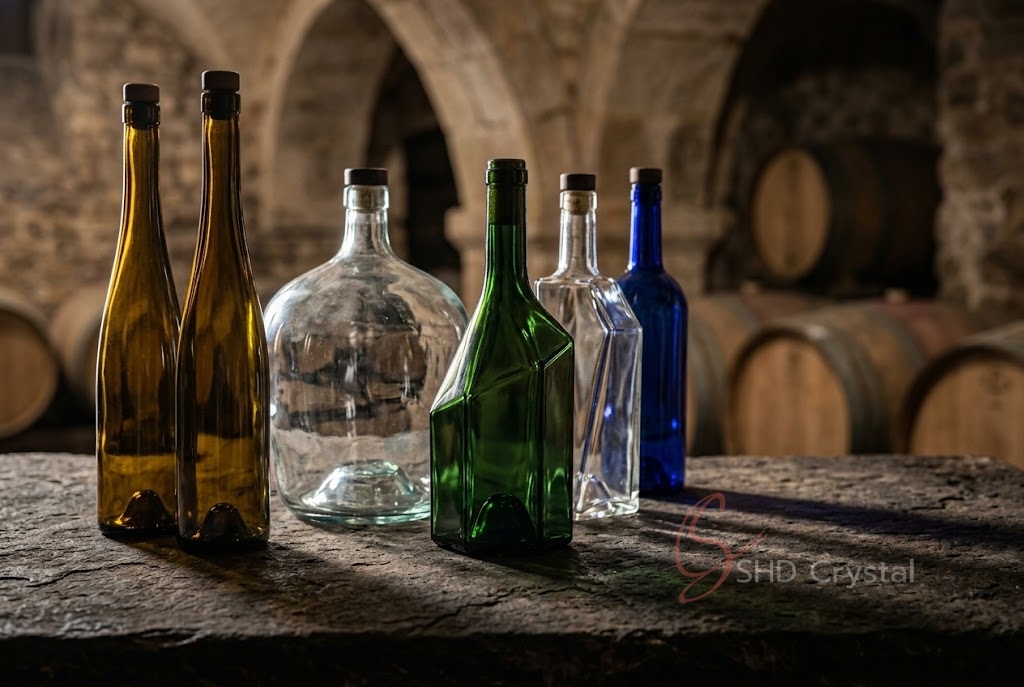
For brands using a unique glass bottle manufacturer, discuss decoration feasibility during the sampling stage. Some shapes that look beautiful in photos may be extremely difficult to decorate consistently at production speed.
Packaging and Logistics for Irregular Shapes
Standard wine bottles fit neatly into standard cartons and pallets. Unusual shapes often do not. Taller bottles may require custom carton heights. Wider bottles may reduce the number of units per carton. Angular shapes may need custom inserts to prevent movement during transit. These packaging considerations should be planned during the sampling stage, not discovered during pre-shipment inspection.
For unusual wine bottles OEM programs targeting export markets, the freight impact of non-standard dimensions can be significant. A bottle that is 3 cm taller than standard may not fit into the same pallet configuration, reducing the number of bottles per container and increasing per-unit shipping cost.
Frequently Asked Questions
How much more does unusual wine bottles OEM cost compared to standard shapes?
The premium varies widely depending on the geometry complexity. Simple modifications may add 10–15% to the cost. Highly unusual shapes with sharp angles or extreme proportions can cost 30–50% more due to higher rejection rates, longer annealing cycles, and custom mold investment.
Can I use a stock mold for a custom wine bottle design?
Stock molds are available for standard profiles only. Any custom wine bottle design requires a dedicated mold. Some factories offer modified stock molds with minor adjustments, which can reduce tooling cost while still creating a distinct appearance.
What should I ask a unique glass bottle manufacturer before starting a project?
Ask about their experience with non-standard shapes, their typical rejection rates for unusual geometries, and whether they can provide a forming feasibility assessment before mold development. A unique glass bottle manufacturer with relevant experience will answer these questions with specific examples.
Conclusion
Unusual wine bottles OEM delivers strong brand differentiation, but the engineering challenges are real. Brands that evaluate geometry risk, closure compatibility, decoration feasibility, and packaging impact during sampling create a more reliable path from concept to repeat production.
Explore Unusual Wine Bottle Designs With SHD Crystal
For brands pursuing unusual wine bottles OEM, SHD Crystal can support geometry assessment, mold feasibility review, closure compatibility testing, and packaging planning. Share your custom wine bottle design concept with us to discuss the most practical production route.
Interested in custom glassware or related products?
Contact our team to discuss your project requirements.